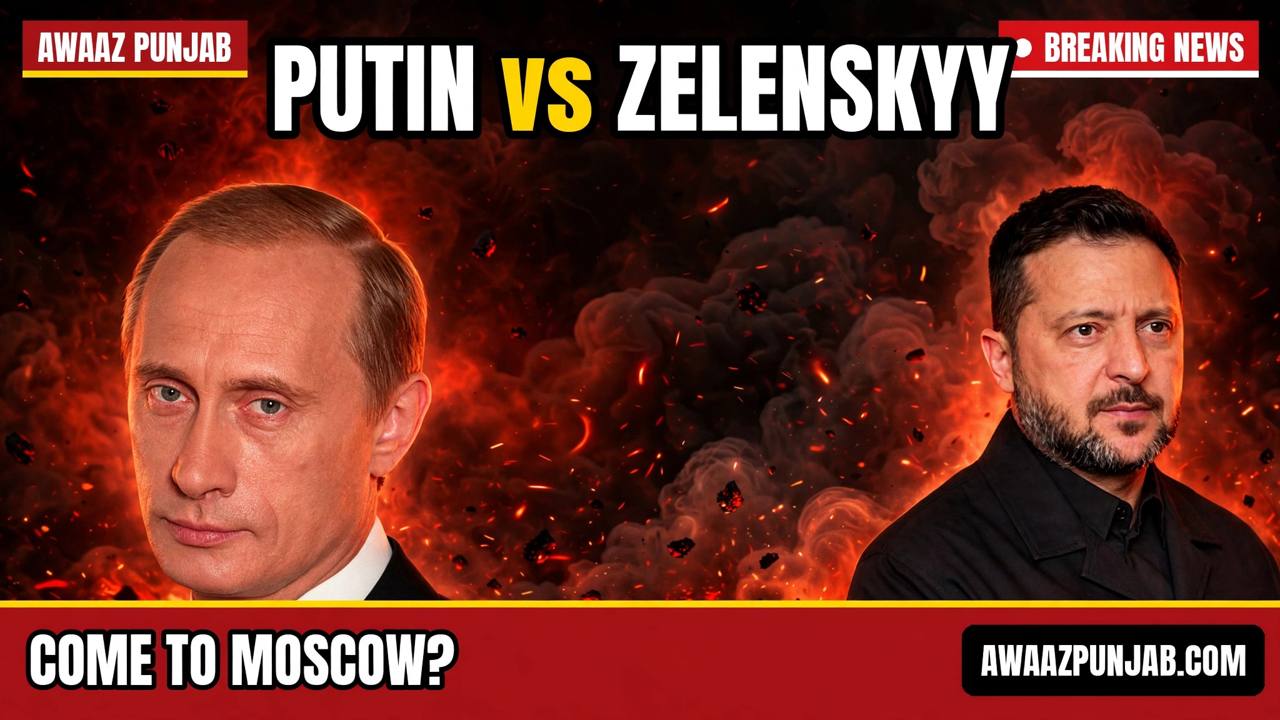
European leaders agreed in Berlin on Thursday that Europe must have a coordinated seat in the next round of talks with Russia, approving a prospective four-party format bringing together Ukraine, Europe, the United States and Russia. German Chancellor Friedrich Merz said new talks would “take place soon”. Read the earlier story
Russian President Vladimir Putin said on Thursday that Russia has proposed that European envoys come to Moscow to clarify their position on Ukraine peace negotiations before the format of further talks is decided.
Source: Reuters
“We are not opposed [to European participation], but we need to understand what Europe will bring to these talks. Through diplomatic channels, we have proposed that European representatives come to Moscow so that we can determine their position. After that, we will decide in what format to continue the dialogue with Ukraine,” Mr Putin said.
Mr Putin was speaking in China after a summit with US President Donald Trump and Chinese President Xi Jinping in Shenzhen. He said the United States was urging Russia “quite insistently” to agree to European participation in talks that until now have been conducted mainly between Moscow, Washington and Kyiv, with little progress. Russian, Ukrainian and US officials held talks in Abu Dhabi last week for the first time in nine months.
Source: Reuters
Zelenskyy: not Moscow
Ukrainian President Volodymyr Zelenskyy rejected the idea of European officials travelling to Moscow and favoured a neutral third country as the venue for any meeting, according to Ukrainian media reports of his response.
Source: h.ua
The Berlin backdrop
The invitation is Moscow's direct answer to the Coalition of the Willing summit in Berlin, where more than 40 countries and partners agreed that Europe must have a coordinated seat at the next talks. Chancellor Merz, who hosted the meeting alongside French President Emmanuel Macron and British Prime Minister Andy Burnham, said the talks “can only be successful with Ukraine and Europe”. US envoys Steve Witkoff and Jared Kushner attended, along with NATO Secretary General Mark Rutte.
What happens next
No date has been set for any meeting in Moscow, and no European capital has publicly accepted the invitation. Mr Merz has already dismissed the Shenzhen summit as a “photo opportunity”, and Mr Putin has separately ruled out a Black Sea energy truce and rejected ceasefire talks after Ukrainian strikes on the Kerch Bridge, vowing a response. The format of the next talks — and whether Europe sits at the table at all — remains undecided.
Mr Putin has also ruled out a Black Sea energy truce after Ukrainian strikes on the Kerch Bridge. Read the earlier story
What is solid
- Mr Putin said Russia has proposed through diplomatic channels that European envoys come to Moscow to clarify their position.
- The US is pressing Russia “quite insistently” to accept European participation, Mr Putin said.
- Mr Zelenskyy rejected Moscow as a venue and prefers a neutral third country.
- The Coalition of the Willing agreed in Berlin that Europe must have a coordinated seat in the next talks.
What is only claimed
- Whether any European capital will accept an invitation to Moscow.
- What format the next talks will take — four-party, or the existing Moscow-Washington-Kyiv channel.
- Whether the Shenzhen declaration changes anything — Mr Merz called it a “photo opportunity”, while the three leaders presented it as a peace declaration.
Why it matters
The dispute over who sits at the table has become the central question of Ukraine diplomacy: Kyiv and its European allies insist no deal can be made about Europe without Europe, while Moscow wants to test what Europe would bring before agreeing to a format. For India and the wider world, the outcome shapes energy prices, food trade and the war's wider fallout — the same pressures that have pushed oil and shipping costs up and down through the conflict.
The next step is Europe's answer: accept Moscow's invitation, propose a neutral venue, or hold the line agreed in Berlin that talks happen with Ukraine and Europe together.