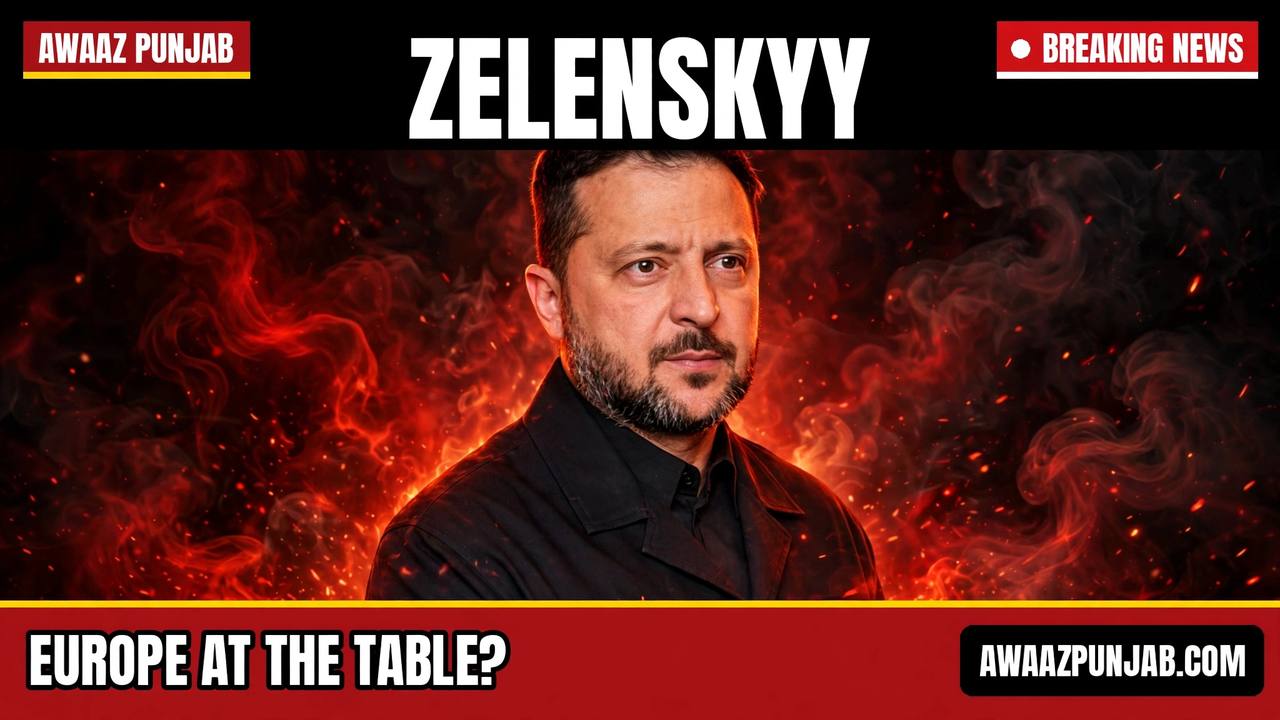
Earlier today we reported that the Coalition of the Willing gathered in Berlin, with President Zelenskyy seeking air defences and energy aid and Britain announcing 1,000+ long-range drones. Read the earlier story
European leaders agreed in Berlin on Thursday that Europe must have a coordinated seat in the next round of talks with Russia, approving a prospective four-party format bringing together Ukraine, Europe, the United States and Russia, after a day of talks at the German Chancellery.
German Chancellor Friedrich Merz, who hosted the Coalition of the Willing summit alongside French President Emmanuel Macron and British Prime Minister Andy Burnham, said new talks with Russia would “take place soon”. “We are prepared to hold talks with Russia, we have always said this. These talks are now set to take place soon,” he said, adding that the parties were “looking for locations on neutral ground” and naming the United Arab Emirates as a possible venue.
More than 40 countries and partners took part in the Berlin meeting, including Ukrainian President Volodymyr Zelenskyy, NATO Secretary General Mark Rutte and US envoys Steve Witkoff and Jared Kushner. Mr Merz said European, Ukrainian and American advisers would gather at the Chancellery on Thursday evening for a further round of talks.
A direct answer to Shenzhen
The Berlin gathering took place only hours after US President Donald Trump, Russian President Vladimir Putin and Chinese President Xi Jinping held an unprecedented three-way summit in Shenzhen and issued a joint declaration on peace that did not mention Ukraine. Mr Merz dismissed that meeting as “first and foremost a photo op” and warned that “a Yalta format will not bring peace” — a reference to the 1945 conference that divided Europe into spheres of influence.
“If it comes to peace negotiations, then we will be involved,” Mr Merz said, adding that talks “can only be successful with Ukraine and Europe”. Mr Macron said any negotiations to end the war must include Ukraine, Europe, the United States and Russia together, while Mr Burnham said Europe was “strong and organised” and “ready to enter negotiations”, insisting a peace agreement must come before any talks on Russia’s “unrealistic security demands”.
What the leaders agreed
The leaders’ joint declaration set out possible security guarantees for Ukraine once a ceasefire takes effect — described as defensive and legally binding — including sustained military support, a US-led ceasefire monitoring mechanism and a European-led multinational force working on land, at sea and in the air. The declaration also called on Russia to agree to a Black Sea ceasefire and a winter halt to attacks on energy infrastructure.
Russia has already answered that call: President Putin said in Shenzhen there would be ‘no agreements’ on a Black Sea or energy truce after Ukraine’s strikes on the Crimea Bridge. Read: Putin rules out Black Sea and energy truce
Britain and Norway announced more than £100m in joint funding for two British-built fast attack boats for Ukraine, and the leaders reaffirmed NATO allies’ pledge to provide €70bn in military equipment, assistance and training for Ukraine in 2026, with at least an equivalent level in 2027. They also cited the European Union’s €90bn Ukraine Support Loan and backed direct Russia–Ukraine talks with US and European participation.
Air defence dominated the practical discussions. President Zelenskyy has warned that US deliveries of Patriot interceptor missiles have fallen sharply this year — to about 12 a month, by his count — while NATO’s top commander has said there are no delays in supplying Patriot systems. The summit also discussed energy protection, financial aid and preparations for a multinational force after the war.
What happens next
Whether the four-party format becomes real depends on Moscow. Russia’s acceptance of the expanded format remains disputed: President Putin has said Europeans should be part of the talks and invited EU representatives to Moscow, but he also ruled out defence ties between Ukraine and Europe, and the Kremlin has not formally confirmed European participation. The next step is the advisers’ meeting in Berlin on Thursday evening — and the search for a neutral venue both sides will accept.
What is solid
- The Coalition of the Willing met in Berlin on 19 November with more than 40 countries and partners.
- Chancellor Merz said new talks with Russia would take place soon and that Europe would be involved.
- The leaders agreed on a coordinated European role and a prospective four-party format.
What is only claimed
- Whether Russia will accept European participation in the next round of talks.
- Whether the Black Sea and energy ceasefire the leaders called for can happen, after President Putin ruled it out.