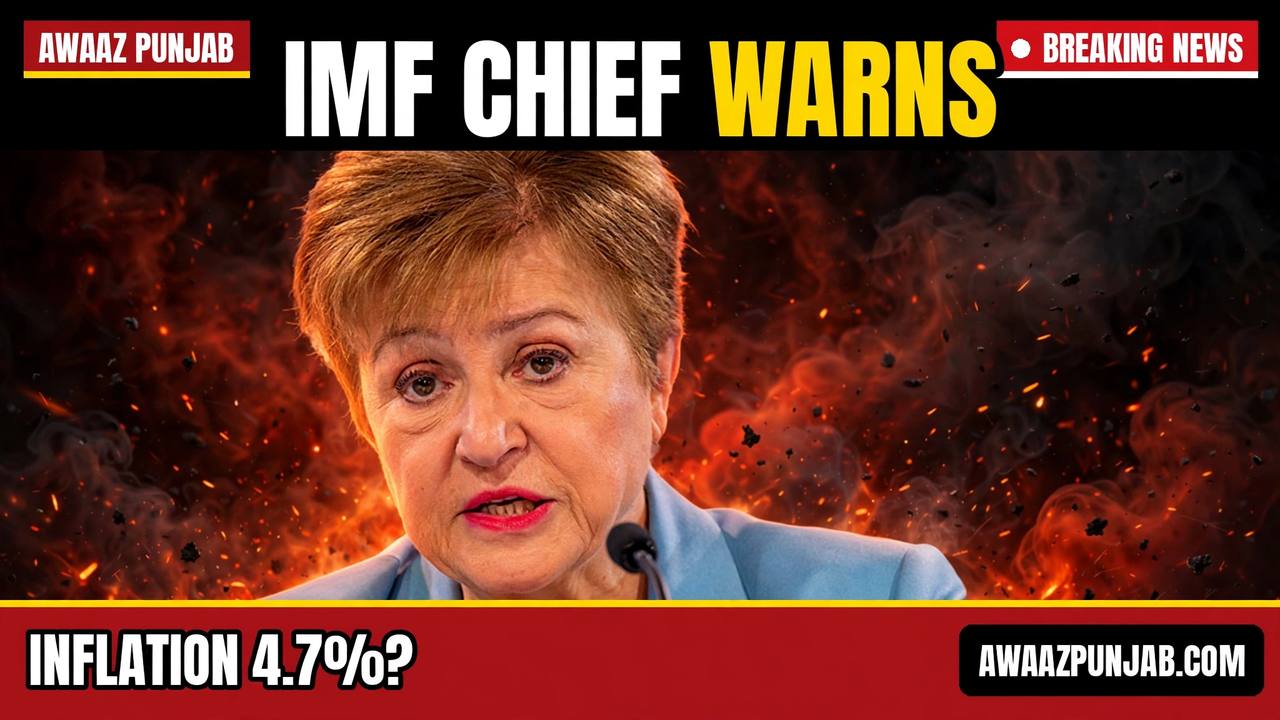
The head of the International Monetary Fund has warned that the world is about to get more expensive — and that central banks should act now. IMF Managing Director Kristalina Georgieva said on Thursday, November 19, that energy supply shocks and surging demand for artificial intelligence were accelerating global inflation to 4.7% this year, calling for a tightening of monetary policy in many economies.
Source: Reuters via The Hindu BusinessLine
Georgieva was speaking at the Asia-Pacific Economic Cooperation summit in the southern Chinese tech hub of Shenzhen, where leaders from economies across the Pacific have gathered. Her briefing to leaders put two pressures side by side: the energy shock from the fighting in the Middle East, and a demand shock from the AI investment boom.
Source: BusinessWorld
AI is pushing prices up — not just tech stocks
Georgieva's warning was that the AI boom is no longer just a story about technology companies. Demand for AI hardware and related technology products is pushing up consumer prices around the world, she said — a direct message to policymakers that the surge in spending on AI is now a force acting on prices, wages and interest rates in economies everywhere.
Source: The Guardian
The IMF's October 2026 World Economic Outlook had already flagged the pattern: investment in semiconductors, data centres, electricity infrastructure and specialised construction was increasing demand across several sectors before the full productivity benefits of artificial intelligence had materialised.
Source: Republic Policy
Energy importers face the toughest squeeze
Georgieva said energy importers are expected to face difficulties dealing with shocks happening in parallel to the Middle East crisis, particularly if they cannot cushion the blow by making the transition to artificial intelligence. For countries that buy most of their oil and gas from abroad, that means higher import bills at the same time as higher borrowing costs.
Source: BusinessWorld
The energy shock she pointed to is tied to the war in the Gulf, where US strikes on Iran and attacks on shipping through the Strait of Hormuz have kept oil markets on edge. Brent crude closed at $91.95 a barrel on November 18, down 1.3% on the day, according to the Associated Press — still far above the levels seen before the war began in late February.
There was one offsetting force in her briefing: AI investment helped counter the energy supply shock, lifting global growth to 3.1% this year, while trade expanded 4.6%, powered by the AI investment boom and by deeper regional integration. The IMF projects global inflation will peak at 4.7% in 2026 before easing to 4.1% in 2027.
Source: BusinessWorld
What her call means in practice is straightforward: if central banks tighten as she urges, borrowing gets costlier — for home loans, business loans and government debt — even as prices stay high. That is the trade-off she put before APEC leaders: act on inflation now, or let 4.7% become the new normal.
Georgieva's message to APEC leaders: the AI boom and the energy shock are hitting prices at the same time — and central banks should act before 4.7% becomes entrenched.
What is solid
- Georgieva's forecast that global inflation reaches 4.7% in 2026 and eases to 4.1% in 2027
- Her call for tighter monetary policy in many economies, made at the APEC summit in Shenzhen on November 19
- Global growth of 3.1% and trade growth of 4.6% in 2026, as set out in her APEC briefing
What is only claimed
- How much of the 4.7% is driven by AI demand versus the energy shock — the split is not precisely quantified in the IMF's public remarks
What happens next: APEC leaders continue their talks in Shenzhen, markets will watch the next central bank decisions in the coming weeks, and the IMF's next World Economic Outlook update will show whether the 4.7% peak holds — or whether the expected easing to 4.1% in 2027 stays on track.