On November 3, the court announced it would deliver this judgment today — read our preview of what was at stake in the case. Read the earlier story
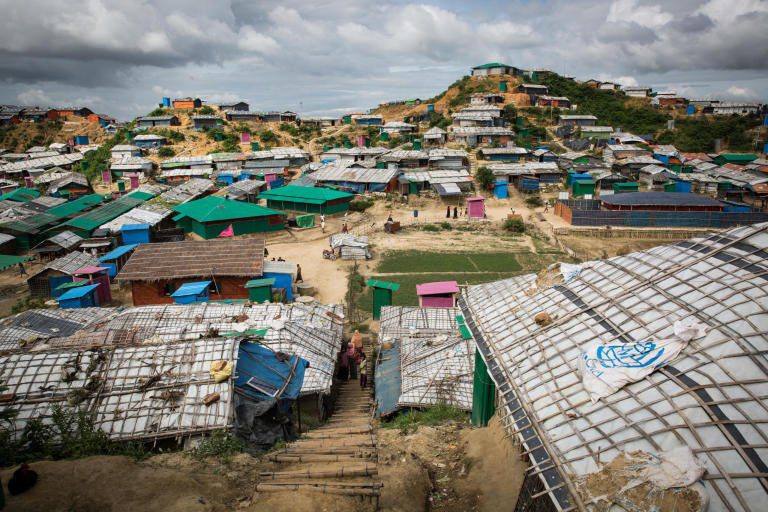
The International Court of Justice (ICJ) began delivering its long-awaited judgment in the genocide case brought by Gambia against Myanmar on Thursday, with the court's president, Judge Yuji Iwasawa, reading out the findings at the Peace Palace in The Hague. The court has so far found that Myanmar's security forces killed around 10,000 Rohingya during the military's 2017 clearance operations in Rakhine State.
Source: Reuters
"The Court finds that Myanmar's security forces killed thousands of Rohingya civilians, committed numerous acts of sexual violence, as well as exceptionally brutal crimes against children, and attacked Rohingya who were attempting to flee," Judge Iwasawa said as he read the judgment.
Source: TBS News
What the court has found so far
The court found that about 815,000 Rohingya who lived in northern Rakhine State before the 2017 operation were targeted by Myanmar — a number the judge said was "clearly significant" and "substantial" for the purposes of the Genocide Convention.
Source: TBS News
The court also found that the Myanmar military "actively disseminated and promoted hate speech in a systematic and coordinated way" during the operations, portraying the Rohingya as "sub-human" and "a violent threat" — a campaign the judges said contributed to "a climate conducive to targeting a group for destruction".
Source: TBS News
Judge Iwasawa said Myanmar imposed marriage-permission rules and a two-child limit on Rohingya couples, and the court was convinced the measures were intended at least to reduce births within the group. He said sexual violence during the operations was intended to "physically and mentally impair the willingness and ability of the population to procreate". The court also took account of Myanmar's failure to genuinely investigate the alleged atrocities and its refusal to let investigators reach evidence and witnesses — while finding Gambia's witnesses credible, with many of their key statements unchallenged in cross-examination.
Source: TBS News
Myanmar's position
Myanmar denies committing genocide. It says the 2017 campaign was a legitimate counterterrorism operation against fighters of the Arakan Rohingya Salvation Army (ARSA), whose attacks on police posts in August 2017 killed 12 security personnel — not an attack on the Rohingya people as a whole.
Source: Reuters
The case so far
Gambia filed the case on November 11, 2019, with the backing of the 57-member Organisation of Islamic Cooperation, alleging Myanmar violated the 1948 Convention on the Prevention and Punishment of the Crime of Genocide. The court ordered emergency measures in January 2020 requiring Myanmar to prevent genocidal acts, rejected Myanmar's objections to its jurisdiction in July 2022, and heard the merits of the case from January 12 to 29, 2026, including closed-door testimony from Rohingya witnesses.
Source: Human Rights Watch
The judgment is final and binding, with no right of appeal — though the court has no means of enforcing it on its own. It is only the third time the court has ruled on the merits of a genocide case, and it has never before found a state responsible for genocide.
Source: Reuters
The reading of the judgment continues at The Hague. The court's final determination — whether Myanmar as a state committed genocide — is still to be delivered, and Awaaz Punjab will report it when it is announced.