Iran has hardened its negotiating position with the United States since the American midterm elections and has drawn up plans to escalate the war in the Gulf, The New York Times reported on Tuesday, citing American, European and Iranian officials.
According to the report, Tehran reads the Republican Party's losses in the November 3 midterm elections — in which the party lost control of both the House and the Senate — as a vote of no confidence in the way President Donald Trump is managing the war, which began on February 28, 2026.
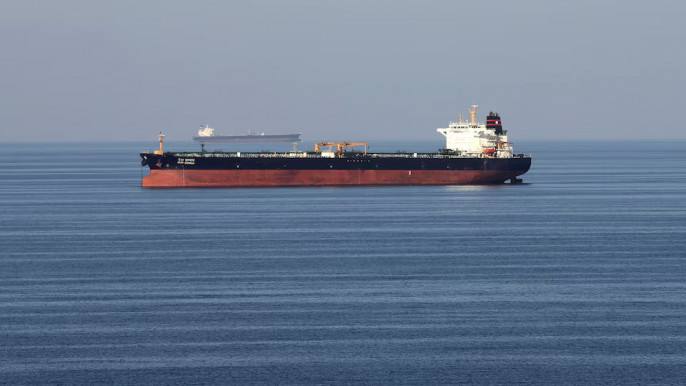
The Times reported that Iran has drafted plans to step up the conflict in order to force Washington back to the negotiating table, including intensifying attacks on tankers in the Strait of Hormuz — among them vessels that refuse to pay Iran transit fees to pass through the waterway.
Iranian officials who spoke to the newspaper on condition of anonymity said the strategy of inflicting economic pain on American voters by disrupting shipping through the strait had worked. "Iran thinks Trump is under pressure from his voters and his party to end the war with Iran," Peyman Salehi, a Tehran-based commentator close to the government, told the Times.
Divided assessments on how serious Iran is about a deal
American and European officials are divided over how serious Tehran is about reaching an agreement to end the war, the report said, with intelligence assessments differing on the degree of Iranian seriousness in the talks. Democratic Congressman Jim Himes, who is expected to chair the House Intelligence Committee next year, was among those cited in the reporting.
The Times also reported that the United States and Israel have gathered intelligence indicating that Iranian officials have discussed the possibility of using chemical weapons or other unconventional attacks. There is no confirmation that any such attack has taken place, and the report presents the discussion as an intelligence assessment, not as an established fact.
The sticking point: sanctions relief versus a halt to attacks
According to the report, Iran is demanding sanctions relief and payments from Arab states before it will allow ships to pass freely through the Strait of Hormuz. Washington, by contrast, insists that Iran must first halt its attacks on vessels, and only then will funds be released or sanctions lifted.
The backdrop is a renewed round of strikes this week. U.S. fighter aircraft struck an Islamic Revolutionary Guard Corps missile launch site on Qeshm Island in the Strait of Hormuz on Tuesday, in what a U.S. military official described as retaliation for Iranian attacks on U.S. personnel and assets. Iran has in turn fired drones at U.S.-linked bases in Bahrain and Kuwait, and the United States now has three aircraft carriers in the region.
Source: Awaaz Punjab
The Qeshm Island strike followed Iranian drone attacks on American bases in Bahrain, breaking a two-month lull in attacks on Gulf states. Read our earlier report on the Qeshm Island strike
The shipping toll keeps rising. On November 16, the Panama-flagged LPG tanker Tara Gas was struck about seven nautical miles north of Khasab, Oman, disabling the vessel and starting an engine-room fire; a second strike the next day forced its 25 crew to abandon ship, with one Indian seafarer missing. It was the 17th confirmed shipping incident this month. In a separate attack on November 18, the Liberia-flagged crude tanker MT Navig8 Messi was hit by a projectile in the Persian Gulf; its three Indian seafarers were reported safe. Brent crude has traded near $93 a barrel in recent sessions as the attacks continue.
President Trump, for his part, has sent mixed signals. On November 9 he said he was postponing further strikes after speaking with Qatar's prime minister, and Gulf leaders have urged him not to attack for fear of Iranian retaliation. On November 12, he wrote on Truth Social that "we don't need a deal with Iran" and moved Vice President JD Vance off the Iran negotiations. Vance had said publicly a day after the midterms that the war had cost Republicans votes.
What happens next will turn on whether Tehran acts on the escalation plans the Times describes, and how Washington answers. Diplomacy continues through Oman, but with Iran demanding sanctions relief first and the U.S. demanding a halt to vessel attacks first, neither side has moved — and the strait, through which a large share of the world's seaborne oil passes, remains the flashpoint.
What is solid
- The New York Times reported on November 18 that Iran has hardened its stance and drafted escalation plans, citing U.S., European and Iranian officials
- The war began on February 28, 2026, and is in its ninth month
- The tanker Tara Gas was struck on November 16 near Khasab, Oman; one Indian seafarer is missing
- U.S. aircraft struck an IRGC missile site on Qeshm Island on November 18 (IST, November 17 U.S. time)
What is only claimed
- Whether Iran will actually carry out the escalation plans described in the Times report
- How serious Tehran is about reaching a negotiated deal — U.S. and European intelligence assessments differ
- Whether Iranian officials seriously considered chemical or other unconventional attacks — reported as an intelligence assessment, not a confirmed fact