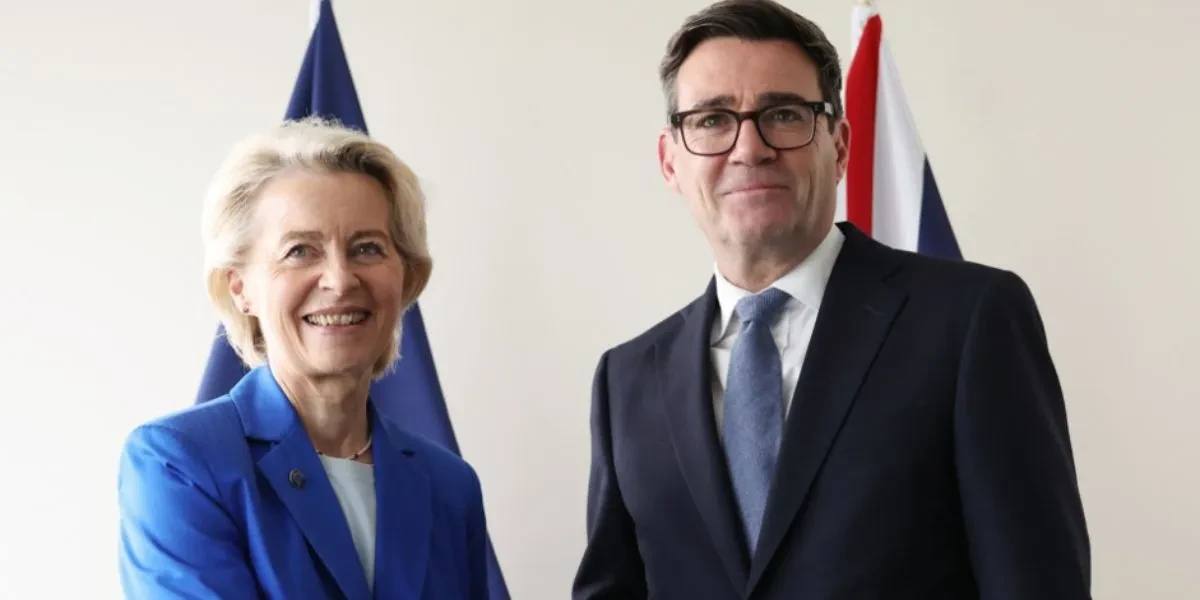
Britain and the European Union have largely settled the terms of their post-Brexit 'relationship reset', according to a leaked second draft of the agreement seen by The Guardian, with sign-off expected when Prime Minister Andy Burnham meets EU leaders in Brussels on Friday. The 72-paragraph joint communiqué shows how much has been agreed, and how much is still unresolved.
Source: The Guardian
The reset process began in earnest under Burnham's predecessor Keir Starmer and is meant to repair parts of the relationship damaged by Brexit. The draft covers youth travel and work, food exports, pet travel, touring musicians, car manufacturing and police cooperation. In almost every area, the picture is the same: progress on paper, but delivery years away.
Youth mobility: the headline promise, and the wait
The most eye-catching proposal is a youth mobility scheme that would let people under 30 from the UK and the EU live in each other's countries for up to three years, to work, study, au pair, volunteer or simply travel, the draft states.
But young people may be waiting a long time. Because work permits remain the responsibility of national governments rather than Brussels, the scheme may not be operating until 2030. The draft says the two sides aim to apply the agreement no later than 2028 and to ensure opportunities under the scheme are available no later than January 2030.
The two sides have not even agreed how many young people the scheme will cover. The British government wants to cap numbers at between 50,000 and 80,000 places to limit the impact on overall migration figures, while the EU is pushing for at least 100,000.
Food, cheese and pet passports
On food trade, the sanitary and phytosanitary (SPS) agreement, which would remove post-Brexit health certificates and physical checks, will not be implemented until 1 March 2028, because the UK needs primary legislation to align dynamically with EU standards. Small British cheesemakers will therefore not see an immediate return to exporting to EU customers without paperwork. The UK government has said the wider agricultural deal could be worth more than £5.1 billion to the economy (yaani roughly 51 arab pounds, or about 5.7 lakh crore rupees) by 2040.
Pet passports, one of the most popular promises of the reset, are not mentioned in the draft at all. Because they are tied to the SPS deal, British travellers will keep paying up to £200 every time they take a dog or cat to an EU country until the food agreement takes effect.
Student fees also remain unresolved. Home-fee treatment for EU students studying in the UK has yet to be agreed, and earlier draft reporting suggested the fees question would be decoupled from the summit deal, with an aim to settle it within six months. Touring artists' visas and access to law-enforcement databases also feature in the package of texts around the summit.
For Britain's large Punjabi and wider South Asian diaspora, the practical stakes are familiar ones: easier youth travel and work routes between the UK and Europe, cheaper food trade, and an end to per-trip pet paperwork, all of which touch families split between Britain and the continent. On the leaked timetable, most of those benefits arrive between 2028 and 2030, not at Friday's signing.
What happens next: Burnham is expected to sign off the package in Brussels on Friday alongside European Commission President Ursula von der Leyen and European Council President António Costa. Outstanding points, including the youth mobility cap and student fees, are set to continue in negotiation after the summit.