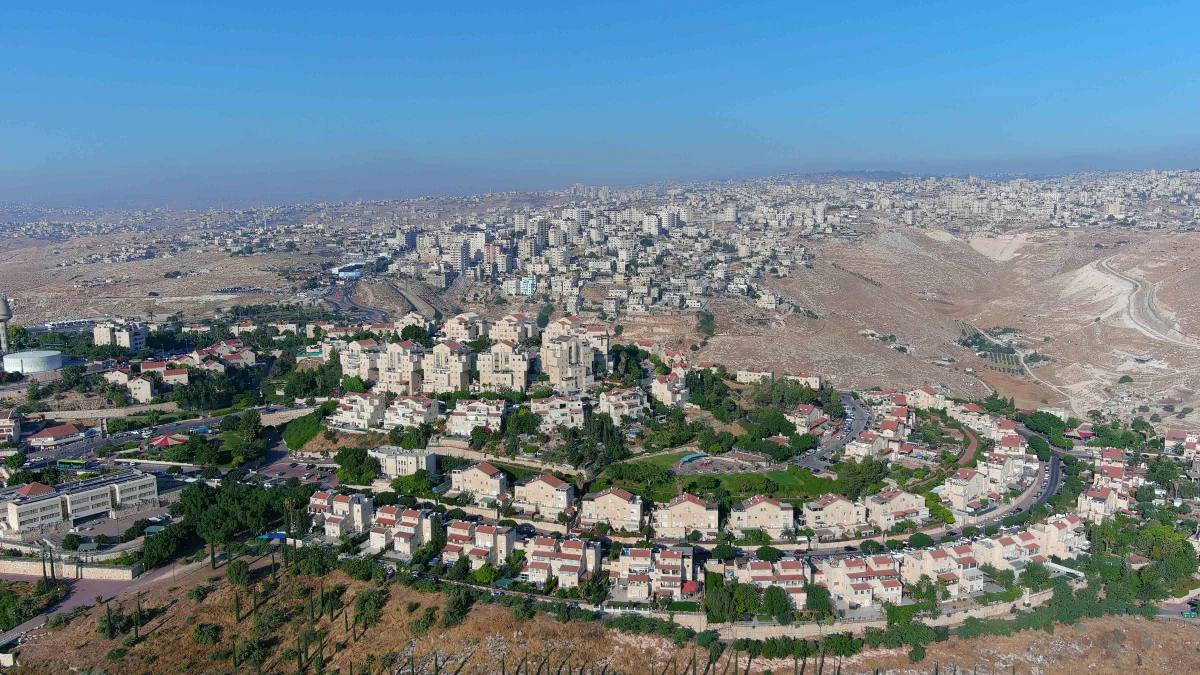
Israel's attorney general, Gali Baharav-Miara, has ordered the caretaker government to halt the tender process for construction in the contested E1 settlement area of the occupied West Bank until a new government is sworn in, in a decision announced on Tuesday just hours after Britain imposed sanctions on Israeli construction firms.
Source: The Guardian
Baharav-Miara instructed the Israel Land Authority and the Ministry of Housing not to open the tender process. The tender published for the E1 project covered more than 3,401 housing units in total, and the deadline for companies to submit bids for 1,234 of those units had been set for Thursday. That deadline has now been pushed back at least until a new government takes office.
The attorney general said a decision on settlement expansion on this scale should not be taken by the caretaker government led by Prime Minister Benjamin Netanyahu, but by whatever administration is formed next. Legal discussions had determined that the limits placed on a caretaker government apply to this project, according to reports of her decision.
The freeze came hours after Britain sanctioned eight Israeli construction firms involved in settlement building, along with the activist group Tzav 9, which has blocked aid deliveries to Gaza. The United Kingdom said the measures were aimed at curbing settlement expansion and protecting the viability of a two-state solution.
Awaaz Punjab reported the British sanctions when they were announced on Monday. Read: UK sanctions eight settlement firms and Tzav 9
Israeli diplomats insisted the postponement was not a response to the British measures. British diplomats, however, believe growing international pressure on Israel over settlements, including criticism from Democrats in the United States, is beginning to have an impact. Foreign Minister Gideon Sa'ar has vowed that Israel will hit back at the British sanctions.
Why the E1 corridor matters
E1 is a strip of land between Jerusalem and the settlement city of Ma'ale Adumim, home to nearly 40,000 residents. Building there would slice across the West Bank, severing territorial contiguity between the major Palestinian population centres of Ramallah, East Jerusalem and Bethlehem.
Britain's foreign secretary, Ed Miliband, has characterised the E1 expansion as a potential death knell for Palestinian statehood. Critics of the project, including the European Union, say it would make a viable two-state solution impossible. The international community largely views Israeli settlements in the occupied West Bank as illegal, a position Israel disputes.
The E1 plan received final approval in August 2025 after years of delays caused largely by objections from the international community, including the United States. The European Union's diplomatic service condemned the issuing of the tenders at the time. At the beginning of November, the Israeli military began demolishing homes in a Bedouin community inside the E1 area.
Peace Now, the Israeli anti-settlement group, welcomed the freeze as an important step. Australia also announced coordinated sanctions this week on settler figures and a construction company behind settlement expansion, with Foreign Minister Penny Wong urging Israel to halt the E1 project.
Australia's sanctions targeted settler leader Daniella Weiss and the Eyal Hari Yehuda construction company. Read: Australia sanctions Israeli settlers, coordinated with UK
What is solid
- Attorney General Gali Baharav-Miara ordered the E1 tender process halted until a new government is sworn in
- Britain sanctioned eight Israeli construction firms and the Tzav 9 group this week
What is only claimed
- Whether the freeze was a response to the UK sanctions: Israeli diplomats say it was not; British diplomats believe international pressure contributed
What happens next: the deferral puts the future of E1 into the coalition negotiations following last month's inconclusive Israeli election. No new timeline has been given for when tenders for the project might be issued, and the decision will now rest with the next Israeli government.