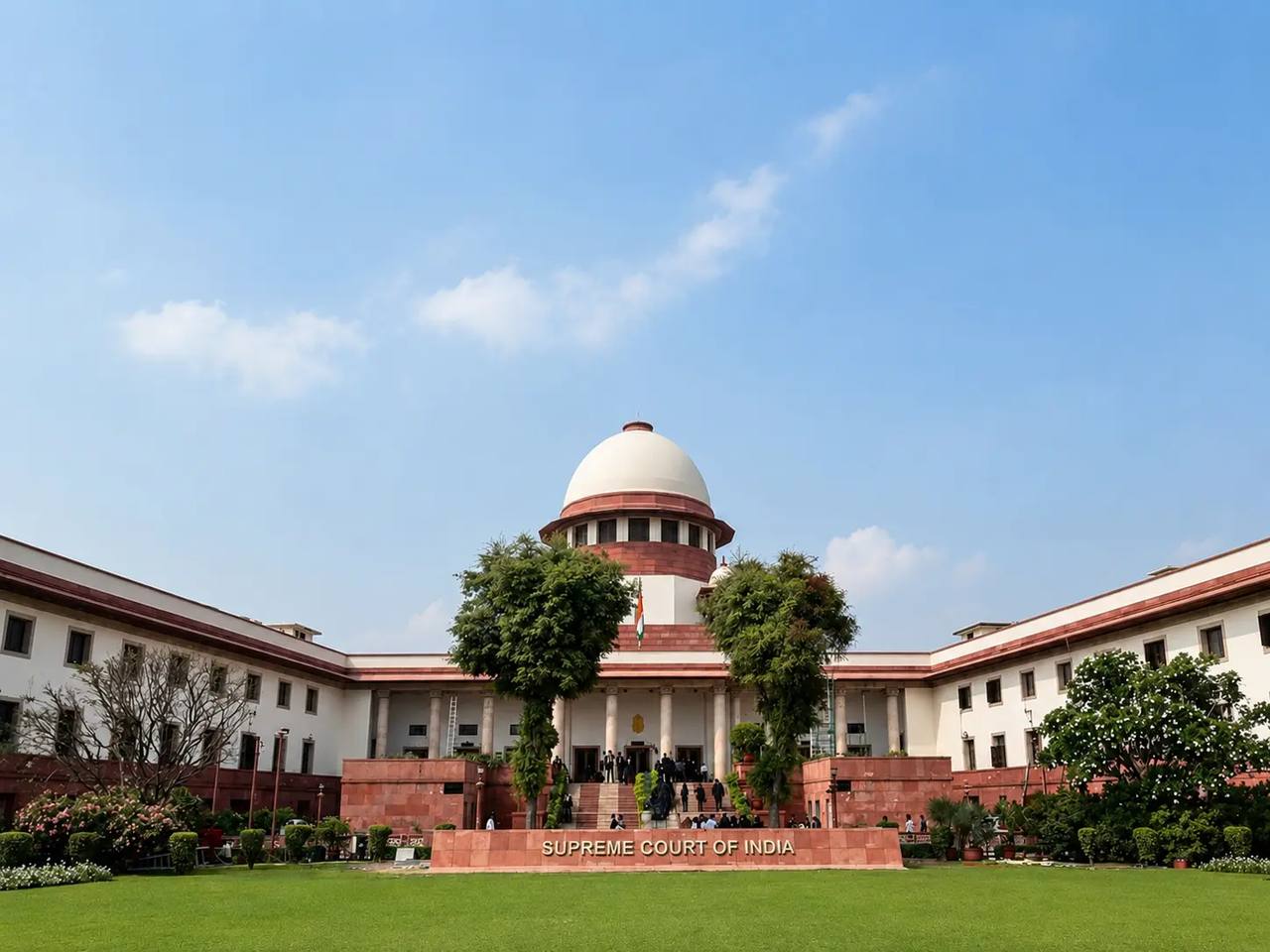
The Supreme Court has restored two criminal proceedings against a City Survey Officer in Dhule, Maharashtra, holding that no prior sanction is needed to prosecute a public servant accused of forging documents and manipulating land records. The Court said such acts have no reasonable link with the discharge of official duty, so the protection meant for bona fide official acts does not apply.
Source: Verdictum
A Bench of Justices K.V. Viswanathan and Alok Aradhe delivered the judgment on November 17, 2026, in Ashok v. Mahesh & Another (2026 INSC 1235), allowing the complainant's appeals and setting aside a Bombay High Court order that had quashed both cases.
What the case was about
The complaints concerned land in Dhule recorded in the names of the Priyadarshini Charitable Trust and the Shri Swami Samarth Cooperative Housing Society. The complainant alleged that a civil-court decree was used to change property entries through forged or altered documents, including land that was not covered by that suit, and that a fraudulent mutation entry — Mutation Entry No. 7062 — was recorded to transfer property to private individuals. The revenue authorities had cancelled that mutation entry on November 30, 2019, after finding it had no lawful basis.
Two criminal cases were filed against City Survey Officer Mahesh Fulpagare — Regular Criminal Case No. 1020 of 2023 and Regular Criminal Case No. 119 of 2024 — with charges including criminal conspiracy, cheating, forgery and using forged documents as genuine under Sections 120B, 420, 465, 466, 468, 471 and 474 of the Indian Penal Code.
The Bombay High Court, Aurangabad Bench, had quashed both proceedings by an order dated November 27, 2024. It held that the Magistrate could not have ordered an investigation under Section 156(3) of the Code of Criminal Procedure without prior sanction under Section 197, and that the sanction applications made to the land-record authorities did not amount to deemed sanction because they had not gone to the competent authority.
Forgery is not official duty, the Court held
The Supreme Court disagreed. Relying on the principles summarised in Om Prakash Yadav v. Niranjan Kumar Upadhyay (2024), the Bench held that conspiring to prepare forged documents, presenting them as genuine and manipulating land records to facilitate a fraudulent mutation cannot be treated as an act done in the discharge, or purported discharge, of official duty. For that reason, prior sanction under Section 197 of the CrPC was not required before the Magistrate could take cognizance, and the special safeguard introduced by the Maharashtra amendment to Section 156(3) did not apply either.
Source: LiveLaw
The ruling narrows a shield public servants have often invoked in land-dispute cases: an official accused of fabricating records cannot stall prosecution by insisting the government must first grant sanction. The protection under Section 197 is for genuine official acts — not for forgery.
The Court restored both criminal cases to the Chief Judicial Magistrate, Dhule, and directed that they proceed in accordance with law. It expressly clarified that its observations were confined to the question of sanction, and that the trial and other proceedings must be decided independently on their own merits — the ruling does not decide whether the allegations are ultimately proved.
Source: LawChakra
With the sanction obstacle removed, the prosecution of the land-record manipulation allegations in Dhule will now move to trial, where the evidence — including the cancelled mutation entry and the documents at the centre of the dispute — will be tested.