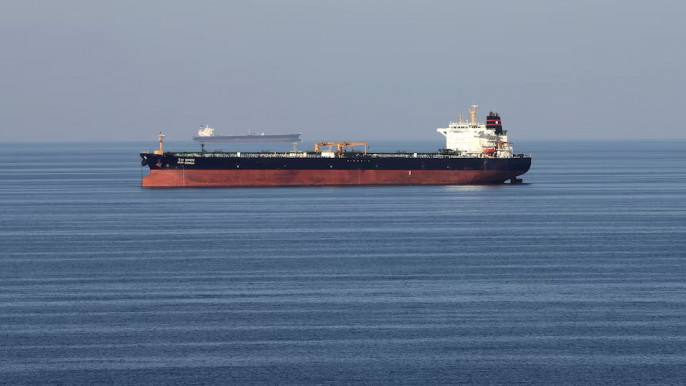
The International Energy Agency (IEA) said on Thursday that the crisis in the Strait of Hormuz has created the largest threat to energy security in history, warning in its flagship World Energy Outlook 2026 that the disruption to oil and gas flows through the vital waterway is not over — and that the energy world will never return to how it was before the Iran war.
Source: Reuters
"The Strait of Hormuz crisis has created the largest threat to energy security in history, one that dwarfs the scale of the oil shocks of the 1970s," IEA executive director Fatih Birol wrote in his foreword to the report, which was published on Thursday, November 19, as the COP31 climate talks continued in Antalya, Turkey.
Source: Bytes Europe
"In my view, the energy world will never be the same again as it was before the Iran war," Birol said in an interview alongside the release. "I don't see any credible pathway for the energy world to return to the way it was before," he added.
What the report found
The war began on February 28, 2026, when the United States and Israel struck Iran, and Tehran responded with a blockade of the strait and attacks on tankers. Before the crisis, about a fifth of the world's oil and liquefied natural gas passed through the Strait of Hormuz, the narrow waterway between Iran and Oman that is the main artery for Gulf energy exports.
For the first time, the IEA modelled a case in which the strait stays closed permanently. In that case, flows through the strait would fall from 20 million barrels a day in 2025 — 15 million barrels of crude and 5 million barrels of products, yaani 2 crore barrels a day — to 8.5 million barrels a day by 2030 and just 2 million barrels a day by 2035. The agency stressed that none of its scenarios is a forecast.
Consumers are already footing the bill. The IEA said spending on imported oil and gas will reach $1.6 trillion in 2026 — yaani 1,60,000 crore dollar — about 25 percent more than in 2025. Diesel prices have hit record levels above $200 a barrel, and benchmark Brent crude was trading around $92.76 a barrel this week, far above its level before the war.
A faster shift away from oil
Under a new Additional Response Case, the IEA said energy-security fears could speed up electrification, efficiency and fuel-switching. In that case, world oil demand in 2035 would be 4.4 million barrels a day — yaani 44 lakh barrels a day — lower than under the agency's Stated Policies Scenario, which reflects governments' current plans. Electric vehicles alone would displace more than 11 million barrels a day of oil demand.
Global oil demand would fall to 97 million barrels a day in 2035 and 85 million by 2050 under that case, compared with just over 101 million barrels a day in 2035 under stated policies. Gas demand would be more than 300 billion cubic metres lower. Electricity's share of final energy use is projected to approach 30 percent by 2035, up from about 23 percent today, and demand for cooling in buildings has exceeded demand for heating for the first time, the IEA said.
For India — one of the world's biggest oil importers — and for the lakhs of Punjabi and Indian workers living in the Gulf, the warning matters twice over: high fuel prices raise the cost of living and transport at home, while the strain on Gulf economies touches the jobs and remittances that families in Punjab depend on. The IEA said many countries are now treating electrification as an energy-security policy, choosing to build energy at home instead of importing it.
What is solid
- The IEA published its World Energy Outlook 2026 on Thursday, November 19, 2026, during COP31 in Antalya.
- Executive director Fatih Birol called the Hormuz crisis the largest threat to energy security in history, dwarfing the 1970s oil shocks.
- The IEA put cumulative Gulf losses at 2.8 billion barrels of oil and 60 billion cubic metres of gas since February.
What is only claimed
- Whether the Strait of Hormuz stays closed permanently — the IEA modelled it as a scenario, not a forecast.
- How fast oil demand falls — the faster fall depends on governments accelerating electrification, efficiency and fuel-switching.
What happens next: the COP31 talks continue in Turkey, markets watch whether shipping through the strait stays open, and mediation efforts between Tehran and Washington — led by Oman and Qatar — continue in parallel with the fighting. The IEA's message is blunt: as of November, the disruption is not over, and the longer it lasts, the deeper its effects will be.
Oil prices have stayed near $92 a barrel this week as surplus worries compete with war risk — read our earlier report on the market. Oil steady at $92.12 as surplus fears outweigh Gulf war support