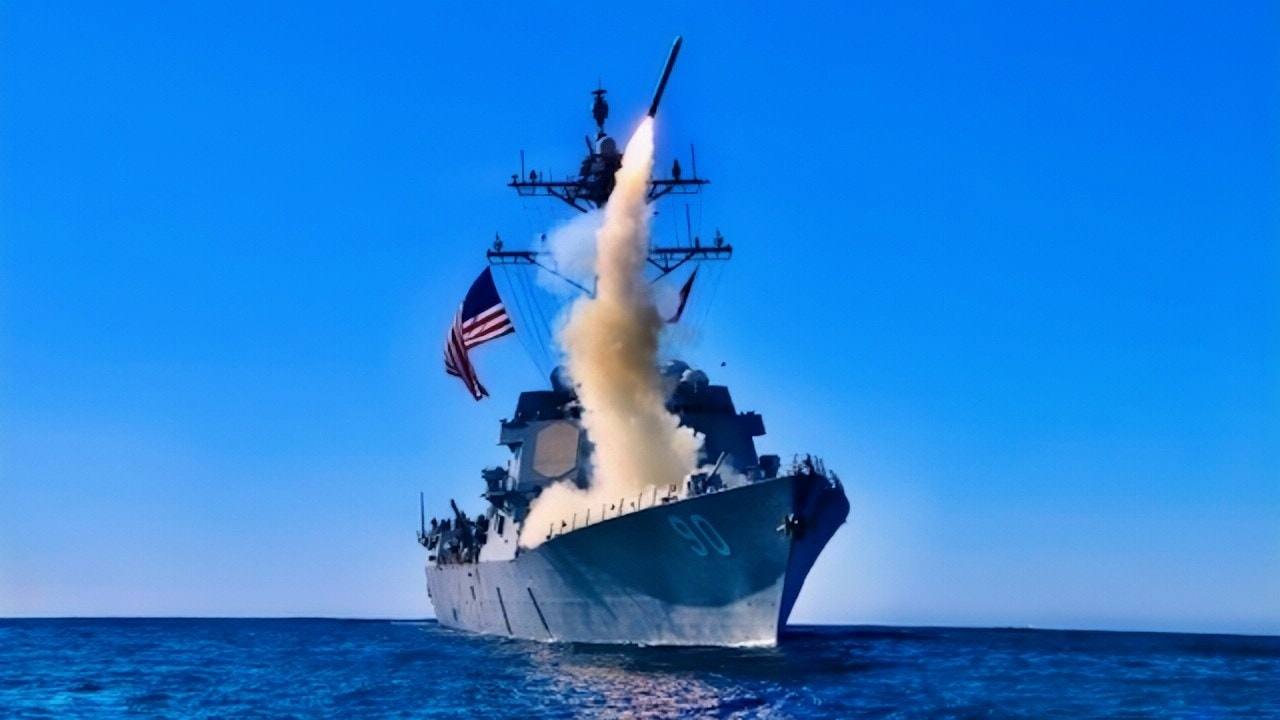
Acting Navy Secretary Hung Cao told US senators on Tuesday that the US Navy recoded and fired missiles classified as expired during the war with Iran, a rare public admission that months of fighting have strained American weapons stocks.
Source: Defense News
Cao made the disclosure during his Senate Armed Services Committee confirmation hearing on November 17, as he seeks the permanent post. "A lot of the munitions we used in Epic Fury, we were able to recode those," he said. "They were code echo, code foxtrot, which means they're expired." Operation Epic Fury is the codename for the US campaign against Iran, which began on February 28, 2026.
Codes Echo and Foxtrot refer to materiel classified as unserviceable but able to be fixed, according to the Defense Logistics Agency manual. The Wall Street Journal described the munitions as including expired Tomahawk cruise missiles used because of shortages of critical stocks. Cao did not tell senators which weapons were recoded, how many were fired, or whether all of them were cruise missiles.
A stockpile under strain
The US military fired more than 850 Tomahawk missiles in the first month of the war alone, the Washington Post reported in March. The Center for Strategic and International Studies (CSIS) later put total expenditure above 1,000 missiles by the time the campaign paused in April, from a pre-war inventory it estimated at about 3,100. CSIS analyst Marc Cancian said it would take two to three years to replace the 850 fired in the opening weeks.
Each Tomahawk costs between $2 million and $4 million, depending on the variant — yaani 20-40 lakh dollar — with the latest versions costing up to $3.6 million each, yaani 36 lakh dollar, and taking as long as two years to build. In April, the Defense Department asked Congress to approve a $3 billion government payment to replenish the Tomahawk stockpile — yaani 300 crore dollar — as part of its fiscal 2027 budget request. In August, the military awarded a $22.9 billion seven-year contract to Raytheon — yaani 2,290 crore dollar — to raise Tomahawk production to more than 1,000 missiles a year.
Cao told senators that production had climbed from about 125 Tomahawks a year when he was in uniform to "well above 60 every month" now, and that output of SM-6 naval interceptors was also being expanded. But a Pentagon inspector general report released in September found that munitions spending in the Iran war had produced "strategic inventory shortfalls and revealed industrial base bottlenecks for munitions resupply." Cao acknowledged the war was "stressing our naval resources."
Senator Elizabeth Warren told the hearing that the naval blockade of Iranian shipping costs about $32.5 million a day — yaani 3.25 crore dollar rozana — and Cao confirmed the figure. The Navy did not immediately respond to a request for comment on whether the use of expired munitions is still going on.
What happens next
Cao, a retired Navy captain and former explosive ordnance disposal officer, has served as acting secretary since April 22, 2026. He needs a congressional waiver to take the permanent job because he left active duty less than seven years ago. His testimony puts the munitions shortage — long reported by analysts — on the official record, and it comes as the war enters its tenth month with no ceasefire in force and US forces still under Iranian missile and drone attack across the Gulf.
For the lakhs of Indian and Punjabi workers in the Gulf, the strain on American weapons stocks is not an abstract problem: it shapes how long the war can run, how exposed Gulf states remain to Iranian retaliation, and whether shipping through the Strait of Hormuz and flights across the region keep facing disruption.
What is solid
- Acting Navy Secretary Hung Cao told the Senate Armed Services Committee on November 17 that the Navy recoded and fired expired munitions during the Iran war
- Codes Echo and Foxtrot mean materiel classified as unserviceable but able to be fixed, per the Defense Logistics Agency manual
- More than 850 Tomahawks were fired in the first month of the war, per the Washington Post's March reporting
- The Pentagon inspector general's September report found strategic inventory shortfalls from munitions spending in the war
- Cao confirmed the naval blockade of Iranian shipping costs about $32.5 million a day
What is only claimed
- Which weapons were recoded and how many expired Tomahawks were fired — Cao did not say, and the Navy has not confirmed a number
- Whether the use of expired munitions is still ongoing — the Navy did not answer that question