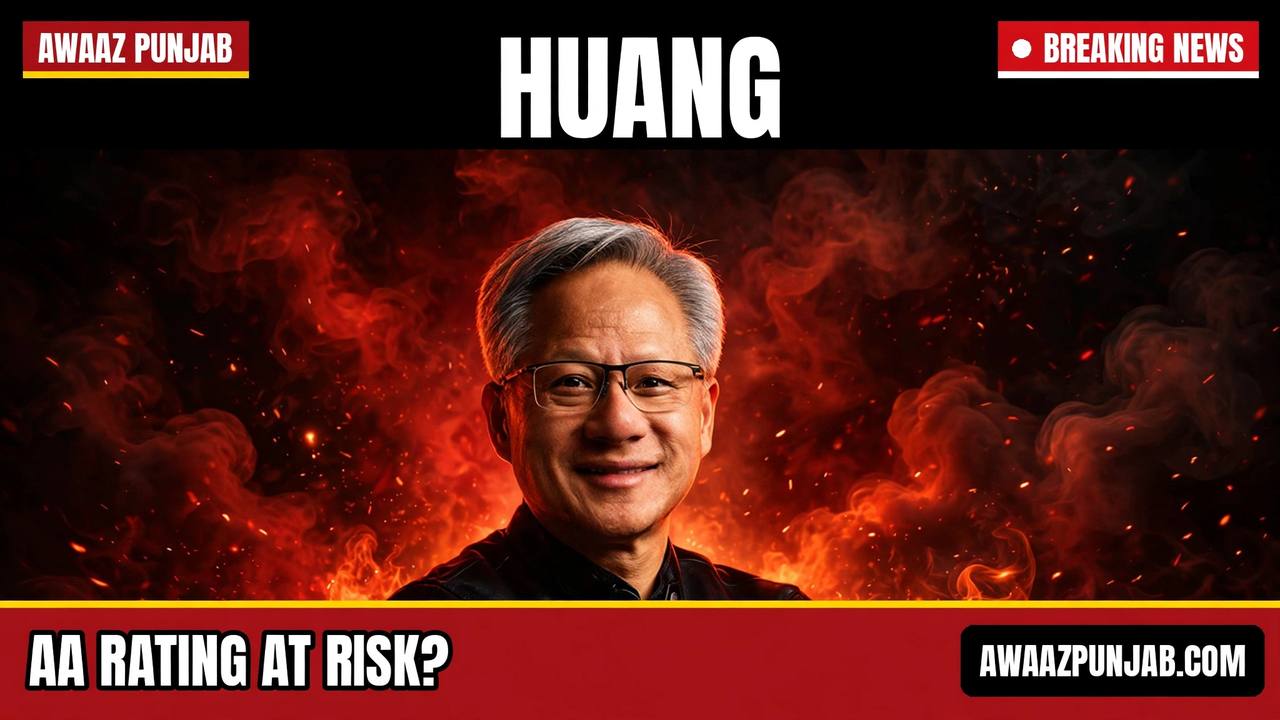
S&P Global Ratings placed Nvidia's AA credit rating on watch for a possible downgrade on Wednesday, November 25, saying the departure and subsequent reinstatement of chief executive Jensen Huang had exposed weaknesses in the chipmaker's management and board oversight. The agency put both the company's AA issuer credit rating and the AA rating on its senior unsecured debt on CreditWatch with negative implications, signalling that a downgrade is likely unless the board acts.
Source: Reuters
“We believe the long tenure of certain board members may have compromised their independence. The company's corporate governance practices may also not have kept pace with Nvidia's rapid growth and its role as a critical global technology enabler,” S&P said. The agency added that the departure and then the reinstatement of Huang “does not sufficiently answer our questions regarding board oversight of executive code of conduct.”
Source: Reuters
What S&P wants the board to fix
S&P said it was “unaware of any remedial action enacted by the board” to address what it called meaningful management and governance deficiencies, according to analyst Andrew Chang. The agency said it would meet Nvidia's board and management to discuss board independence, oversight of management and a credible succession plan. Among its concerns are the company's heavy dependence on Huang — so-called key-man risk — and questions about geopolitical risk management and internal controls tied to Nvidia's business in China. S&P also cut its management and governance modifier on Nvidia to neutral from positive, effective on Wednesday.
Source: Reuters
Eleven days that shook the boardroom
Huang, who co-founded Nvidia and has led it for more than three decades, resigned on November 12 after admitting to extramarital affairs with his direct reports and with a Chinese businesswoman, Alice Huang, whom US intelligence alleged was a spy for Beijing. Finance chief Colette Kress took over as interim chief executive. On the company's third-quarter earnings call, board chair Harvey C. Jones told investors the board did not plan to bring Huang back because his personal behaviour was inconsistent with the company's code of conduct. Nvidia's revenue had more than doubled to $115.8 billion in the quarter. Then on Monday, November 23, the board reversed course and unanimously reinstated Huang as president, chief executive and board director, saying the move was “based on US government input” and that it had consulted senior government officials and concluded he posed no national security risk. An independent board committee is still investigating the reports involving him.
Source: Reuters
Reuters reported on Wednesday that the US Justice Department did not conduct a formal investigation into Huang before President Donald Trump pushed for his return, according to three people familiar with the matter. Instead, it concluded there was no evidence he had broken any laws, based on ongoing investigations into two Nvidia clients, Super Micro and Megaspeed International, which are suspected of smuggling advanced microchips to China. That determination is subject to change as the inquiries continue.
Separately, the Wall Street Journal reported on Wednesday that US officials found no evidence that Alice Huang was directed by Beijing to spy on Jensen Huang, citing people familiar with a classified briefing. Officials from the CIA, the FBI, the Office of the Director of National Intelligence and the National Security Agency told congressional intelligence committees that she had contacted China's spy agency during the affair but that there was no indication she provided it with significant intelligence. Reuters said it could not independently verify the report, and the officials said new information could change the assessment. The Journal also reported that Kang Wei, described as Alice Huang's husband by people who know them, was an asset for China's Ministry of State Security who remained in frequent contact with the intelligence service.
Source: Reuters
Markets react — and Moody's disagrees, for now
Investors were largely unruffled by the S&P move, Reuters reported, with Nvidia shares down 38 percent since October 6. The stock closed down nearly 4 percent on Wednesday, retracing some declines after the Nasdaq 100 index briefly flirted with a 20 percent fall from its recent high. The cost of insuring Nvidia's debt has jumped sharply in recent weeks; the five-year credit default swap spread rose to an intraday record of 147.27 basis points on Wednesday, according to ICE Data Services, though Reuters noted the spread was little changed by the close.
Moody's took a different view on Wednesday, saying that bringing Huang back eases near-term uncertainty around Nvidia's business execution and removes the execution risk of appointing a new leader. It left Nvidia's Aa1 rating and stable outlook unchanged, while adding that governance and regulatory uncertainty persists.
Nvidia has played a central role in financing the artificial-intelligence boom, bankrolling AI start-ups, cloud firms and data-centre projects, which in turn spend much of that capital on Nvidia's own graphics processors and other AI chips. Analysts say those complex financing arrangements have increased the company's exposure to a downturn — one reason the governance questions now carry weight beyond the boardroom. Vice-President J.D. Vance played down suggestions on Wednesday that Huang might need a presidential pardon, as scrutiny of the affair continues in Washington.
Source: Associated Press
On Monday, November 23, Nvidia's board unanimously reinstated Jensen Huang as president and chief executive, eleven days after he resigned. Read our full report on the reinstatement. Read the reinstatement story
What happens next
S&P said its review would conclude within three months, and it expects any downgrade to be limited to one notch unless investigations or other disclosures harm Nvidia's reputation or future business prospects. The agency will sit down with the board and management to hear their plans for board independence, oversight and succession. The independent board committee's investigation continues, and the Justice Department's inquiries into Super Micro and Megaspeed International — and whether advanced chips reached China — remain open.
What is solid
- S&P placed Nvidia's AA issuer and senior unsecured debt ratings on CreditWatch with negative implications on November 25, 2026.
- S&P said it could downgrade Nvidia by one notch, to AA-, within 90 days.
- Nvidia's board unanimously reinstated Jensen Huang on November 23, eleven days after he resigned.
- Moody's kept Nvidia's Aa1 rating and stable outlook unchanged.
What is only claimed
- Whether Huang poses a national-security risk: the board says it consulted senior US officials and concluded he does not; the Justice Department conducted no formal investigation into him before his return.
- Whether Alice Huang spied for Beijing: US intelligence alleged she was a spy; the Wall Street Journal reported US officials found no evidence she was directed by Beijing, a report Reuters could not independently verify.