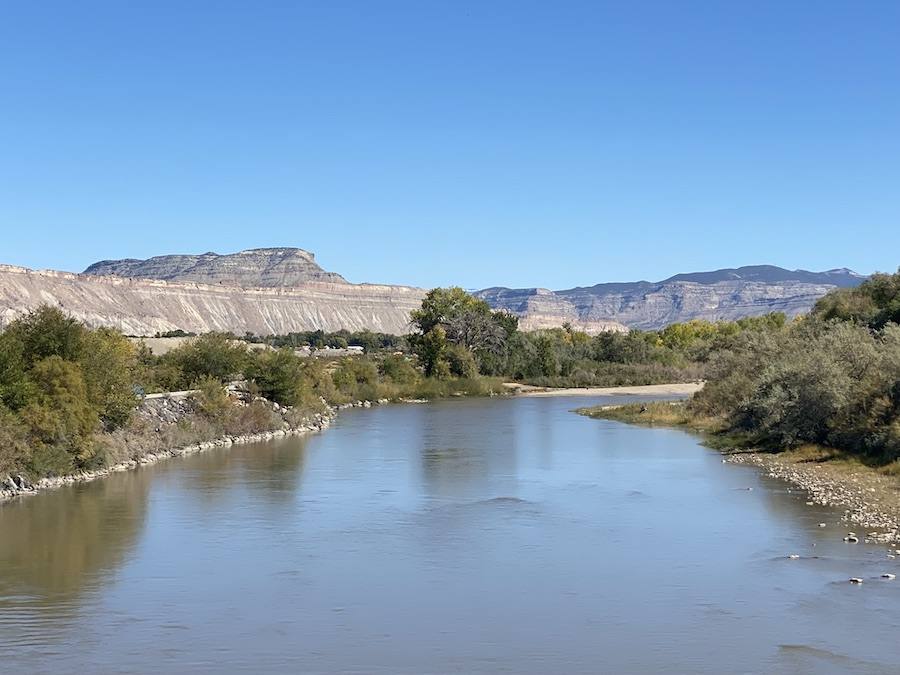
The City of Grand Junction, Colorado, begins clearing homeless encampments along the Colorado River on Monday, November 16, with cleanup work starting along the Riverfront Trail and Watson Island after final notices were delivered to people living in the camps last week.
Source: 99.9 KEKB (Townsquare Media)
Grand Junction Police Department spokesperson Kelly Clingman said the initial notices were issued about two weeks ago, with final notices delivered on November 11 — the date by which people occupying the spaces were told to move their belongings. In recent days, people near Las Colonias Park have been removing bicycles, blankets, tents, stoves and other belongings, with volunteers helping them move, KEKB reported.
The cleanup covers city-owned riverfront land along the Riverfront Trail — the paved path that follows the Colorado River through the city — and Watson Island, a river island area that has repeatedly hosted camps. No count of how many people were living in the camps being cleared has been published in the reports.
Why the city is doing this
City officials give three reasons: preventing hazardous conditions from accumulating, protecting the river corridor, and protecting people in the area. Much of the river corridor sits within the floodplain, so debris left behind in camps could wash into the Colorado River during spring runoff. Some camps include propane tanks and other wildfire hazards, KEKB reported, while others sit in places that are difficult for emergency crews to reach.
The cost and debris figures come from city figures presented to the Grand Junction City Council in May 2026: nearly $460,000 spent cleaning up encampments along the river corridor since 2022, removing an estimated 119 tons of debris. The Business Times, reporting on the council's May workshops, put the same figures at roughly $460,000 spent between 2022 and 2025 — and added that more than $62 million in subsidized housing and homelessness-related investment has gone into Grand Junction since 2022 through city funding and partner investment combined.
A cleanup effort that goes back to 2011
Grand Junction Police Chief Matt Smith told the council in May that the city's encampment-response work began in 2011, after outreach teams identified growing public-safety, public-health, environmental and wildfire concerns along the rivers. The city first tried smaller cleanups with its own crews, then moved to specialised contractors able to handle hazardous waste — needles, propane tanks and mattresses are among the items commonly found in camps. Some sites, Smith said, have been cleaned up five or six times over the years.
Smith also described the order the city says it follows: outreach first, conversations with the people living in a camp, referrals to service providers, notice before any cleanup, and a chance for people to remove their own belongings before crews arrive. Depending on the location, he said, camps have historically been given anywhere from several days to nearly a month of notice. The department's stated strategy has focused on voluntary compliance rather than arrests or citations.
The rule change behind this week's cleanup
This week's clearing follows a 5-2 City Council vote on June 3 to amend the city's camping ordinance — Ordinance No. 4833 — removing language that had prevented enforcement of the public camping ban when no overnight shelter beds were available. The amendment took effect 30 days after adoption. The council acted after the U.S. Supreme Court's 2024 decision in City of Grants Pass v. Johnson, and after Grand Junction's shelter capacity shrank: HomewardBound's North Avenue shelter was consolidated into the Pathways shelter on 29 Road, reducing the number of emergency beds in the city.
Cleanup crews begin work on Monday, November 16 along the Riverfront Trail and Watson Island. People who use the trail — walkers, cyclists and families visiting Las Colonias Park — should expect work areas, removed debris and displaced belongings being collected near the river this week, while the people who were living in the camps move on with help from volunteers.
What happens next
The reports do not give a finishing date for this week's cleanup, and the city's own history suggests the work is unlikely to be one-and-done: sites along the Colorado and Gunnison river corridors have been cleared repeatedly since 2011. The questions the council debated in May remain open — where the people cleared from the riverfront go next, and whether shelter space at the consolidated Pathways facility is enough — as enforcement under the amended camping ordinance now proceeds without the old shelter-availability condition.