Federal judges in Jacksonville, Florida, granted at least 47 habeas corpus petitions from immigration detainees in just three weeks, ordering the government in most cases to give each person an individualized bond hearing within seven days or release them, according to a review of the court's public orders published on November 13 by First Coast Ledger.
Source: First Coast Ledger
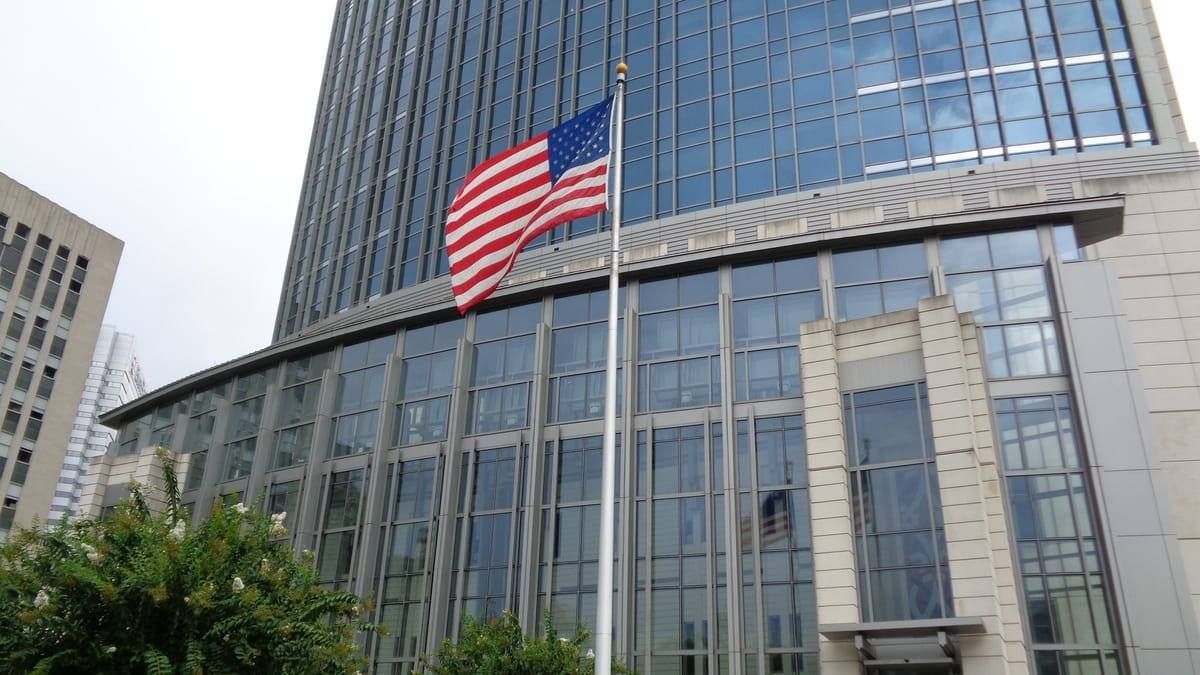
The orders came from the Jacksonville Division of the U.S. District Court for the Middle District of Florida, sitting at the Bryan Simpson United States Courthouse in Jacksonville. First Coast Ledger reviewed the court's public list of opinions and orders issued from October 23 through November 12 and counted at least 47 grants in that three-week span — a pace the newspaper described as extraordinary for a single division.
The detainee transferred to Texas — and ordered released within a day
The case that opens the Ledger's account is that of Victoriia Tsarionova, a citizen of Russia who entered the United States on July 3, 2022. Immigration and Customs Enforcement detained her on September 29 and held her at the Flagler County Jail. She petitioned for a writ of habeas corpus, asking whether the government could keep her locked up without a chance to seek release on bond.
In their response, federal lawyers told Chief Judge Marcia Morales Howard they were detaining Tsarionova under 8 U.S.C. § 1226(a), a statute that generally allows an immigration judge to consider bond, and they conceded that under a 2026 decision of the U.S. Court of Appeals for the Eleventh Circuit the court should grant her request for an individualized bond hearing. Then, while the petition was still pending, ICE transferred her to a detention facility in Texas.
Texas sits in the Fifth Circuit, which has held that people in Tsarionova's position are not entitled to those hearings, in Buenrostro-Mendez v. Bondi, 166 F.4th 494 (5th Cir. 2026). Howard wrote that she was 'not confident she would receive the individualized bond hearing to which Respondents concede she is entitled,' found release 'the most appropriate remedy,' and on October 27 ordered the government to release Tsarionova within 24 hours and to tell her lawyer when and where to collect her. Flagler County Sheriff Rick Staly, who oversees the jail, is named as a respondent in the case.
A Cuban petitioner held more than eight months
The next day, Judge Jordan Emery Pratt granted a petition filed by Ricardo Eire, a Cuban citizen who entered the United States in 1971. An immigration judge had ordered Eire removed in 2015, and ICE later placed him on supervision. The agency re-detained him on February 11, 2026. In court, the government opposed release, saying 'ICE intends to remove Petitioner to Mexico' and that Eire had impeded that plan by refusing to sign two documents.
Pratt found the government had not shown a significant likelihood of removing Eire in the reasonably foreseeable future — the standard the Supreme Court set in Zadvydas v. Davis for prolonged detention after a removal order. By then Eire had been in ICE custody for more than eight months, past the six-month period the Court treated as presumptively reasonable. Pratt ordered him released within 24 hours, subject to supervision.
Where the detainees are held
Most of the Jacksonville cases involve people held at ICE detention sites in Baker County, often identified on the docket as the North Florida Detention Facility. At least five involve the Flagler County Jail. Judges in the court's Fort Myers Division have been issuing similar orders for people held at the Glades County Detention Center: a review of the same public docket for the same three-week window found about 20 such grants there, most of them signed by Judge Kyle C. Dudek.
The legal fight: § 1225 versus § 1226
The legal fight is over which part of federal immigration law applies when the government detains someone who is already in the country. One provision, § 1225, is the rule for many people arriving at the border and seeking admission; under the government's reading, it can require detention without a bond hearing. Another provision, § 1226(a), covers many people already inside the United States who are in removal proceedings, and generally allows an immigration judge to decide whether the person can be released on bond while the case goes forward.
For years, the second rule was the usual one for people arrested in the interior. In Hernandez Alvarez v. Warden, Federal Detention Center Miami, decided May 6, 2026, the Eleventh Circuit said that 'for nearly thirty years, the answer to that question was, for most aliens, "yes."' Then, the court wrote, the Department of Homeland Security 'took a different view' and 'now maintains that these aliens must be detained without bond under 8 U.S.C. § 1225(b)(2)(A).' The government argued that people present in the United States without having been lawfully admitted are 'applicants for admission' and can be held without bond. The Eleventh Circuit rejected that reading; the Jacksonville orders quote the decision as concluding that '§ 1225 applies to arriving aliens seeking entry at the border, whereas § 1226 applies to aliens unlawfully in the interior.' Judge Barbara Lagoa dissented. The appeals court did not decide whether any particular person was a flight risk or a danger — only that the no-bond statute did not apply.
Howard has applied that reasoning even when someone was once stopped at the border, paroled into the country, and re-detained years later. In a November 12 order, she found that Jonathan Mompoint, a Haitian citizen paroled into the United States in 2017, arrested by local law enforcement in September and transferred to ICE a week later, 'was not seeking entry at the border when he was re-detained.' She gave the government seven days to hold a bond hearing or release him; he was not entitled to immediate release, she wrote.
Howard, a Jacksonville native, was appointed by President George W. Bush and became chief judge on November 3, 2024. Berger was appointed by President Donald Trump and commissioned on July 29, 2019. Pratt, the court's newest Jacksonville district judge, was also appointed by Trump and commissioned on November 3, 2025. In case after case, the Ledger found, they reached the same bottom line: a hearing, or release.
What the orders do — and do not — mean
The orders do not mean the petitioners will remain in the United States. A bond hearing is a chance to ask for release while a case proceeds, not a grant of legal status or a bar to deportation. For Punjabi and other immigrant families in Florida with a relative held at Baker County or Flagler County, the practical meaning is narrower and immediate: a detained person in the Middle District of Florida can ask a federal judge for the individualized bond hearing that ICE's current detention position would deny, and Jacksonville judges have been granting those requests at a rate of more than two a day.
ICE and the Department of Homeland Security did not comment for the Ledger's article; the newspaper noted it did not contact the agencies and that the government positions described are the ones already on file in the court records. What happens next in each case is set by the orders themselves: within seven days in most of them, the government must hold the bond hearing or let the person go, while the underlying removal cases continue.