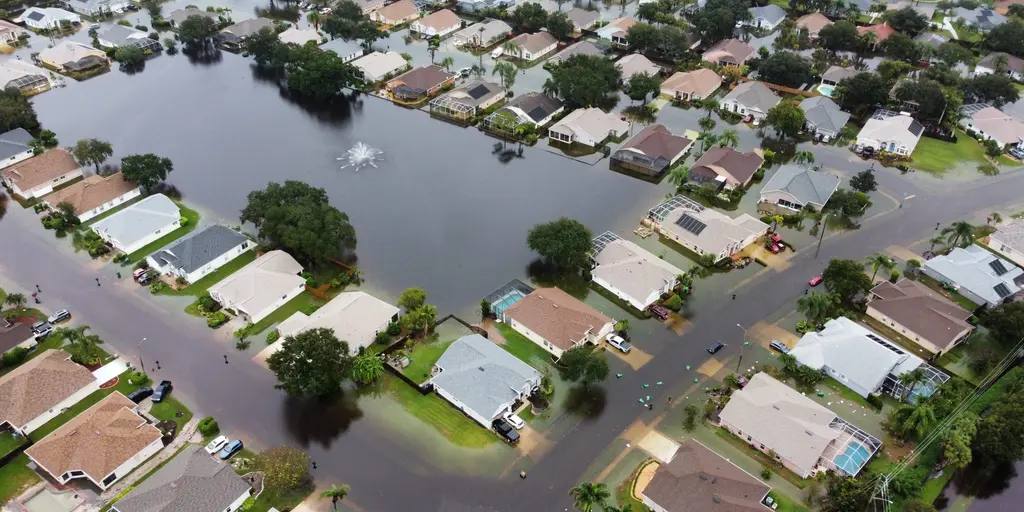
The Federal Emergency Management Agency announced on Friday, November 27, that President Donald Trump has approved a second major disaster declaration for Florida, opening federal aid to people hit by the second round of historic flooding that began on November 16. The new declaration, FEMA disaster DR-4957-FL, is dated November 26, 2026, and it makes individual assistance available to homeowners and renters in Brevard and Broward counties for the first time for this storm.
Source: FEMA
This is the second federal declaration for Florida's November flooding. The first, approved on November 24, covered the earlier round of storms that began on October 31. Read the earlier story
What the second declaration covers
Under DR-4957, individual assistance is limited to Brevard and Broward counties. According to FEMA, the aid can include grants for temporary housing and home repairs, low-cost loans to cover uninsured property losses, and other programs to help individuals and families recover from the effects of the disaster.
Source: FEMA
Federal funding is also available to state, tribal and eligible local governments and certain private nonprofit organizations on a cost-sharing basis for emergency protective measures, limited to direct federal assistance, in eight counties: Brevard, Broward, Flagler, Indian River, Orange, Putnam, Seminole and Volusia. FEMA named Brett H. Howard as the Federal Coordinating Officer for federal recovery operations in the affected areas, and said additional designations may be made later if damage assessments warrant it.
Source: FEMA
Two floods in three weeks on the Space Coast
Brevard County has taken the worst of both storms. WESH reported that parts of the county received more than 28 inches of rain in a week during the second round, after up to 20 inches fell about two weeks earlier. The second round of flooding hit central and northern Brevard from November 17 to 20, reaching Cocoa, Rockledge, Merritt Island, Cocoa Beach, Cape Canaveral, the beachside towns and Titusville.
Source: WESH via The Florida Press
The St. Johns River near Cocoa passed its 1953 record on Thursday, peaked near 18.77 feet, and stood at 18.17 feet early on Saturday, November 28 — still more than two feet above flood stage. Cocoa-area neighbourhoods near the river remained underwater through Thanksgiving week, more than a week after the second storm, and the county listed flooding around Lake View Boulevard, Catalina Drive, Pine Hill Street, Johnson Boulevard, Cartee Street, Stratford Drive and Lake Poinsett. Walmart stores in Cocoa, Titusville and Melbourne planned to hand out water to residents.
Source: WESH via The Florida Press
How the two declarations fit together
The first declaration, DR-4956, was signed on Tuesday, November 24, for the severe storms and flooding that began on October 31. It makes individual assistance available in six counties: Brevard, Indian River, Martin, Okeechobee, Palm Beach and St. Lucie. Florida first asked for that declaration on November 9, and Governor Ron DeSantis had declared a state of emergency for Brevard on November 2, later widening it to 21 counties. On Tuesday, November 24, DeSantis directed the state to file an expedited request for the second declaration covering eight counties.
Source: WFTV
Taken together, the two orders open some form of federal aid in 13 Florida counties. Brevard and Indian River appear in both declarations, and Brevard is the only county with individual assistance under both — a measure of how hard the Space Coast was hit by back-to-back storms this month. Seminole County alone reported at least 495 homes damaged in the second round of flooding.
Source: WFTV
How residents can apply
FEMA asks residents to file a claim with their own insurance company first, then apply for federal assistance online at DisasterAssistance.gov, by calling 1-800-621-3362, or by using the FEMA App. Residents should apply under the declaration that matches when their damage happened: October 31 or later for the first declaration, and November 16 or later for the second. Damage assessments are continuing, and FEMA says additional counties may be added if the assessments warrant it.
Source: FEMA
If you were flooded: file your insurance claim first, then apply for federal help at DisasterAssistance.gov or by calling 1-800-621-3362. Apply under the declaration that matches when your damage happened.
Florida's November flooding has now produced two separate federal disaster declarations in one week, and the recovery will stretch well beyond Thanksgiving. With the St. Johns River still above flood stage and neighbourhoods in Cocoa still underwater, the second declaration means thousands more households — in Broward County for the first time — can now seek federal help to repair homes, replace what was lost, and get back on their feet.