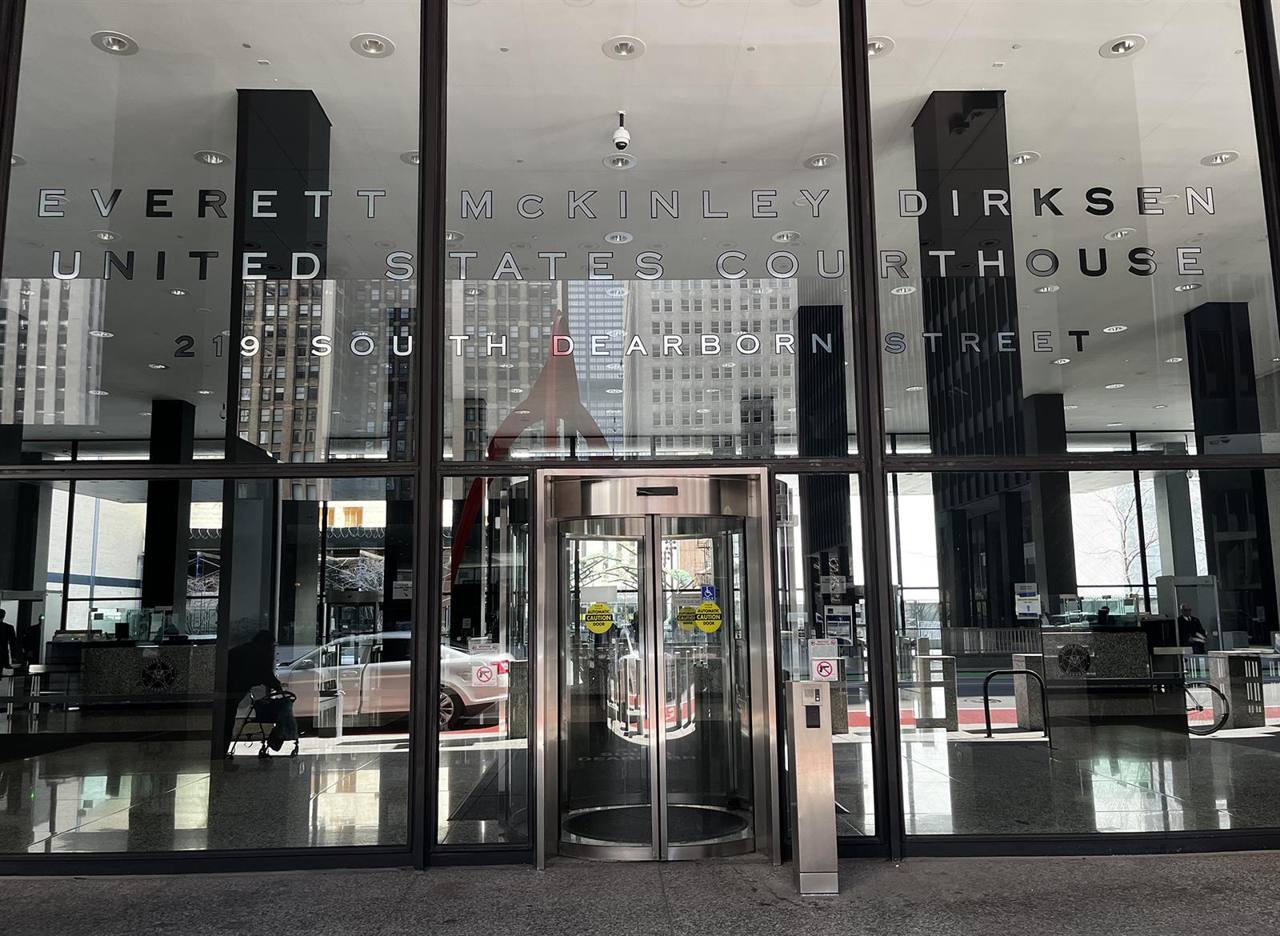
CHICAGO — The federal judge investigating the collapse of the "Broadview Six" immigration-protest prosecution refused on Monday to let the Justice Department narrow her inquiry, rejecting a bid filed late Sunday to limit the questions she can put to the government's own lawyers and turning aside blanket claims of privilege ahead of a rare December 2 hearing at which Chicago's top federal prosecutor has been ordered to testify under oath.
Source: The Washington Sun
At a 20-minute status hearing at the Dirksen United States Courthouse, U.S. District Judge April Perry also heard that three of the four prosecutors she has ordered onto the witness stand — Assistant U.S. Attorneys William Hogan, Matthew Skiba and Andres Almendarez — will not invoke their Fifth Amendment right against self-incrimination. Attorneys for the three told the judge their clients do not plan to assert any privileges; Shelly Kulwin, an attorney for Hogan, said his client "doesn't intend to assert any privileges." Whether the fourth witness, U.S. Attorney Andrew Boutros, will follow suit remains unclear.
Source: Focal News
Perry also pushed back on the department's broad assertions of privilege, telling the government that privilege must be raised question by question rather than claimed in advance for whole categories of testimony. The December 2 evidentiary hearing, at which Boutros and the three assistant prosecutors must answer for their handling of the case, remains on track and could end in sanctions or even a finding of criminal contempt — an extraordinary outcome for sitting federal prosecutors.
Source: Bloomberg Law
What happened in court on Monday
The hearing drew Associate Attorney General Stanley Woodward, the Justice Department's third-highest-ranking official, to the Chicago courtroom in person — a measure of how seriously Washington is treating the inquiry. In a motion filed late Sunday, Woodward said the four prosecutors have been "instructed" to assert legal privileges, argued there is "plainly no need for anyone but the U.S. attorney to provide information," suggested Perry leave the matter to the executive branch, and raised the possibility of seeking relief from the 7th U.S. Circuit Court of Appeals.
Perry assured the lawyers she would not ask questions "that would call for a privileged answer," while noting the prosecutors might themselves want to offer explanations that cross that line. She gave the witnesses until Friday to submit a written version of any such testimony for her review, and set a November 25 deadline for the Justice Department to explain why privilege should prevent the testimony from going forward. When Woodward objected to privileged material reaching her before the hearing — saying the department "may have an issue" with the judge "wearing dual hats" — Perry replied that it is not unusual for a judge to disregard inadmissible evidence that has come before her. The judge has said she particularly wants to explore two comments by prosecutors that she now believes were inaccurate.
How the case reached this point
The case began in September 2025, when federal prosecutors charged six protesters with conspiring to obstruct a federal officer during demonstrations outside the U.S. Immigration and Customs Enforcement processing facility in Broadview, a Chicago suburb that became the focal point of Operation Midway Blitz, the administration's immigration enforcement surge in the Chicago area. The prosecution, United States v. Rabbitt (No. 1:25-cr-00693), was the highest-profile of roughly 30 protester prosecutions brought during the operation; many of those charges have since been dropped or dismissed.
The Broadview Six case itself fell apart in May, when Boutros dropped all charges as grand jury transcripts and other materials raised questions about the government's conduct. On November 2, Perry ordered Boutros and the three prosecutors to testify, saying her "sole focus, at this point, is on lack of candor, concealment of material facts, or other misconduct that occurred before me." Monday's hearing was originally to have been the testimony day; under a November 12 minute entry, made at the request of the witnesses' lawyers and with the Justice Department's consent, the testimony moved to December 2 at 9 a.m. in Courtroom 1725, leaving Monday as a status hearing.
The inquiry is running alongside a separate lawsuit filed November 2 by Douglas DePodesta, the former head of the FBI's Chicago field office, who alleges he was forced out after being wrongly blamed for the prosecution's failure — a case Awaaz Punjab reported earlier this month. Five of the six former defendants are also seeking attorneys' fees under the Hyde Amendment, the 1997 law that lets acquitted or exonerated defendants recover costs when a prosecution was vexatious or brought in bad faith; Magistrate Judge Heather McShain has set a settlement conference for December 7, with position papers due December 1, the day before the testimony.
The Justice Department must file its written privilege justification by November 25, and the witnesses' written testimony is due Friday. On December 2, Boutros, Hogan, Skiba and Almendarez testify in open court. The hearing could produce sanctions or a criminal-contempt finding, and the former defendants have asked Perry to appoint a special counsel to investigate possible misconduct.
For immigrant communities in the Chicago area — including the region's Punjabi diaspora, for whom the Broadview facility and the Midway Blitz raids have been a daily concern — the proceedings are a rare public accounting of how the protest prosecutions were built. Some of the former defendants watched Monday's hearing from the courtroom gallery. The Dec. 2 hearing is in open court and the docket is public.