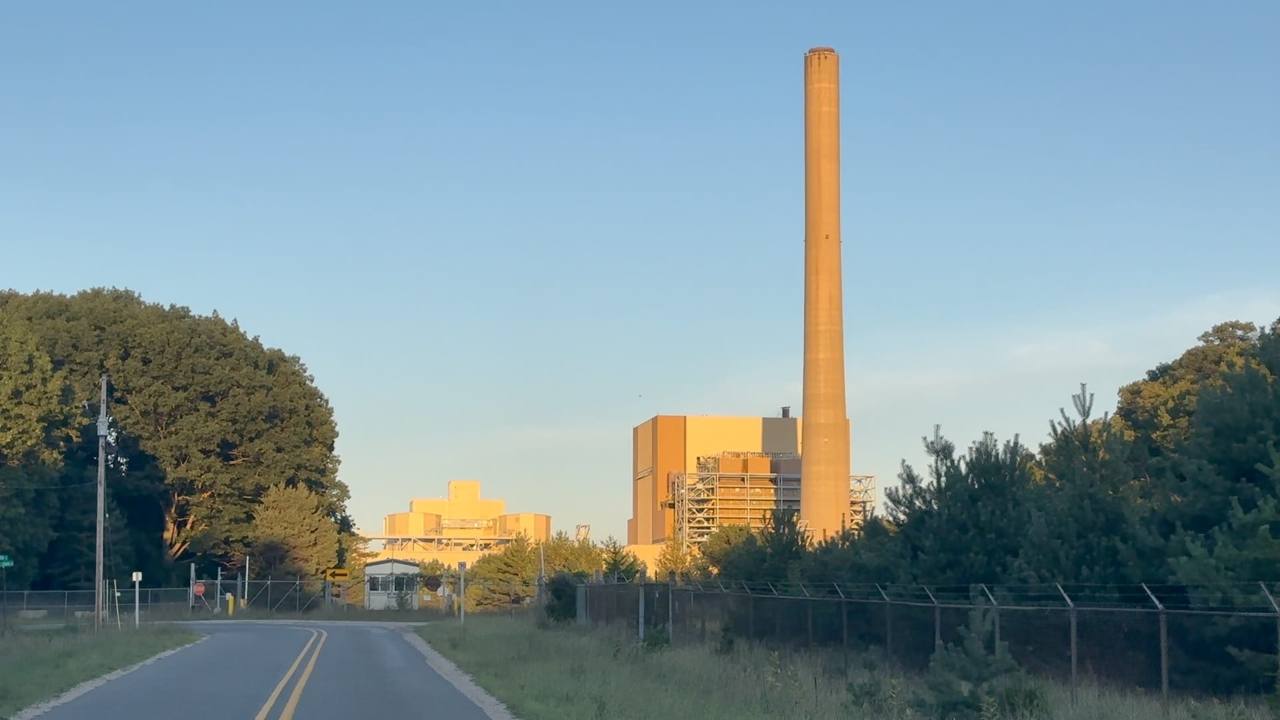
The J.H. Campbell coal-fired power plant on the Lake Michigan shoreline will keep running through the winter after the U.S. Department of Energy issued a seventh consecutive 90-day emergency order for the plant — and Michigan's attorney general has already announced she will challenge this order too. The new order was issued late on Friday, November 13, took effect on Sunday, November 15, and runs through February 12, 2027, directing the regional grid operator and the plant's owner to keep the facility available to generate power for emergency grid needs.
Source: Michigan Attorney General
This is a follow-up development in a fight this site has been tracking: the previous federal order for Campbell was set to expire on November 14, and readers were waiting to see whether Washington would let the plant finally close or extend its life again. The Department of Energy chose another extension — its seventh — even though a federal appeals court ruled in September that the department's first order in this series was unlawful.
What the seventh order actually does
The order was issued under Section 202(c) of the Federal Power Act, the emergency provision the Energy Department has used for every order in this series. It directs the Midcontinent Independent System Operator, known as MISO, working with Consumers Energy, to maintain the operational readiness of the 1,420-megawatt Campbell plant in West Olive, in Port Sheldon Township, Ottawa County, while using economic dispatch — running the plant in the cheapest workable way — to limit costs for ratepayers, according to Planet Detroit's reporting on the order.
Source: Planet Detroit / Ottawa News Network
U.S. Energy Secretary Chris Wright said in the latest order that keeping dispatchable coal generation active remains necessary to prevent winter blackouts across the region. 'President Trump and the Energy Department remain committed to doing everything in our power to stop power outages for American families and businesses,' Wright said, adding that keeping plants such as Campbell available 'has prevented blackouts and likely saved lives.' The department pointed to a joint Federal Energy Regulatory Commission and North American Electric Reliability Corporation report on the Winter 2026 Arctic cold period, including Winter Storm Fern, during which MISO declared energy emergency alerts and Campbell generated more than 201,000 megawatt-hours of electricity.
A plant that was supposed to close in May 2025
Campbell has operated on the Lake Michigan shoreline since 1962 and is now 64 years old. Under a 2022 state-approved clean-energy transition plan, it was scheduled to burn its final ton of coal on May 31, 2025 — roughly 15 years before the end of its scheduled design life. The Attorney General's office says the retirement, and the replacement power resources procured to cover it, were expected to save Michigan ratepayers nearly $600 million. Federal officials intervened just eight days before the decommissioning date in May 2025 with the first of the 90-day mandates, and the plant has been kept available ever since.
Consumers Energy, which did not request the emergency orders, says it has added 1,200 megawatts of generating capacity elsewhere in West Michigan to offset the planned retirement. The utility confirmed it will keep complying with the federal mandate. 'Consumers Energy will continue to follow the law and operate our Campbell plant in West Michigan, complying with the seventh 90-day emergency order from the U.S. Department of Energy,' the utility said in a statement reported by WZZM-13 on November 14, adding that it will work 'to ensure that everyone who benefits from power from the Campbell plant across the Midwest pays their fair share.'
The court ruling Washington is working around
On September 11, 2026, a unanimous panel of the U.S. Court of Appeals for the District of Columbia Circuit vacated the Energy Department's first Campbell order, ruling that the department had overstepped its statutory authority under Section 202(c). Writing for the court, Circuit Judge Cornelia Pillard held that the emergency power applies only when the agency identifies a risk of substantial harm from inadequate electricity supply that calls for immediate action by the department in particular, rather than long-term resource-adequacy concerns managed through state and regional planning. The court warned that the department's reading 'would empower it to pick its preferred power sources in Michigan — or, presumably, any other state — and order them to operate.'
The Energy Department has not accepted that outcome. In its November 13 order it noted that it has petitioned the D.C. Circuit for a rehearing before the full court, and it continues to invoke its emergency authority while that request is pending. The November order is the first issued since the September ruling.
Nessel: 'Here we go, again'
Michigan Attorney General Dana Nessel announced on Tuesday, November 17, that her office intends to file another request for rehearing with the Department of Energy challenging the seventh order, which she called arbitrary and unlawful. 'Here we go, again,' Nessel said. 'In September, a federal court ruled DOE's first Campbell plant order was entirely illegal, and this seventh order makes no further effort to comply with the law.' She said Consumers Energy has indicated the ongoing Campbell operations have cost more than $300 million to date, 'and they're actively working to pass these costs onto customers across the state and region.'
Source: Michigan Attorney General
Nessel's office says it has already filed six requests for rehearing with the department and six petitions for review with the D.C. Circuit in this dispute, arguing the department has not demonstrated an actual emergency. Separately, she is litigating before the Federal Energy Regulatory Commission to prevent the costs of running Campbell from being passed through to ratepayers on MISO's grid, arguing that if the underlying orders are unlawful, recovering their costs from customers would be unlawful too. Her office has also challenged similar federal orders targeting coal plants in Indiana, seeking to protect Michiganders from those costs as well.
Because Campbell operates under a federal mandate rather than normal market economics, its extra running costs are not carried by West Michigan alone. Planet Detroit reports the added costs — estimated at $259 million to $295 million as of September 2026, at roughly $640,000 to $1 million a day — are shared by electricity customers across MISO's 15-state Midwest grid, and Consumers Energy is seeking regional cost recovery for more than $300 million spent since May 2025.
What it means for households, and what happens next
For families in West Michigan — including the Punjabi diaspora households and trucking families settled across Michigan — the immediate effect is not a blackout warning but a bill question: how much of Campbell's extended running cost lands on monthly electricity bills across the Midwest, and whether the courts eventually block that pass-through. Supporters of the orders, including Secretary Wright, argue the plant is insurance against winter outages; opponents, including the Attorney General, environmental groups and many Ottawa County residents who have rallied outside the plant, argue Michigan had already planned reliable, cheaper replacement power and that continued coal burning adds air and water pollution along the Lake Michigan shoreline.
Three tracks now decide what happens next. First, Nessel's promised rehearing request to the Energy Department, the step her office has taken after each previous order before going to court. Second, the department's own petition for a full-court rehearing of the September ruling in the D.C. Circuit. Third, the calendar: the seventh order expires on February 12, 2027, and unless the legal fight ends the series first, Washington will face the same extend-or-close decision again in mid-February. Once the federal mandates do expire and decommissioning formally begins, Consumers Energy expects remediation and restoration of the Port Sheldon Township site to take roughly five years.