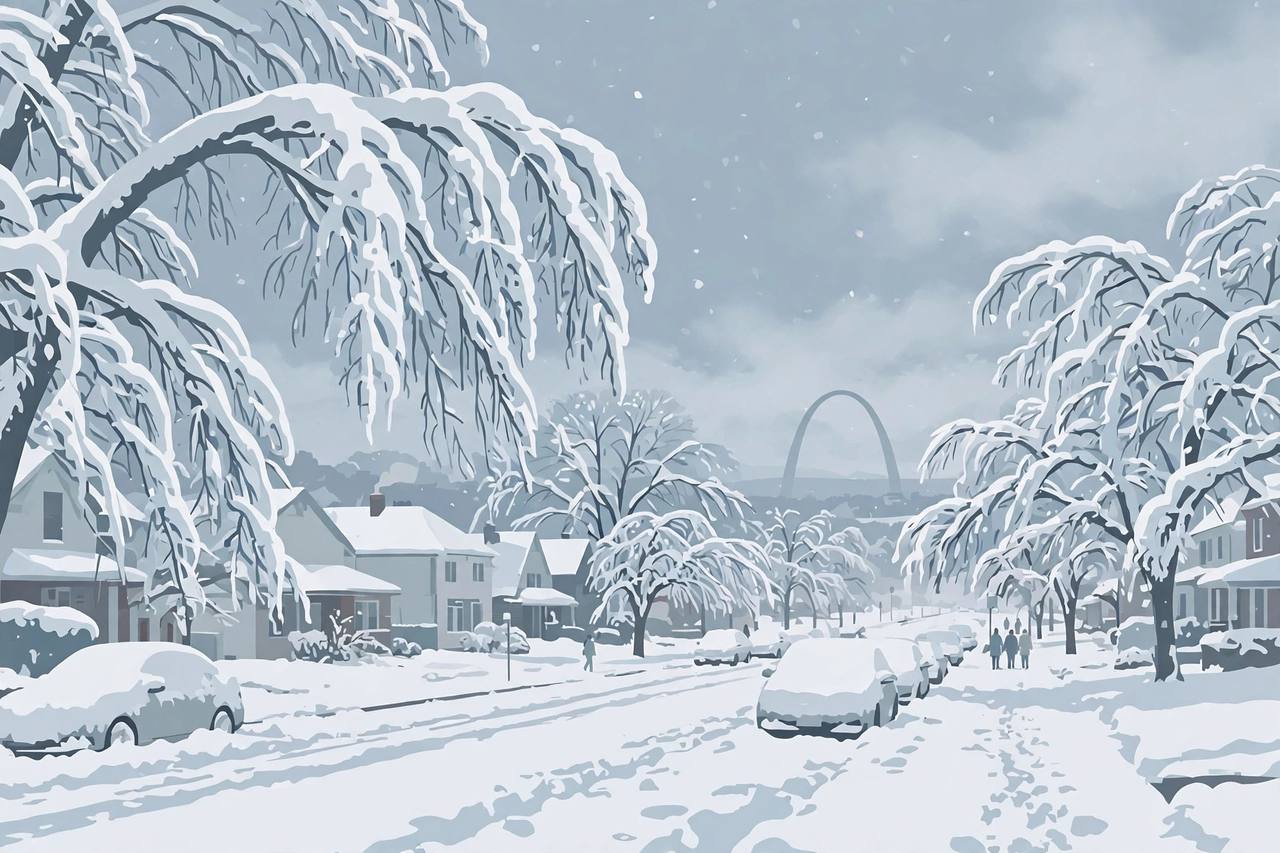
ST. LOUIS — A heavy, wet snowstorm buried the St. Louis region on Thanksgiving, dumping 7.3 inches of snow on the city and knocking out power to more than 125,000 homes and businesses across Missouri and Illinois. It was the city's fifth-biggest November snowstorm on record, and the first Thanksgiving with snow on the ground in St. Louis since 2014.
The snow began on Wednesday afternoon, November 25, and kept falling overnight into Thanksgiving morning. St. Louis Lambert International Airport measured 5.2 inches on Wednesday alone — a record for the date, more than tripling the previous record of 1.5 inches set in 1903. The city's normal snowfall for the whole month of November is just 0.7 inches.
Snow totals across the region
The heaviest snow fell in a narrow band south and east of the city. Ste. Genevieve reported 14 inches, Arnold 11 inches, Perryville 10 inches, High Ridge 9 inches, Farmington 8.5 inches and Crestwood 7.1 inches, according to National Weather Service storm reports. The Weather Channel said the 7.3-inch city total makes this the second-snowiest Thanksgiving holiday storm on record for St. Louis, behind only the 7.7-inch storm of 1980.
Power outages and damage
The wet, clingy snow weighed down tree limbs and power lines, and the damage spread quickly. Utility company Ameren reported more than 112,000 customers without power in Missouri as of 5:45 a.m. on Thursday, November 26, according to FOX 2 — including more than 74,000 customers in St. Louis County, 15,000 in Jefferson County and 11,000 in St. Charles County, plus nearly 4,000 in the city of St. Louis. Combined outages across Missouri and Illinois topped 136,000 by mid-morning, and other trackers put the figure above 150,000. Ameren said most affected counties had no estimated restoration time on Thursday morning.
The storm also caused a serious safety incident across the river in Swansea, Illinois, where the fire department attributed a fire involving three homes on Thursday morning to a fallen electrical wire that had become draped across several houses.
Forecasters had their own problem during the storm: the National Weather Service's St. Louis Doppler radar, KLSX, went out of service for at least 3 hours and 40 minutes on Wednesday evening, leaving forecasters to lean on radars in other cities while the heaviest snow was falling.
Travel and what happens next
Winter Storm Warnings stayed in effect through Thursday morning — until noon Central Time for the St. Louis area, until 3 p.m. for southeast Missouri and the Rolla area, and until 6 p.m. for Ste. Genevieve, St. Francois and Washington counties. By midday Thursday the snow was changing to rain from east to west, but the National Weather Service warned that the weight of the snow had already caused damage across the area and that a refreeze could bring black ice. Missouri transportation officials urged drivers to avoid unnecessary travel, and cars were reported spinning out on Interstate 270 while lorries got stuck on a Highway 32 hill near Farmington.
Thanksgiving is one of the busiest travel periods of the year, and this was the heaviest kind of snow for infrastructure: wet and clingy, it adds enormous weight to trees and utility lines. For families travelling to holiday gatherings and for truckers moving freight through the St. Louis corridor, the storm turned a holiday drive into a hazardous one.
The same storm collapsed the roof of an unoccupied ice arena in Wentzville, about 40 miles northwest of St. Louis. No injuries were reported. Read the full story
The Missouri snow was the Midwest arm of the same sprawling Thanksgiving storm system that flooded the East Coast, knocked out power to more than 660,000 customers there and forced the postponement of the Macy's Thanksgiving Day Parade in New York. In St. Louis, the storm's legacy will be measured in downed trees, repair crews working through the holiday and a record book rewritten for the first time in more than a century.