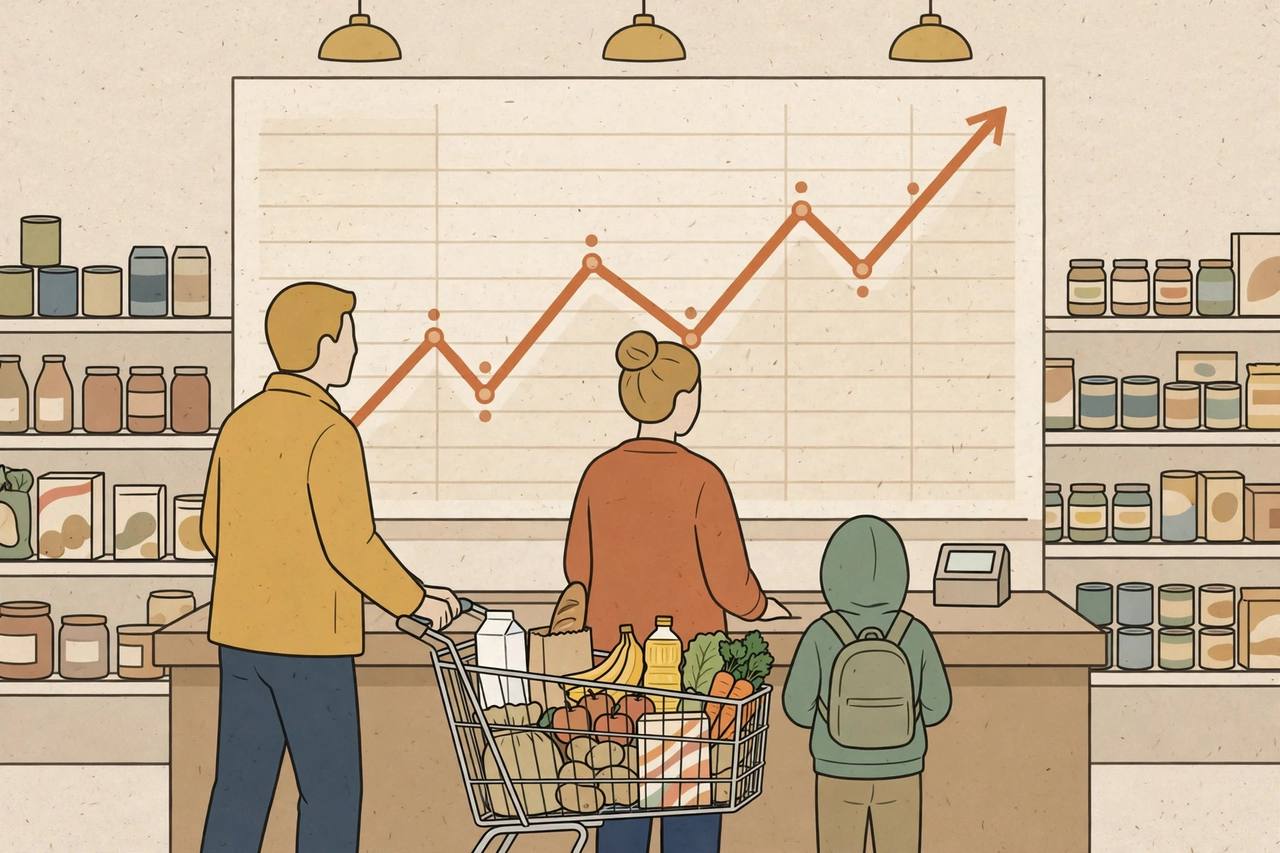
US inflation rose further in October, the Commerce Department reported on Wednesday, with the Federal Reserve's preferred price gauge climbing 0.3 percent in the month and the annual rate accelerating to 3.8 percent — the last major inflation reading before the central bank's December 9 policy decision.
Source: Reuters
What the numbers show
The Personal Consumption Expenditures (PCE) Price Index rose 0.3 percent in October after an unrevised 0.5 percent gain in September, the department's Bureau of Economic Analysis said. In the 12 months through October, PCE inflation increased 3.8 percent, up from 3.7 percent in September after the earlier reading was revised upward, and in line with economists' forecasts.
Source: Morningstar
Excluding the volatile food and energy components, the so-called core PCE Price Index also rose 0.3 percent over the month, matching September's pace. But the annual core rate climbed to 3.3 percent from 3.1 percent in September — above the 3.2 percent economists had expected. Core goods inflation ran at about 0.4 percent in the month, its hottest since February.
Source: FXStreet
Household finances told a mixed story. Personal income climbed 0.7 percent in October, beating the 0.4 percent forecast, while personal spending rose 0.3 percent, slightly below expectations. Disposable personal income rose 0.8 percent and real disposable income rose 0.5 percent after falling 0.2 percent in September — but real personal spending was flat at 0.0 percent, a sign Americans held back even as their pay packets grew.
Why this matters for the Federal Reserve
The PCE index is the measure the Federal Reserve watches most closely when it sets interest rates, and it targets inflation of 2 percent over time. At 3.8 percent headline and 3.3 percent core, price growth remains well above that target, reinforcing expectations that the Fed could continue raising interest rates into early 2027, Reuters reported.
Source: Reuters
The timing sharpens the stakes: the October report is the last major inflation reading before the Fed's December 9 meeting, and traders are pricing a very high chance of a rate rise next month. MarketWatch reported the figures 'virtually assure' the central bank will increase borrowing costs in December. The Fed skipped a rate rise in October to get a clearer picture of price trends — but inflation actually got worse.
Treasury Secretary Scott Bessent warned on CBS's Face the Nation on November 22 that the Fed could make a policy mistake by overtightening, pointing to hawkish remarks from Fed governors and a sharp tightening in financial conditions. President Donald Trump, on the same day, blamed a roughly $6 trillion decline in the stock market on Democrats' midterm election wins.
What it means for households — and for truckers
For American families, the report means the cost of everyday life is still climbing faster than the Fed wants, even if the monthly pace eased from September. Grocery, housing and service costs continue to squeeze household budgets, and any further rise in interest rates would push up borrowing costs on credit cards, car loans and mortgages.
For the Punjabi diaspora and the many Punjabi truckers on American highways, the stakes are direct: higher rates raise the cost of financing trucks and equipment, and fuel and food prices feed straight into the cost of every run. At the same time, the jobs market behind the numbers still looks resilient — US consumer confidence jumped to 103.3 in November, its highest in nearly two years, as optimism about jobs rebounded.
What happens next
All eyes now turn to the Federal Reserve's December 9 decision, when policymakers will weigh this report alongside jobs data and their own forecasts. November inflation figures, due in December, will show whether October's acceleration was a one-month blip or the start of a renewed climb. If the Fed does raise rates, it would be the latest step in a tightening cycle that has already made borrowing the most expensive in years — and the debate between the White House and the central bank over how far to go is only set to intensify.
Awaaz Punjab reported on the September figures, when PCE inflation rose 3.6 percent and the core rate stood at 3.1 percent, keeping a December rate rise in play. October's data show both measures moving higher still. Read our September PCE report
US consumer confidence also jumped in November to 103.3, its highest level in nearly two years, as job optimism rebounded. Read: Consumer confidence jumps to 103.3