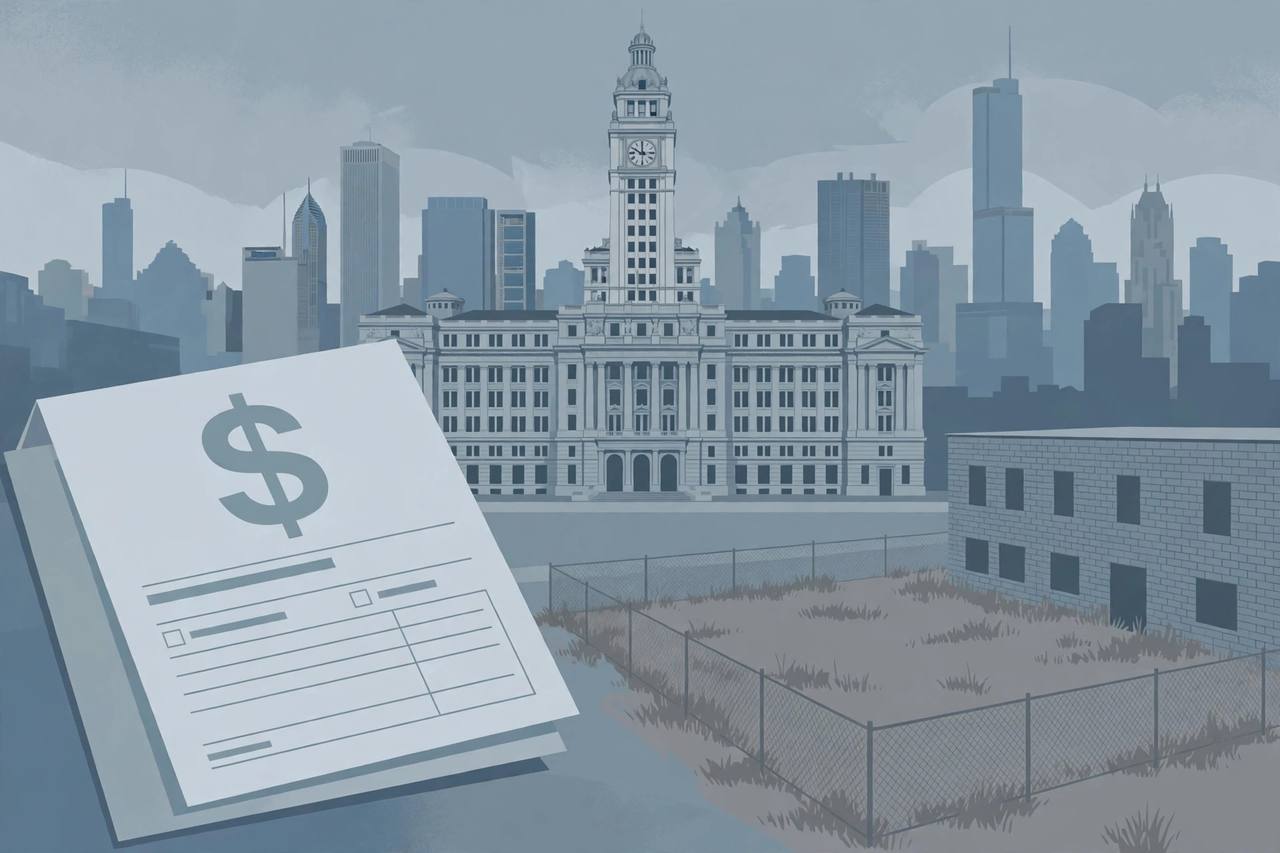
Chicago Mayor Brandon Johnson has revised his proposed 2027 budget, adding a new $1,000-a-year tax on privately owned vacant land — but he has refused to drop the corporate head tax that a majority of the City Council says makes the plan unpassable. With a December 31 deadline to adopt a balanced budget, the mayor still does not have the votes, according to council members.
Johnson unveiled the original $17.6 billion budget in October, reviving the corporate head tax and proposing $480 million in borrowing to pay police misconduct settlements. Read our earlier report
The vacant land tax
The new tax would charge $1,000 a year for each privately owned vacant parcel, and the administration estimates it would raise $12 million a year. It would take effect in July 2027 if approved. Side lots and owners actively pursuing development would be exempt, as would community gardens and green spaces that serve neighbourhood purposes. The administration says the levy is meant to push owners to develop unused land rather than sit on it.
The revised plan also raises fees for registering vacant buildings, expected to bring in about $1.2 million. Private owners would pay $150 to register a vacant building and $50 for six-month renewals, while vacant storefronts would be charged $200 every six months and bank-owned properties $1,000 every six months. Other pieces of the $75 million stopgap include moving $11.5 million from an underused investment fund, modernising procurement for more than $13 million, and strengthening debt collection for about $12 million.
The head tax stays — and so does the opposition
The corporate head tax remains the biggest obstacle. It would charge $25 a month per employee at companies with at least 125 workers, raising roughly $101 million to $113 million a year. The administration says it affects only about 2.8 percent of Chicago corporations. Alderman Bill Conway, who signed the council coalition's letter, disputed that framing, saying that based on the administration's own revenue estimate, the tax would reach about 30 percent of the city's workforce.
Twenty-nine alderpeople signed a letter in September asking the mayor to remove the head tax, avoid relying on anticipated state funding and direct the parking-meter windfall toward the city's $36 billion pension crisis. Alderman Gilbert Villegas of the Budget Accountability Coalition said the revised proposal only completes half the job: "The mayor has done half of his assignment. Half of his assignment is putting forward a budget. The other half of the assignment is putting forward a budget that can get votes. Right now, the votes are not there."
The head tax is not the only levy the council opposes. The plan also raises the Personal Property Lease Transaction Tax — which covers cloud computing and rented equipment — from 15 percent to 20 percent, worth about $234 million. Together, the head tax and the lease tax account for about $335 million of the mayor's plan.
The parking-meter money fight
At the centre of the standoff is $75 million from the sale of Chicago's parking meters to Stonepeak Partners, the New York investment firm. The council coalition wants that upfront payment applied as an extra pension payment. But the city's own records show the money is effectively already spoken for: on November 2, the council voted 44 to 6 to send the parking-meter payment to the pension funds this year, and all 28 signers of the coalition letter voted yes.
Why the deadline matters
The stakes go beyond City Hall politics. The Illinois Policy Institute calculates the budget contains almost $427 million in new taxes and fees, with 40 percent of all spending going to pensions or debt service. The plan also includes $481 million in additional borrowing to settle police misconduct lawsuits over the next two years. Credit ratings agency S&P Global warned last week that there is an elevated likelihood of a negative rating action within 90 days if the budget stalemate continues. A University of Chicago study released this week found the proposed head tax's impact would extend well beyond large corporations.
Johnson defended his approach at a City Hall briefing on Tuesday, shortly after a majority of aldermen restated their refusal to back the head tax or higher spending. "We're not going to cut our way towards solvency, right. There is no example of anywhere on the planet in the history of the world where you can cut your way towards a prosperous existence," he said. He warned that without a deal, cuts would threaten city services, libraries and housing programmes.
What happens next
The council's public hearings on the budget are scheduled for December 8 and 9, and a balanced 2027 budget must pass by December 31. If no budget is adopted, the city faces a government shutdown. Negotiations between the mayor's office and the council coalition are expected to continue through December — and the vacant land tax, the head tax and the parking-meter money will all be on the table.
For Chicago residents — including the city's large Indian and Punjabi community, many of whom run small businesses, own property or work for the mid-sized employers the head tax would reach — the outcome will shape tax bills, city services and the cost of doing business in 2027. Awaaz Punjab will follow the budget fight as the deadline approaches.