Three Russian Kh-101 cruise missiles fell in south-eastern Poland on November 20, and a Russian drone briefly entered Polish airspace overnight on November 23-24. Awaaz Punjab reported both incidents as they happened. Read the earlier report
Poland announced on Tuesday that it has renewed its push for a permanent United States military presence in the country, after Russian airspace violations twice in four days. Poland's chargé d'affaires in Washington, Bogdan Klich, said he briefed the White House National Security Council on the violations and renewed Warsaw's call to permanently station American troops in the NATO member country.
"Yesterday, I briefed the U.S. National Security Council on the violation of Polish airspace by Russian Kh-101 missiles and once again discussed the issue of the permanent deployment of U.S. troops in Poland," Klich wrote on X.
The first incursion came on November 20, during one of Russia's largest aerial attacks on Ukraine since the full-scale invasion began in 2022. Three Russian Kh-101 cruise missiles entered Polish airspace and came down near Nowy Lipowiec, Rudnik nad Sanem and Mołodycz in the country's south-east. Defence Minister Władysław Kosiniak-Kamysz said a Kh-101 missile crashed at about 06:30 near Nowy Lipowiec, roughly 50 kilometres from the Ukrainian border. Nobody was hurt and no damage was reported.
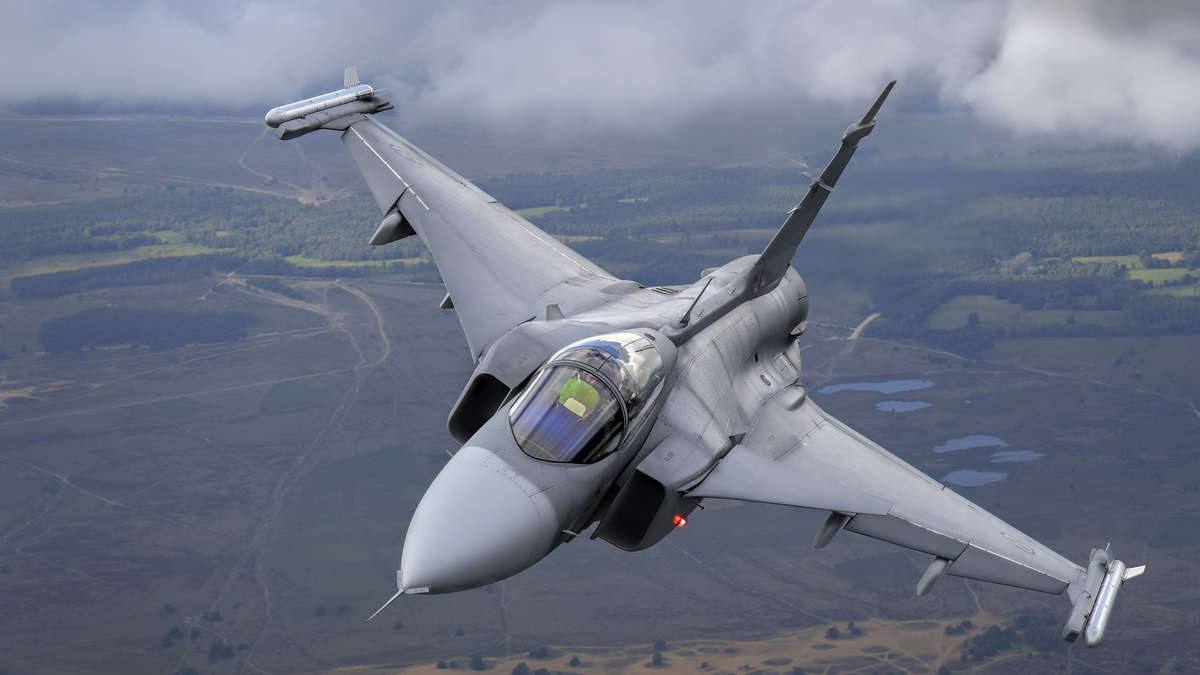
Polish authorities monitored 11 potentially threatening aerial objects during that attack, three of which entered the country's airspace, according to Lt. Gen. Ireneusz Nowak, commander of Poland's Armed Forces Operational Command. A Swedish JAS 39 Gripen fighter operating under NATO command was authorised to shoot down one of the missiles but held fire because the target could not be identified with certainty in poor weather, Nowak said, as reported by The Kyiv Independent. Polish prosecutors later confirmed that debris recovered at all three sites belonged to Russian Kh-101 cruise missiles manufactured in October or November 2026 at a factory in Dubna, in Russia's Moscow region.
The second incursion happened overnight on November 23-24, when a Russian drone briefly entered Polish airspace from Ukraine during another wave of Russian strikes. The military had authorisation to shoot it down but did not intervene because the drone's altered course posed a risk to civilians. Deputy Defence Minister Paweł Zalewski described the drone incursion as likely intentional.
Prime Minister Donald Tusk said the incursions did not appear to be an accident, calling them a likely deliberate provocation. He said it was "no coincidence" that the objects landed near Nowa Dęba, where the UK- and France-led Koalicja 2026 exercise involving 11 countries of the Coalition of the Willing is under way in preparation for a potential peace deal in Ukraine. NATO Secretary General Mark Rutte condemned the "grave violations of Polish airspace", said alliance jets had been scrambled, and called the incident "clearly dangerous — a consequence of Russia's ongoing war against Ukraine".
Poland's Foreign Ministry summoned Russia's ambassador to Warsaw, Georgy Mikhno, and delivered a "very stern" diplomatic note. Russia has made no comment on the violations.
After the November 20 incursion, the North Atlantic Council met in Brussels on November 23 and NATO decided to deploy an AWACS early-warning aircraft to Poland to strengthen air defences along the alliance's eastern flank. Read the NATO response
The push for a permanent American presence is not new. In September, Polish Foreign Minister Radosław Sikorski said US and Polish officials were working toward an agreement that could accommodate up to 10,000 American troops. Poland is expected to continue negotiations with Washington on permanently stationing US troops, potentially expanding the current rotational force of about 7,000 to 10,000 soldiers.
What happens next: Warsaw will keep pressing Washington for a permanent deployment, NATO's enhanced air defences in Poland stay in place, and any further Russian object crossing into allied airspace will test how far the alliance is willing to go in answering it. The violations have already become the sharpest test yet of NATO's eastern flank since the war began.
What is solid
- Bogdan Klich briefed the White House National Security Council and renewed the call for permanent US troops
- Polish prosecutors confirmed debris at all three sites was from Russian Kh-101 missiles made in October or November 2026
- NATO scrambled jets and deployed an AWACS aircraft to Poland after the November 20 incursion
What is only claimed
- Whether the incursions were deliberate — Prime Minister Tusk and Deputy Defence Minister Zalewski say they appear intentional, while Moscow has not commented and prosecutors' findings on intent are preliminary