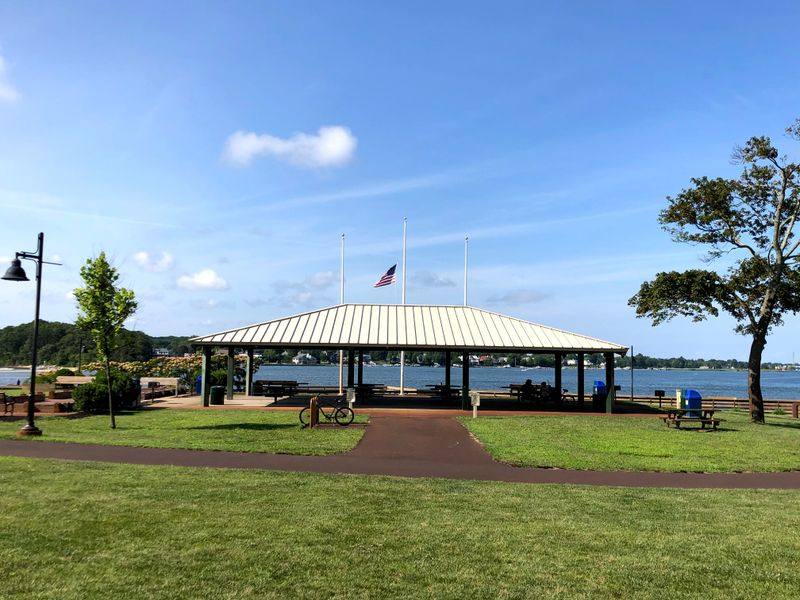
New Jersey's highest court has ruled unanimously that the state can force a private condominium community to open its waterfront to the public, upholding the Department of Environmental Protection's power to demand public access to Beaver Dam Creek in Point Pleasant as a condition of a waterfront permit.
Source: Press of Atlantic City, via Wisevoter
What the court decided
The case concerned the Sea Point Condominium Association, a 24-unit community built around a boat basin on the north branch of Beaver Dam Creek in Point Pleasant Borough. The association had asked the Department of Environmental Protection (DEP) to replace a bulkhead and approve finger piers and mooring piles that had been built without permits. The DEP agreed to the permit only if Sea Point submitted a proposal for public access to the creek on its own property — and refused the association's offer of a money payment toward public access on nearby borough-owned land instead.
The Supreme Court held that the DEP was entitled to impose the access condition, because the replaced bulkhead and the newly approved structures changed the property's footprint. The ruling is the first time the state's highest court has tested the DEP's authority under the 2019 Public Access Law, which lets the agency require public access to tidal waterways, including in places where none existed before.
New Jersey's tidal waters belong to the public under the public trust doctrine. This ruling says the right to reach them cannot be cut off by a private gate — even on land a condominium owns.
A case that travelled through every court
The dispute has been running for years. An administrative law judge ruled for the DEP in 2022, the DEP Commissioner issued a final decision adopting that ruling with modifications on October 6, 2023, and the Appellate Division affirmed the DEP in August 2025. The Supreme Court's unanimous decision on November 24, 2026 closes the case at the state's highest level.
Sea Point had argued that the DEP must apply the four-factor Matthews test from the landmark 1984 case Matthews v. Bay Head Improvement Association, that the agency cannot impose access conditions until it adopts implementing regulations under the 2019 law, and that the access requirement amounts to an unconstitutional taking of its property. The courts rejected those arguments at every stage. The 2019 law required the DEP to adopt implementing regulations within 18 months — but those regulations have still not been finalised and remain in draft.
What is solid
- The New Jersey Supreme Court ruled unanimously on November 24, 2026, for the DEP.
- Sea Point is a 24-unit condominium community on the north branch of Beaver Dam Creek in Point Pleasant Borough.
- The DEP can condition waterfront permits on public access under the 2019 Public Access Law.
- It is the first high-court test of the DEP's power under that law.
What is only claimed
- Sea Point argued the public-access condition amounts to an unconstitutional taking of private property and that the DEP must first adopt implementing regulations — arguments the courts rejected at every stage.
- The association offered money toward public access on borough-owned land instead of access on its own property; the DEP refused, and the courts backed the agency.
What happens next
Sea Point must now submit a public-access proposal for its own property, giving the public a route to Beaver Dam Creek where the community's boat basin, slips and piers now sit behind a private gate. The DEP can apply the same condition to other waterfront permits, and condominium associations and developers along New Jersey's coast and rivers are now on notice that a permit to build or rebuild on the water can come with a public-access price. The DEP's implementing regulations under the 2019 law remain unfinished, so further disputes over how access is designed are likely.
For residents, the ruling means a new public way onto the water in Point Pleasant — and a precedent that reaches every tidal creek, river and bay in the state. New Jersey is home to one of the largest Punjabi communities in the United States, centred on Edison and Jersey City, and public access to the state's waterways is part of everyday life for families who fish, walk and gather along the shore.