The city of Charlotte, North Carolina, will pay $1.725 million to settle a class-action lawsuit brought by protesters who say police trapped them on an Uptown street in 2020 and fired tear gas and pepper balls into the crowd. Charlotte City Council approved the amount in a closed session on Monday, November 16, the Charlotte Observer reported, ending a case that was days away from a jury trial.
Source: The Charlotte Observer via Police1
The settlement itself was first reported last week, but the dollar figure stayed secret until council's closed-session vote. Each of the 67 claimants will receive $25,746 on average — just under $26,000. The class-action suit was filed in 2021 in Mecklenburg County Superior Court and was set to go before a jury last week; the claims were settled on the eve of trial instead.
What happened on Fourth Street on June 2, 2020
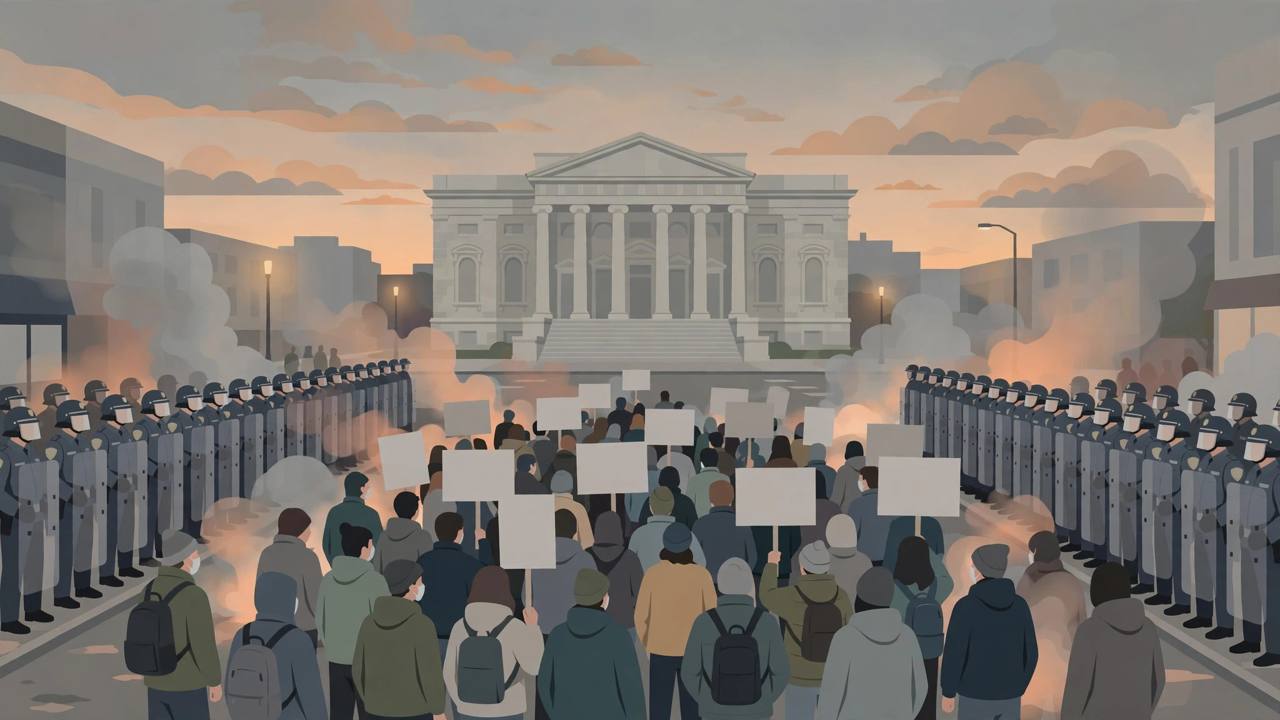
The lawsuit stems from the night of June 2, 2020, when protesters had filled Charlotte's streets for nearly a week, as they had in cities across the United States, after Minneapolis police killed George Floyd. The suit alleged that Charlotte-Mecklenburg Police Department (CMPD) officers, sergeants, majors and chiefs acted unlawfully when they used a crowd-control technique known as kettling: officers corralled more than 400 protesters along Fourth Street in Uptown, blocked their exits, and then fired tear gas, smoke grenades, pepper balls and other chemical munitions into the trapped crowd. The plaintiffs also alleged that officers fired pepper balls from a parking deck beside the block.
Source: Charlotte Focal
CMPD initially defended its tactics, saying the protesters were rioters who had ignored orders to disperse. Then-Police Chief Kerr Putney said there was "nothing to indicate whatsoever that there was intentional abuse on the part of our officers." Body-worn camera footage later contradicted that defence: it recorded Sgt. Scott Sherwood telling his officers to wave the protesters on toward two platoons staged out of sight, describing how the crowd would be pushed up Fourth Street, bottlenecked, and then hit with gas from both sides. Then-Mayor Vi Lyles said at the time: "That's not the kind of department we want to have for policing."
"We were all choking and could not breathe. Everyone ended up kind of dropping to their knees and putting their hands up, begging to not be shot." — Katie Rothweiler, one of the 67 claimants, who says the trauma of that night still affects her years later.
The city's position: no admission of wrongdoing
"While this resolution avoids the significant expense and uncertainty of prolonged trial proceedings, it does not constitute an admission of liability or wrongdoing by the City or the Charlotte-Mecklenburg Police Department," city spokesperson Jack VanderToll wrote in an email to reporters on Monday evening. The city's statement added that Charlotte "remains focused on continuing its work with residents and community leaders to strengthen trust and accountability." CMPD referred questions to the city's statement, and current Mayor Rob Harrington has not commented on the protests or the lawsuit.
Lawyers for the protesters read the settlement differently. "There was a premeditated assault on people who were expressing their First Amendment rights," said attorney Tim Emry. His colleague Alex Heroy said the legal team reviewed hundreds of hours of video, adding: "They were out expressing their views. That's what America is about. In our view, they were attacked for that." Attorney Lauren Newton said the council's approval "speaks volumes."
Reforms that followed the lawsuit
Beyond the money, the case has already changed how CMPD handles protests. The department no longer uses chemical munitions on peaceful protesters, and officers are prohibited from blocking designated exit routes — the two tactics at the heart of the Fourth Street allegations. "The systemic changes are the reason that we were protesting in the first place," Rothweiler said. "That's why we have continued to fight for this."
How Charlotte compares with other cities
Charlotte is not the only city that paid for the policing of that same week in 2020. New York settled a similar lawsuit three years ago for $6.5 million covering about 300 protesters, and Philadelphia paid $9.25 million to about 350 protesters. In each city, individual protesters received between $21,000 and $27,000 — the same range as Charlotte's $25,746 average — a pattern that shows how the legal cost of kettling has been priced, city by city, across the United States.
What happens next
The settlement money will now be distributed among the 67 claimants, and the Superior Court case closes without any admission of liability by the city or CMPD. No further trial will test the body-camera recordings in open court. What remains on the record are the policy changes — no chemical munitions against peaceful protesters, no blocked exit routes — and a $1.725 million reminder, approved in a closed session six years after the night itself, of what the Fourth Street operation ultimately cost Charlotte's taxpayers.