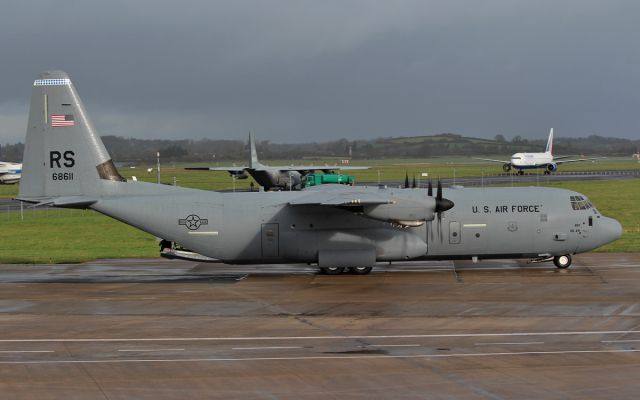
NEW YORK — A federal grand jury in Manhattan has indicted an Irish national for breaking into and destroying a U.S. military C-130H transport aircraft parked at Shannon Airport in County Clare, Ireland, the U.S. Attorney's Office for the Southern District of New York announced on Tuesday, November 17, 2026. U.S. Attorney Jamie McDonald and James C. Barnacle, Jr., the Assistant Director in Charge of the FBI's New York Field Office, announced the charges against Daithi O'Corrain, 48, also known as David Curran.
O'Corrain is charged with one count of destruction of government property, which carries a maximum sentence of 10 years in prison. The indictment was returned by the grand jury on Monday and unsealed on Tuesday. The Justice Department stresses that the charges in an indictment are merely accusations, and that O'Corrain is presumed innocent unless and until proven guilty.
Source: U.S. Department of Justice — SDNY
What prosecutors say happened on April 11
According to the indictment, on the morning of April 11, 2026 — at about 4:39 a.m. local time, the indictment reporting says — O'Corrain breached the security perimeter of Shannon Airport, which serves as a major transatlantic hub for U.S. military troops and equipment, and crossed the airfield to a U.S. Air National Guard C-130 Hercules parked on the taxiway. The aircraft was en route to another country on a U.S. military assignment. The plane belonged to the Missouri Air National Guard's 139th Airlift Wing, based at Rosecrans Air National Guard Base in St. Joseph, Missouri, the Northwest Missouri Times reported.
Source: Northwest Missouri Times
Prosecutors allege he gained entry by breaking the locking mechanism on the aircraft's rear crew door and barricaded himself inside with supplies and tools he had brought with him. Inside, he allegedly cut wire bundles and hydraulic lines, crimped a liquid oxygen line, destroyed every gauge in the cockpit and punctured the aircraft's air ducts. He had also brought multiple capsules of gallium onto the aircraft — a highly corrosive metal that is liquid at room temperature, eats through aluminum in minutes and causes long-term corrosion to steel, the Justice Department said. The C-130 is built substantially of aluminum.
Several hours later, the aircraft's flight crew returned to depart for their next destination, saw O'Corrain through a cockpit window and notified Shannon Airport security, the indictment says. Crew members then watched him escape through a hatch in the aircraft's roof and inflict further damage to the exterior — striking the plane with an axe and pouring unknown substances and objects, including ball bearings, into the fuel tanks. Irish law enforcement arrived shortly afterwards and apprehended him at the scene.
Months of planning, prosecutors allege
The indictment alleges the attack followed months of planning and preparation: online searches about the C-130's construction — followed the same day by an online order of gallium — acquiring tools and equipment, searching for coordinates including where to breach Shannon's perimeter, subscribing to a flight-tracking application that follows military aircraft, researching prior attacks on U.S. military aircraft at Shannon, and attempting to contact a person involved in one of those earlier attacks. Prosecutors say he knew which wires and components to cut and which to leave alone for his own safety. Had he cut, rather than crimped, the liquid oxygen line, the Justice Department said, there would have been a high chance of a massive explosion inside the aircraft.
"These charges send a clear and powerful message that attacks on U.S. military assets — and thus our national security — will not be tolerated," U.S. Attorney Jamie McDonald said. FBI Assistant Director in Charge James C. Barnacle, Jr. said: "This was not an act of spontaneous vandalism. The defendant allegedly spent months researching the aircraft, acquiring tools and materials, and preparing to maximize the destruction he could inflict."
The fourth breach in a year at Shannon
The Justice Department says the attack followed a series of similar, less serious incidents at Shannon over the preceding year: on or about May 1, 2025, three people were arrested after driving a van through the airport perimeter fence; on or about May 17, 2025, three people breached the runway and sprayed a U.S. military aircraft with paint, temporarily rendering it inoperable; and on or about November 22, 2025, three people drove a van to a restricted area where a U.S. military C-40 aircraft was parked before being intercepted by airport security. Prosecutors describe the April attack as the fourth unauthorized access since May 2025. As a result of the damage, the department said, the C-130H 'was effectively destroyed,' is inoperable, and 'will not return to active flight status.'
O'Corrain was arrested by Irish police after the April incident and faced Irish proceedings; The Aviationist reported he was released on bail about a month later. He is not in U.S. custody. The indictment says he is expected to be brought to and arrested in the Southern District of New York; U.S. authorities have not publicly detailed any extradition plans.
Source: The Aviationist
What happens next
The case is being prosecuted by the U.S. Attorney's National Security and International Narcotics Unit, with Assistant U.S. Attorneys Jonathan L. Bodansky and Adam Z. Margulies in charge. The investigation was led by the FBI's New York Joint Terrorism Task Force and its London attaché office, with the U.S. Air Force Office of Special Investigations, the Missouri Air National Guard, the Justice Department's National Security Division and Office of International Affairs, and assistance from the Government of Ireland. For U.S. readers, the case is a test of how far American law reaches when a U.S. military asset is attacked on allied soil: the maximum sentence is set by Congress, and any sentence would be determined by the trial judge if O'Corrain is convicted. Every fact drawn from the indictment remains an allegation until a court decides otherwise.