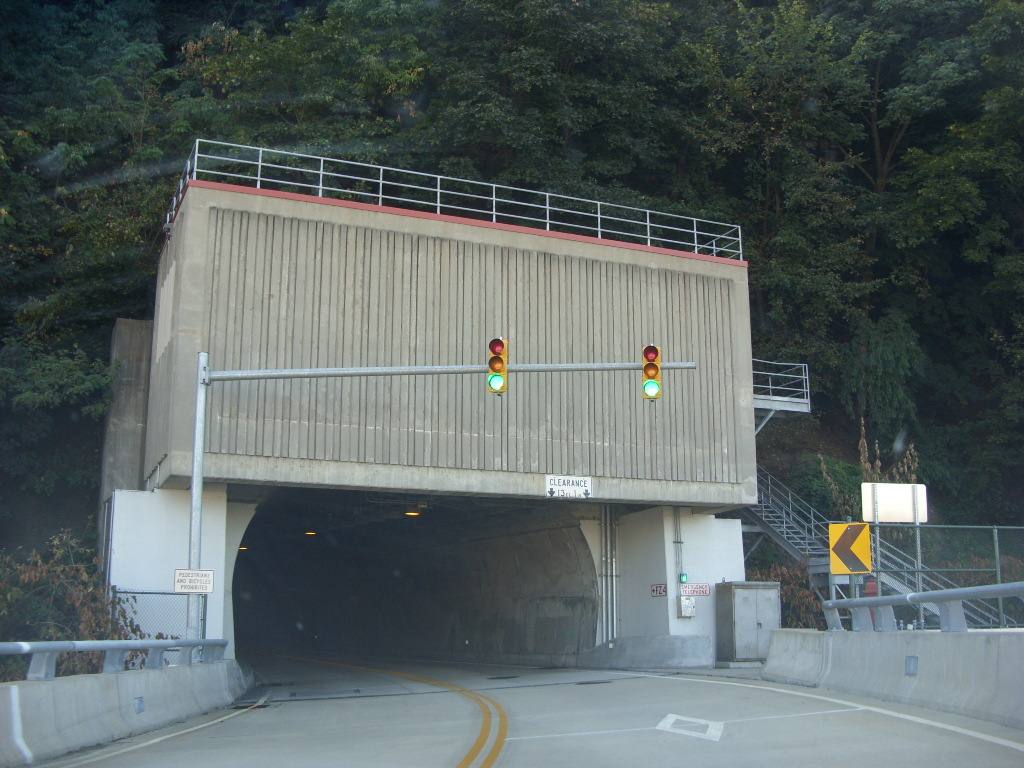
Pittsburgh Regional Transit (PRT) has announced that the Wabash Tunnel will close permanently on December 1, 2026. The tunnel's final day of service will be November 30, after which barriers will go up at both entrances — on West Carson Street and on Woodruff Street — to keep vehicles out for good.
Source: Pittsburgh Regional Transit
The agency says bringing the tunnel up to current safety standards would cost an estimated $43 million. Its lighting, ventilation and electrical systems are in poor to critical condition and past their useful life, even though the tunnel structure itself is described as being in fair condition. Keeping it open costs more than $300,000 a year to run, while only about 1,500 vehicles use it on a typical day.
How the decision was made
PRT first proposed closing the tunnel on October 15, and its board voted to approve the closure on October 23. The agency issued its final reminder to drivers on November 23. The Federal Transit Administration has agreed to let PRT close the tunnel and keep $848,238 in remaining federal value from the facility, which will go toward a future eligible capital project.
Source: The Pittsburgh Wire
“The Wabash Tunnel has a long history in Pittsburgh, but today it primarily serves private vehicle traffic rather than public transit,” PRT chief executive Katharine Kelleman said in the agency's announcement. “With an estimated $43 million needed to rehabilitate the tunnel, we have a responsibility to focus our limited resources on the infrastructure that is most critical to delivering safe, reliable transit service.”
What changes for drivers
The Wabash Park and Ride lot at 155 West Carson Street, with 160 spaces, will stay open. The tunnel itself will not be filled in — fences will go up at both ends so no vehicle or pedestrian can enter. From December 1, drivers who use the tunnel will need another way across Mount Washington.
123 years of history
The Wabash Tunnel was built in 1903 for the Wabash-Pittsburgh Terminal Railroad, part of railroad magnate George Jay Gould's challenge to the Pennsylvania Railroad. The Wabash Bridge that once connected the tunnel across the Monongahela River collapsed during construction in 1903, killing 10 workers; its two stone piers still stand in the river. The bridge was demolished in 1948 and never replaced. Rail use of the tunnel ended in 1946, and it sat abandoned for decades. Its north portal was badly damaged in a landslide in 1925.
Source: Wikipedia — Wabash Tunnel
The tunnel reopened to automobiles on December 27, 2004, as a high-occupancy vehicle facility linking West Carson Street with Woodruff Street. It is a single-lane, single-bore tunnel with a clearance of 13 feet 1 inch. In recent weeks it served as an outbound detour for buses while the Mount Washington Transit Tunnel was shut for electrical work from November 2 to 7.
What happens next
On December 1, barriers will block both entrances and the 123-year-old passage will fall silent. The structure will remain in place behind fences, the $848,238 in federal value will be directed to a future capital project, and PRT says it will put its limited resources into the transit infrastructure riders depend on most.
November 30 is the last chance to drive the Wabash Tunnel. From December 1, plan another route across Mount Washington — the entrances will be blocked and no vehicles will get through.