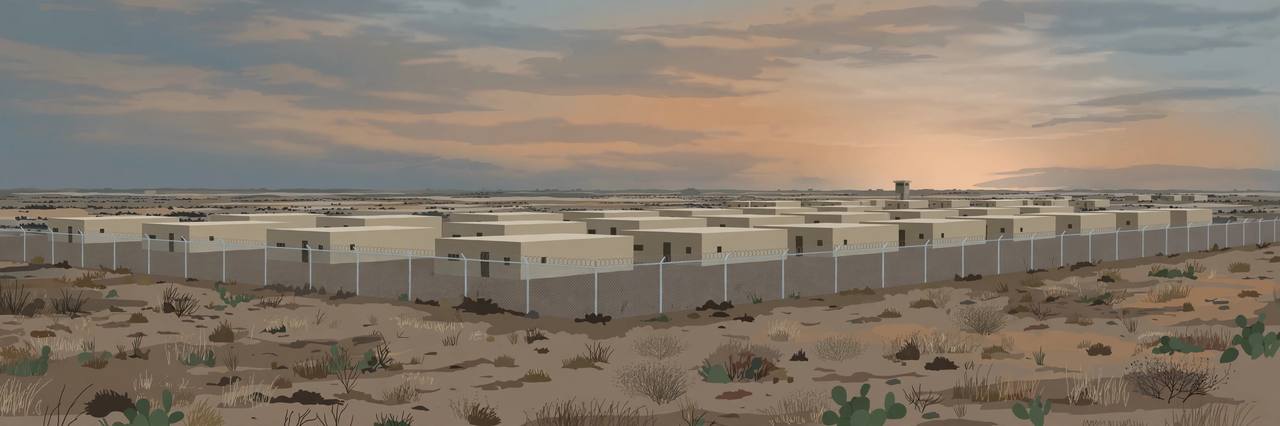
Dozens of families will spend Thanksgiving locked inside the South Texas Family Residential Center in Dilley, Texas — and new sworn statements filed in federal court say some of their children have now been held far longer than the law allows. The declarations, reported by Scripps News on November 25, were filed by a 7-year-old girl's mother and 31 other detainees who are challenging their detention at the facility, the only family detention centre in the United States.
The 7-year-old, from New Orleans, wrote a plea to President Donald Trump while in detention, her attorneys said. “I would like to visit my father and study at my school,” she wrote in Spanish, alongside a drawing of herself standing beside her mother and father. Her family came to the United States from Venezuela legally through a humanitarian parole programme, but the Department of Homeland Security says they failed to leave the country when their authorisation expired. She and her mother have been at Dilley for almost a month after immigration officers arrested the mother while she was working as a delivery driver. Her attorneys said the girl has lost 15 pounds in detention and now eats almost nothing but corn flakes.
What the declarations describe
The affidavits claim children at the facility are losing weight, developing rashes, being offered foul-tasting water and unable to sleep in bunk rooms where the lights stay on all night. The declarations also say detainees were not told about the 20-day maximum on holding children, and that they did not have access to phone calls with their lawyers. These are allegations made in sworn court filings; they have not been established as facts in court, and the facility's operator disputes them.
One father and his 6-year-old daughter have been at Dilley for 43 days, even though the father said he signed a voluntary departure agreement. “Every time I ask ICE why we are still here, they say ‘next week you'll leave,’” the man stated in his declaration. Some detainees said they have already agreed to leave the United States and return to their countries of origin, but remain held in ICE custody.
A family of four, including an 8-year-old boy and a 10-year-old girl, has been held at Dilley for 143 days, according to the filings. “ICE officers have told us that they are detaining us for so many months because we are waiting here for travel documents,” the father said in his affidavit.
The 20-day rule and the Flores settlement
The case turns on the Flores Settlement Agreement, a 1997 court settlement that sets standards for the treatment and release of detained migrant children, including a limit of 20 days on holding them. On November 20, children's rights lawyers filed a brief in federal court saying the government has refused for more than a year and a half to tell children at Dilley about their Flores rights — not even a simple list of those rights, let alone a chance to learn about them from a lawyer. The brief was filed by the Center for Human Rights and Constitutional Law, the National Center for Youth Law and Children's Rights.
Over 15 site visits, Flores counsel interviewed more than 200 families, the brief says. None recalled learning about their child's full Flores rights from ICE or its contractor. Some children have been held for 50, 70 or more than 100 days, according to the filing. One father said officers offered each family member $3,000 to leave the country voluntarily, ABC News reported. Families also reported being told misinformation — that they “don't qualify for Flores,” had “lost [their] chance [to use it],” or that “Flores is history” — while ICE says it meets its obligations with a generic immigration video and a resident handbook, neither of which mentions Flores.
What the operator and the government say
CoreCivic, the private company that owns and operates the Dilley facility, said in a statement to Scripps News that it “strongly rejects” claims that care is driven by profit and refutes the claims from detainees in the declarations. “We would caution against treating allegations in those declarations as established facts,” the statement said. “Nothing matters more to CoreCivic than the health, safety and well-being of the families entrusted to our care.” A company spokesman said staff are preparing a special meal and activities for families to celebrate Thanksgiving.
The Department of Homeland Security has defended the level of care provided to Dilley detainees and said undocumented immigrants should leave the country rather than risk being held against their will.
“The conditions that the families are exposed to once they get into this trailer prison are horrendous,” said Kristin Etter, director of policy and legal services at the Texas Immigration Law Council. “There's no incentive for this private prison industrial complex to improve conditions when that would cut into their bottom line.” Etter added: “Most of the families in Dilley are doing exactly what the government has told them that they need to do, they are following the legal process. There is really no point to this detention other than cruelty and corruption.”
What happens next
The declarations were filed with a motion asking a federal judge to require enforcement of the Flores settlement at Dilley. The court has repeatedly ruled that children are entitled to notice of their rights in a way they can act on, the children's lawyers say. Dilley was closed during the Biden administration and reopened last year as part of the Trump administration's immigration crackdown. The case will now test whether the government must follow the court-ordered limits — and whether families who entered through legal channels and are following the process can be held for months while they wait.
For readers following US immigration enforcement, the Dilley filings matter beyond Texas: the Flores limits apply to detained children of every nationality, and the outcome will shape how long any family — including families from India and Punjab who arrive through legal parole or asylum channels — can be held while their cases move through the system.
What is solid
- 32 detainees filed sworn declarations in the federal court case challenging detention at Dilley
- 25 children at Dilley have been held beyond the 20-day limit in the Flores ruling, according to Scripps News
- CoreCivic owns and operates the South Texas Family Residential Center in Dilley
- The Flores Settlement Agreement (1997) limits detention of migrant children to 20 days
What is only claimed
- Claims in the declarations about weight loss, rashes, foul-tasting water and lights left on all night — alleged by detainees, disputed by CoreCivic
- Whether the government has violated the Flores settlement — the question now before the federal court
- The claim that officers offered families $3,000 each to leave voluntarily — stated in one declaration, reported by ABC News