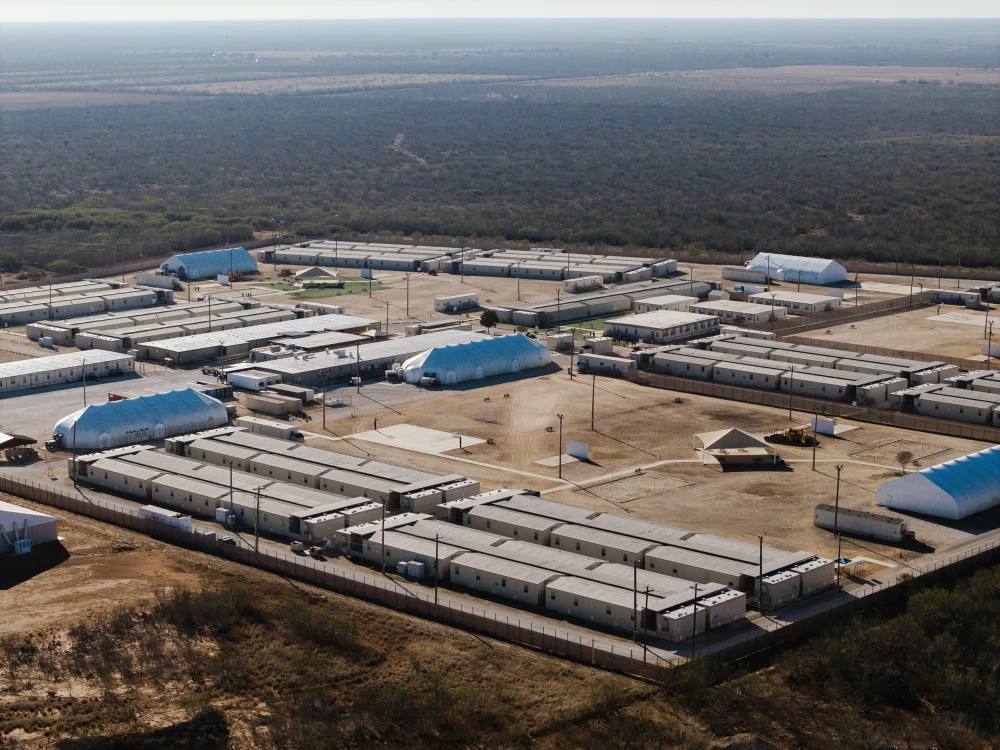
Immigrant families in Texas who are not in detention are being ordered to attend their immigration hearings inside a detention centre — the South Texas Family Residential Center in Dilley — in a new practice by the Justice Department's immigration courts that has left families choosing between two frightening options: show up at a locked facility, or stay away and risk being ordered deported. ABC News first reported the practice on November 10, 2026, and El País reported on November 19 that more families have received the summonses since, including a Venezuelan mother in San Antonio who was given six days to decide whether to attend.
Source: ABC News
Until now, the standard practice has been straightforward: families who are not in custody attend their hearings at their local immigration court. Under the new arrangement, the Executive Office for Immigration Review (EOIR) — the Justice Department agency that runs the immigration courts — is sending some of those families to Dilley instead, a remote facility about 70 miles southwest of San Antonio that is the country's only active family detention centre.
A summons with six days to decide
El País described the case of a Venezuelan mother living in San Antonio who learned her immigration hearing had been moved to Dilley. She received the summons with only six days to decide whether to attend, and she fears being arrested if she goes — and worries for her daughters if she does. Dilley is about an hour and 20 minutes from her home, and the facility is built from tents and shipping containers.
Source: El País
She is not alone. El País reported that after the Texas midterm elections, more families received similar summonses, including one family whose hearing was moved from 2028 to early November 2026. The people summoned are typically not in custody: they have appeared in court regularly, they do not have lawyers, and their earlier hearings took place in San Antonio courts.
Why families fear showing up — and fear staying away
Immigration lawyers and advocates say the dilemma is the point of concern. Families worry that walking into an active detention centre for a hearing means they may not walk out. At the same time, the hearing notices themselves warn that failing to appear can lead to a removal order if the Department of Homeland Security proves the notice was delivered. Advocates fear the choice will push some families to skip court altogether.
"We've never heard of a detained docket, like Dilley, a detention center, having non-detained court appearances." — Kristin Etter, director of policy and legal services at the Texas Immigration Law Council, speaking to ABC News.
The Justice Department has defended the arrangement. A department spokesperson told ABC News that EOIR conducts hearings "in a variety of locations throughout the country," including "DHS detention facilities," and that there is "nothing novel about EOIR maximizing available space options to ensure aliens receive their day in court in a timely manner." The Department of Homeland Security has previously denied allegations of poor conditions and inadequate medical care at Dilley.
What Dilley is
The South Texas Family Residential Center in Dilley was closed by the Biden administration in 2024 and reopened in 2025 under the Trump administration's detention expansion. The private company CoreCivic holds the contract to run it, and the facility has capacity for about 2,400 people. It is the only facility in the United States currently detaining family units, including infants and pregnant women.
The centre has been controversial for years. In July 2026, Representative Joaquin Castro and more than 110 other lawmakers demanded its closure, citing contaminated food, inadequate medical care, lights kept on through the night, detention beyond legal limits, and depression among children. Federal court filings in the ongoing Flores litigation show children held far beyond the 20-day limit: average stays of about 56 days and a median of 44 days in February–March 2026, with dozens of children held beyond 90 days.
What happens next
It is not yet clear how many families have received Dilley hearing notices, whether the practice will spread to other detention facilities, or whether anyone has been detained at one of these hearings — ABC News reported none of those details, and no arrest at a Dilley hearing has been reported. Under immigration court rules, a respondent can ask the judge to change the venue for good cause, or to allow the hearing by video or telephone. Lawyers say families who receive one of these notices should act immediately rather than ignore it, because an unanswered summons can end in a removal order.
The practice matters well beyond Texas. Immigration courts across the United States — including in Houston, Chicago and Los Angeles, where many Punjabi families have asylum cases pending — operate under the same notice and in-absentia rules. For any family with a case before the immigration courts, the lesson of Dilley is the same: read every hearing notice at once, keep proof of attendance, and get legal advice before the hearing date, not after it.