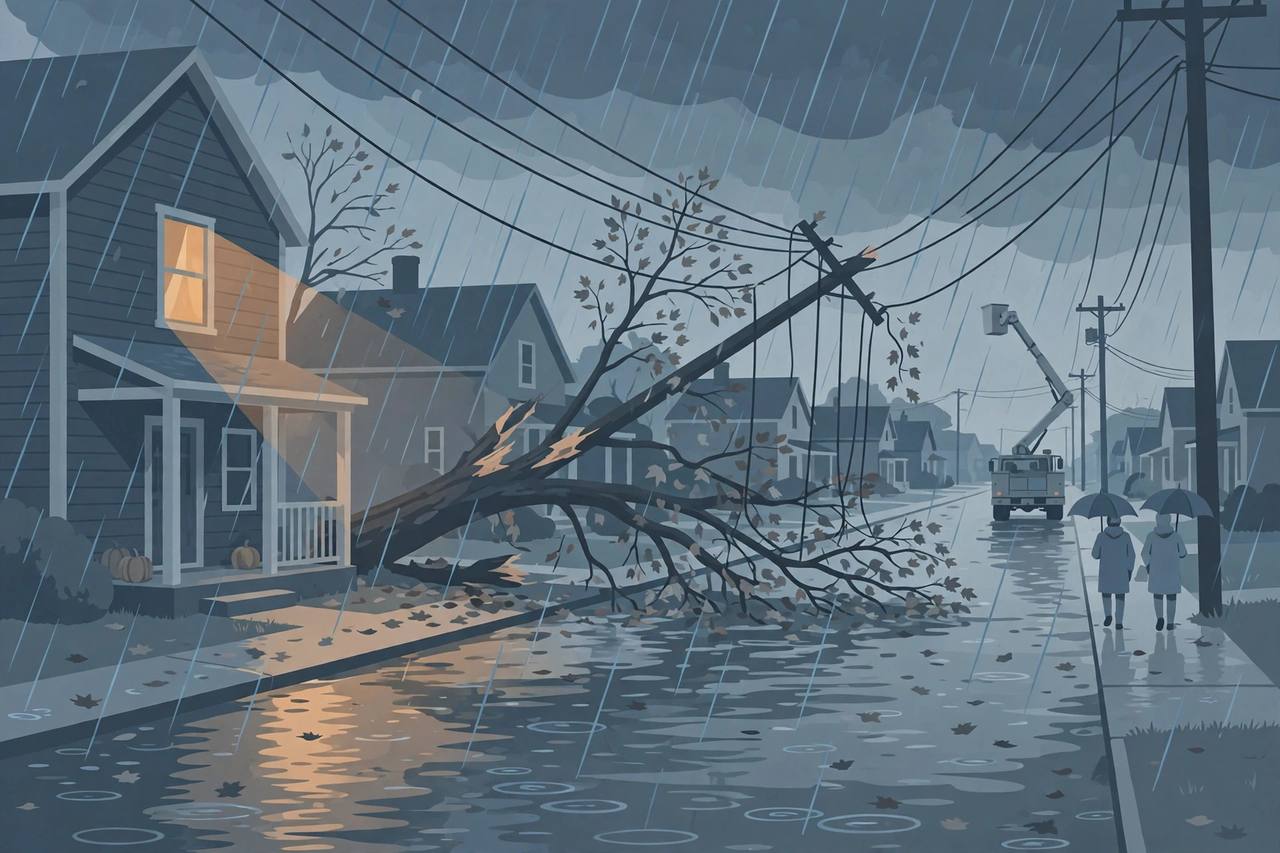
A powerful Thanksgiving nor'easter that battered the United States East Coast is finally pulling away, leaving hundreds of thousands of homes and businesses without power, flooded coastal streets and a long cleanup on one of the busiest travel weekends of the year. More than 500,000 customers were still without electricity on Friday afternoon, according to outage tracker PowerOutage.us, and utilities warned that some neighbourhoods could stay dark into Saturday.
Source: The Weather Channel / theweather.com
Where the outages hit hardest
Pennsylvania was among the hardest-hit states, with more than 122,000 customers still without electricity on Friday afternoon. New Jersey reported more than 92,000 outages, while Maryland had about 66,000, according to PowerOutage.us figures reported on Friday. An earlier Bloomberg snapshot put the counts at more than 117,000 in Pennsylvania, more than 85,000 in New Jersey and about 42,000 in New York State, with the remaining outages spread across Delaware, Maryland and Virginia.
Source: The Weather Channel / theweather.com
Strong wind gusts scoured the eastern seaboard, toppling trees and knocking down power lines. In New York City, trees were uprooted in Queens and Manhattan, and commuter rail lines in New Jersey were inundated, Bloomberg reported. Along the Jersey Shore, floodwaters submerged streets and forced road closures, and the National Weather Service warned that minor to moderate tidal flooding could continue on Friday, particularly around Chesapeake Bay, the tidal Delaware River and coastal back bays.
Source: Bloomberg
A Thanksgiving Day washout
The coastal storm developed off the Southeast coast in the middle of the week and intensified as it moved north on Wednesday, November 25, tracking along the Mid-Atlantic and New England shoreline through Thanksgiving Day on Thursday, November 26. New York City received about 1.5 to 2 inches of rain on Thursday, with locally higher amounts reaching 3 inches, and heavy rain and coastal flooding stretched from North Carolina through New York.
Source: The Weather Channel / theweather.com
The storm also made history in New York City: high winds were too strong to safely fly the giant balloons in the Macy's Thanksgiving Day Parade, and the 100th edition of the parade was postponed for the first time in its history. The parade is now getting a do-over, with its roster of performers returning for a rescheduled celebration.
Source: Associated Press
Travel chaos on the busiest weekend of the year
The storm struck in the middle of one of the busiest travel periods of the year. More than 1,000 flights were cancelled on Thanksgiving Day, and thousands more were delayed as airlines adjusted to high winds, low visibility and ground stops at major East Coast hubs. On the roads, the I-95 corridor from the Carolinas to Maine bore the brunt of the rain and wind, and drivers were warned of flooded stretches and debris.
Source: The Traveler
For the many Punjabi truckers who run the I-95 corridor and East Coast freight lanes, the advice from highway and weather officials is the same as for every driver: check road conditions before rolling, expect standing water and downed branches on secondary routes, and allow extra time — restoration crews and emergency vehicles are still working along the corridor.
The cleanup, and what happens next
By early Friday afternoon, utilities had made progress, but publicly available outage dashboards still pointed to more than 650,000 customers without electricity nationwide, most of them in the Mid-Atlantic and Northeast. Local utilities said much of the damage was scattered — downed distribution lines in residential neighbourhoods, which take crews longer to repair than single large transmission faults. Some neighbourhoods in New Jersey and south-eastern Pennsylvania had been without power since Thursday afternoon and were told restoration might not be complete until later on Friday or into Saturday, November 28.
Source: The Traveler
The National Weather Service said the storm's core was expected to weaken and move into the Canadian Maritimes by Saturday, November 28, but warned that its large size means residual showers, breezy conditions and lingering coastal flooding will persist into the weekend for some communities. A separate Pacific storm is also threatening Sunday return travel, the busiest travel day of the year, with snow in the Rockies and rain and gusty wind spreading east.
Source: The Traveler