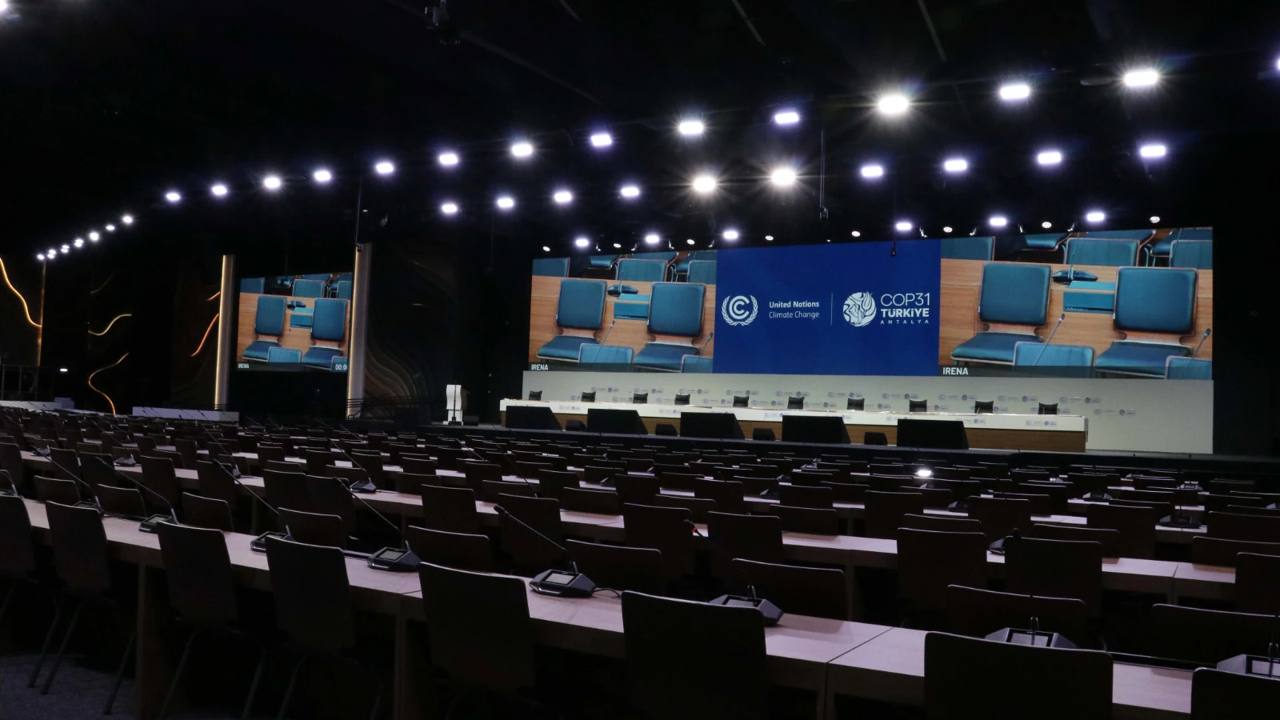
The COP31 climate talks in Antalya, Türkiye, slipped into overtime on Friday, November 20, with negotiators from nearly 200 countries still divided over a final deal and a plenary session scheduled to run to at least midnight. Another draft text was not expected until Saturday morning.
Source: edie
The dispute centres on a revised nine-page draft of the Antalya Accord published on Thursday, November 19, which removed every reference to phasing out fossil fuels. The first draft, published on Monday, had still carried options for accelerating a fossil fuel phase-out. In their place, the new text puts carbon capture, utilisation and storage (CCUS) at the centre, with a provisional target to scale global CCUS capacity to at least 500 million tonnes of CO2 a year by 2035 — against roughly 38 billion tonnes of current annual global energy-related CO2 emissions.
The revised draft also dropped or weakened language on several other central issues. A goal of $120 billion a year for climate adaptation — yaani 12,000 crore dollar — was removed, along with concrete measures to cut methane emissions, a precise target for tripling international climate finance, and language on the historical responsibility of industrialised nations to lead on climate protection.
One of the main deals still on the table is an electrification goal to raise the share of electricity in total global energy consumption from about 21 percent today to 35 percent by 2035 — but the final draft does not spell out that this should be reached with renewable energy, leaving the door open for fossil fuel power plants to be counted toward the target.
The November 19 draft had already stripped out all mention of fossil fuels as the Antalya talks neared their Friday deadline, drawing sharp criticism from vulnerable nations and campaigners before the summit went into overtime. Read the earlier story
Panama threatens to block the deal
Panama has put its foot down. Environment Minister Juan Carlos Navarro wrote to the summit's joint presidencies on Friday warning that Panama will not join any consensus, and will formally object in the closing plenaries, to any decision that does not meet eight demands — including a cap on global oil production. COP agreements require consensus from all parties, so a single formal objection can block a deal.
Navarro said earlier in the week that the world is being held hostage by a petroleum mafia, and that Panama would not lend its name to complacent or ineffective language. His letter also demands that all decisions follow the latest scientific evidence and IPCC findings, that countries acknowledge the failure to keep the 1.5C warming limit within reach, and that governments report on the gap between current emissions and the target.
Hosts defend the text; campaigners warn of a 'ghost COP'
COP31 President Murat Kurum defended the shift as vital for decarbonising hard-to-abate industrial sectors, while COP31 President of Negotiations Chris Bowen reiterated the summit's desire to retain its 'implementation COP' title. But campaigners say that if fossil fuels do not make it into the final agreement, the summit risks being the worst COP ever. Mohamed Adow, director of Power Shift Africa, was among those warning that the talks have been muzzled on the most important threat causing the climate crisis.
The row is a repeat of last year's COP30 summit in Belem, where the transition away from fossil fuels was erased from the final deal after resistance from fossil-fuel exporting countries. The United Nations has warned that the world is dangerously close to missing its decades-old goal of limiting global warming to 1.5 degrees Celsius above pre-industrial temperatures.
What happens next: negotiators were expected to argue into the night and through the weekend, with a new draft text due on Saturday morning. If a significant number of countries object to the text, the conference could end without a decision document at all — which would leave other elements, including the electrification goal, in limbo.