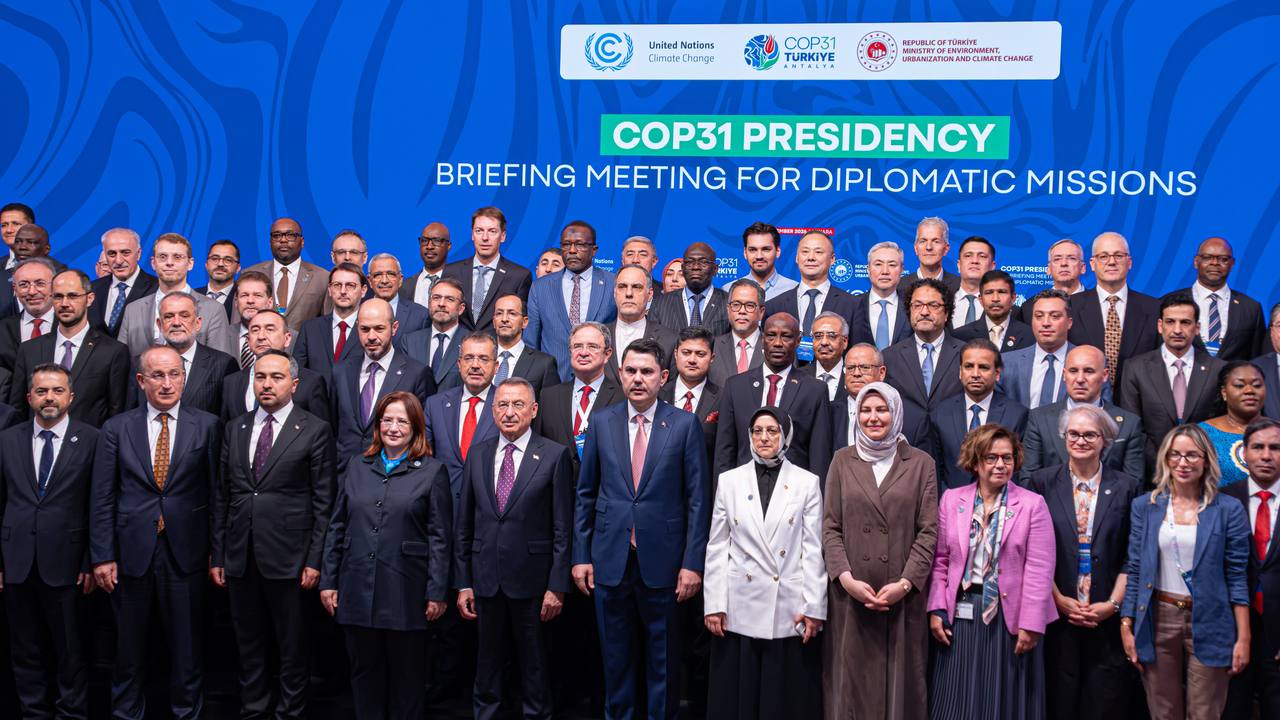
Climate negotiators at the COP31 summit in Antalya, Turkey, published a slimmed-down revised draft of the deal they hope to agree this week, stripping out any reference to ending the use of fossil fuels, Reuters reported on Thursday.
Source: Reuters
The first draft, published on Monday, had contained two references to fossil fuels and limiting their use — a subject that divides countries at the climate talks almost every year. The new text removes both.
Monday's opening text called for an immediate transition away from fossil fuels and put adaptation finance at $120 billion a year by 2035. That draft is the starting point the negotiators have now narrowed down. Read Monday's first-draft story
What the new text keeps — and what it drops
The revised draft still acknowledges that global warming could exceed the 1.5 degrees Celsius threshold countries have sought to preserve, and it calls for “deep, rapid and sustained” cuts to greenhouse gas emissions. It also encourages efforts to scale up technologies that can suck carbon out of the atmosphere.
Australia is leading the negotiations under a split presidency arrangement with Turkey. Canberra had said Monday's opening draft was always intended to be a broad document that would then be narrowed down, and the latest text is expected to be revised further before it can be agreed.
Source: Reuters
The fossil-fuel fault line
The sharpest divide remains over fossil fuels. Pacific countries have pressed for a clear phase-out commitment, while Russia has rejected references to the 1.5C limit and the Arab Group has resisted any mention of moving away from fossil fuels, according to reporting from the talks. Panama's environment minister, Juan Carlos Navarro, told a press conference on Wednesday that the negotiations were being held hostage by a “petroleum mafia”.
Source: AsiaToday
Outside the UN process, 30 nations have backed a separate fossil-fuel treaty, and 11 countries — including Denmark, Portugal, Luxembourg and Spain — published national roadmaps this week for phasing out fossil fuels.
On money, the draft proposes raising adaptation finance for developing countries to a minimum of $120 billion a year by 2035 — yaani 12,000 crore dollar — against estimated needs of about $305 billion a year (yaani 30,500 crore dollar) by 2035, according to the UN Environment Programme's 2026 Adaptation Gap Report. That finance gap matters most to developing countries, including India, which face the sharpest costs from heatwaves, floods and droughts.
Source: AsiaToday
What happens next
Ministers entered the penultimate day of talks on Thursday awaiting the revised text, with the presidency scheduling the first part of the closing plenaries for Thursday and the conference due to close on Friday. In recent years, efforts to secure consensus among the nearly 200 countries have regularly blown past the deadline by more than 24 hours, so the talks may yet run into the weekend.
What is solid
- A revised COP31 draft text was published on Thursday, 19 November 2026, in Antalya.
- Monday's first draft contained two references to fossil fuels; the revised text contains none.
- The draft acknowledges warming could exceed 1.5C and calls for deep, rapid and sustained emission cuts.
- 21 points in the negotiations were still unsettled as of Thursday, and the conference is due to close on Friday.
What is only claimed
- Whether any fossil-fuel language will return to the final text — Russia and the Arab Group oppose it, Pacific nations demand it.
- Whether the Friday deadline will hold — recent COPs have regularly overrun by more than a day.
- How far the proposed $120 billion a year in adaptation finance will go against the estimated $305 billion a year needed by 2035.
For readers in Punjab and India, the outcome matters directly: the adaptation money on the table is meant for countries facing the worst of the warming already under way — the heatwaves, floods and shifting monsoons that hit farms and cities across South Asia. A deal with no fossil-fuel language would still leave the hardest question — how fast the world stops burning coal, oil and gas — for another year.