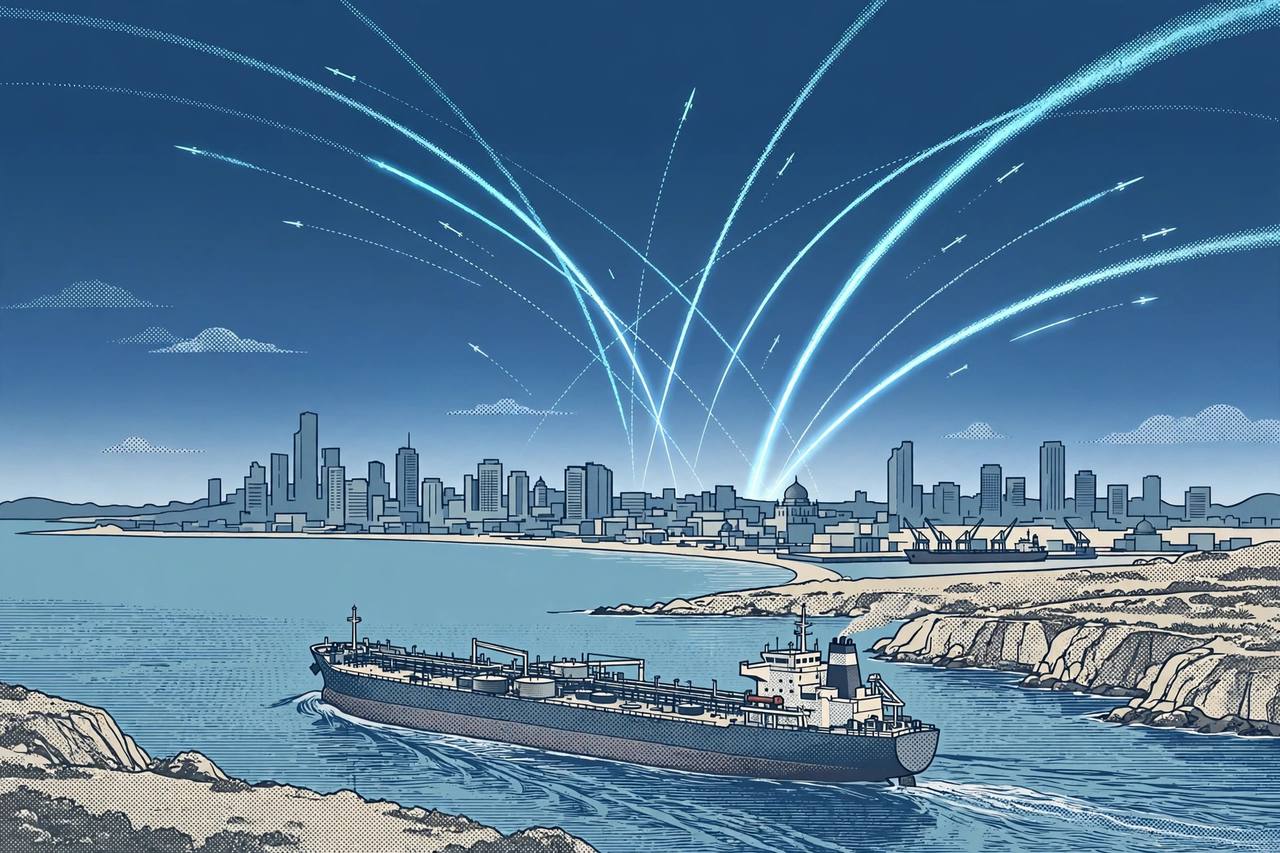
Gulf countries said on Wednesday they had intercepted missiles and drones from Iran and its Houthi allies in Yemen, in a fresh round of exchanges that followed a United States strike on Iran's Qeshm Island — and Iran's army said it had targeted United States drone and missile installations at Kuwait's Ali Al Salem air base, Reuters reported.
The Iranian claim is a new development on top of Tuesday night's interceptions over Kuwait, when Kuwait's air defences engaged hostile drones and Bahrain ordered residents to shelter before issuing an all-clear. Read Tuesday night's Kuwait and Bahrain report
Reuters said it was the first Iranian attack on oil-rich Kuwait since September. Kuwait's armed forces said their air defences were countering hostile drone attacks and warned residents that explosion sounds were the result of interceptions. Kuwait itself did not name the origin of the drones, and no casualties or damage in Kuwait were reported in the statements carried by Reuters and Al Jazeera.
Neighbouring Bahrain said it had intercepted Iranian aerial attacks for the third time this week. Bahrain accused Tehran of maintaining a “systematic hostile approach” of targeting the country, Reuters reported. Bahrain hosts the United States Navy's Fifth Fleet, and its Interior Ministry had already issued a fresh security alert late on Tuesday before the latest interceptions.
In a third theatre of the same night's fighting, the Saudi-led coalition fighting the Iran-aligned Houthis in Yemen said it had destroyed a cruise missile launched by the militia towards the Saudi capital, Riyadh, Reuters reported. The coalition statement was the first reported Houthi cruise-missile launch towards Riyadh in this round since Saudi interceptions reported on November 15.
On Tuesday, United States fighter jets fired on a Revolutionary Guards missile launch site on Qeshm Island in the Strait of Hormuz, a US military official told Reuters, saying the strike was in response to Iran's attacks on US personnel and assets. Iranian media, citing an Iranian official, said the US attack did not damage infrastructure. Read the Qeshm strike report
Diplomacy runs alongside the fire
The exchanges came despite active mediation. Qatari and Iranian officials met on Tuesday for talks aimed at “bridging perspectives and narrowing the gap between proposals presented on the ground,” Qatari spokesperson Majed Al Ansari said, in remarks reported by Reuters. That followed a visit to Oman by Iranian Foreign Minister Abbas Araqchi, who held talks on safeguarding maritime corridors and, in a post on Telegram, said he had informed Oman's Sultan Haitham bin Tariq about Iran's diplomatic initiative to end the war.
The war began when the United States and Israel struck Iran on February 28 and has since widened to include Iranian strikes on Israel and on US assets across the Middle East, Reuters reported. In Washington, President Donald Trump said on Tuesday the US was taking seriously a CNN report of a possible Iranian “dirty bomb” plot against the US capital; on Wednesday Secretary of State Marco Rubio said he did not think there was any imminent threat to Washington, and Iran's Foreign Ministry denied the allegations as “baseless.”
Shipping, oil and the Gulf's Punjabi and Indian workers
Oman and Iran lie on opposite sides of the Strait of Hormuz, a waterway that carried about one-fifth of global energy supplies before the war but is now partly blocked by Iran, Reuters reported. A surge in tanker attacks since October threatens to further strain supplies; on Tuesday a crew abandoned a liquefied petroleum gas tanker off Oman's Khasab. Brent crude was trading around $92.53 a barrel early on Wednesday, with US West Texas Intermediate near $84.77, as rising US inventories weighed on prices even as the Gulf fighting continued.
For the lakhs of Punjabi and Indian workers who live in Kuwait, Bahrain, Saudi Arabia and the other Gulf states, nights like this one are now a recurring safety concern: air-defence interceptions over Gulf cities, official shelter alerts, disrupted shipping through Hormuz and pressure on the oil economy that employs so many of them. No Indian or Punjabi casualties were reported in Wednesday's statements.
What is solid
- The United States struck a Revolutionary Guards missile launch site on Qeshm Island on Tuesday, according to a US military official speaking to Reuters
- Kuwait's air defences engaged hostile drones and Bahrain says it intercepted Iranian aerial attacks
- The Saudi-led coalition says it destroyed a Houthi cruise missile launched towards Riyadh
- Qatari and Iranian officials held mediation talks on Tuesday
What is only claimed
- Iran's army says it targeted US drone and missile installations at Ali Al Salem base in Kuwait — no independent confirmation of any hit or damage has been reported
- Iranian media, citing an Iranian official, say the US strike on Qeshm caused no infrastructure damage, which the US has not confirmed
What happens next will be watched in three places at once: in the Gulf, where each night's interceptions raise the risk of a miscalculation over bases that host US forces; in the mediation channel, where Qatar and Oman are trying to narrow the gap between the proposals on the table; and in Shenzhen, where the APEC leaders' meeting opening this week brings the war's biggest outside powers into the same city. For now, Reuters reported, the back-and-forth attacks are a reminder of the hurdles facing every effort to end the nine-month-old war.