Iran's armed forces have warned that any place from which Iran is attacked will be treated as a legitimate target, in the sharpest signal yet that Tehran is ready to widen its response if the United States strikes again. The warning came on Saturday from Brigadier General Kioumars Heydari, deputy chief of the General Staff of the Iranian Armed Forces, who said the response to any renewed attack would not be confined to one place or region.
Source: Press TV
“If the enemy makes a mistake and commits an act of aggression against our country, any point from which a threat against us emerges, in any country in the world, will be a legitimate target for us, and that source will be targeted,” Heydari said, speaking during a visit to an exhibition of documents about the US-Israeli wars on Iran. He said Iran's armed forces were fully prepared to respond to any hostile action and did not take US President Donald Trump's deadlines for renewed aggression seriously.
Source: Press TV
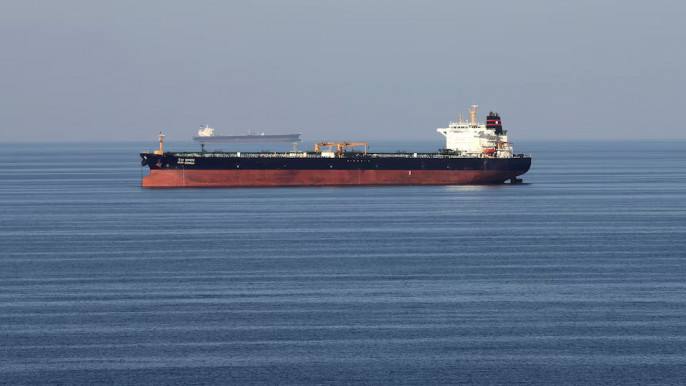
On Thursday, US aircraft disabled the Palau-flagged cargo ship Pacific Archer in the Gulf of Oman after it left the Iranian port of Bandar Abbas, the 15th vessel disabled since the blockade began. Read the earlier story
Hormuz will stay shut, Tehran says
Mohammad Mokhber, an aide to Supreme Leader Mojtaba Khamenei, told reporters on Friday that “definitely, neither will the Strait of Hormuz open nor will we let the blockade stay in place.” Asked when the standoff would end, he said: “It is happening right now.”
Source: Iran War Day 273 daily report
Shahram Irani, commander of Iran's navy, told state television at Friday prayers in Tehran that “the order is that the Strait of Hormuz stays closed” and said operations to break the blockade had begun, without giving routes, vessels or a timetable. He also claimed, without giving a date or names, that Iranian navy commandos had retaken two Iranian tankers seized by the Americans — a claim that could not be independently verified.
Source: Iran War Day 273 daily report
Iran's military chief of staff, Ali Abdollahi, said the army's navy was ready to give “a decisive, effective and regret-inducing response” to any threat, and the army ground force's deputy for operations issued fresh readiness messages on Friday. In parliament, MP Alireza Monadi Sefidan said the strait must stay closed “until complete victory”, while MP Mojtaba Yousefi said US bases in Europe and the region would be “our legitimate target” in the next war.
Source: Iran War Day 273 daily report
The blockade standoff
The US military said on Friday that its aircraft had fired precision munitions at the stern of the Palau-flagged M/V Pacific Archer on Thursday, disabling its propulsion after the ship left Bandar Abbas and tried to run the blockade in the Gulf of Oman. The civilian crew was unharmed. US Central Command said it was at least the 15th vessel disabled since the naval blockade of Iranian ports began in the spring.
Source: AP
The IRGC Navy separately claimed that one of two tankers slipping through north of Oman's Ghanam island exploded on a sea mine on Friday morning and the other turned back — a claim reported by Iranian outlets that has not been independently confirmed. Army commander Amir Hatami, according to Al-Manar, has instructed the navy to strengthen the closure of the strait, making any reopening conditional on Iran's seven demands, and warned that passage would become more difficult if they were not met.
Source: Iran War Day 273 daily report
Background: a war in its tenth month
The war began on 28 February 2026, and Friday marked its 273rd day. The United States has enforced a naval blockade of Iranian ports since the spring, while Iran has kept the Strait of Hormuz — the narrow waterway between Iran and Oman through which Gulf oil reaches the world — closed. President Donald Trump has rejected Iran's proposal to reopen the strait within seven days, and Iran's foreign minister, Abbas Araghchi, has said only negotiation can end the war, with mediators still active.
What it means for the Gulf, oil and workers
The strait is the route through which the Gulf's oil reaches world markets, so every new warning and every disabled ship is watched closely by energy markets and shipping companies. For the lakhs of Punjabis and Indians working in the Gulf states, the stakes are direct: a wider war would threaten jobs, remittances and travel home, and the region's governments have been pressing for a diplomatic way out even as the military standoff hardens.
What happens next
Three questions will decide what follows: whether Iran's claimed blockade-breaking operations show up in shipping movements in the coming days; whether Washington answers Tehran's “legitimate target” warning with new strikes or new pressure; and whether the mediation channel Araghchi has pointed to can produce talks before either side acts. For now, both sides are talking about the next round — Tehran about a response without geographical limits, Washington about keeping the blockade in place.
What is solid
- Brig. Gen. Kioumars Heydari warned on Saturday that any place used to attack Iran would be a legitimate target (Press TV, Mehr News).
- US Central Command said it disabled the Palau-flagged M/V Pacific Archer in the Gulf of Oman on Thursday, the 15th vessel disabled since the blockade began (AP, Reuters).
- Mohammad Mokhber said on Friday the Strait of Hormuz would not open and Iran would not let the blockade stay (Iran International).
What is only claimed
- The IRGC Navy's claim that a tanker hit a sea mine off Ghanam island — reported by Iranian outlets, not independently confirmed.
- Navy chief Shahram Irani's claim that Iranian commandos retook two seized tankers — no date, names or independent confirmation given.
- The details of Iran's “seven demands” for reopening the strait — reported via Al-Manar, not published in full.