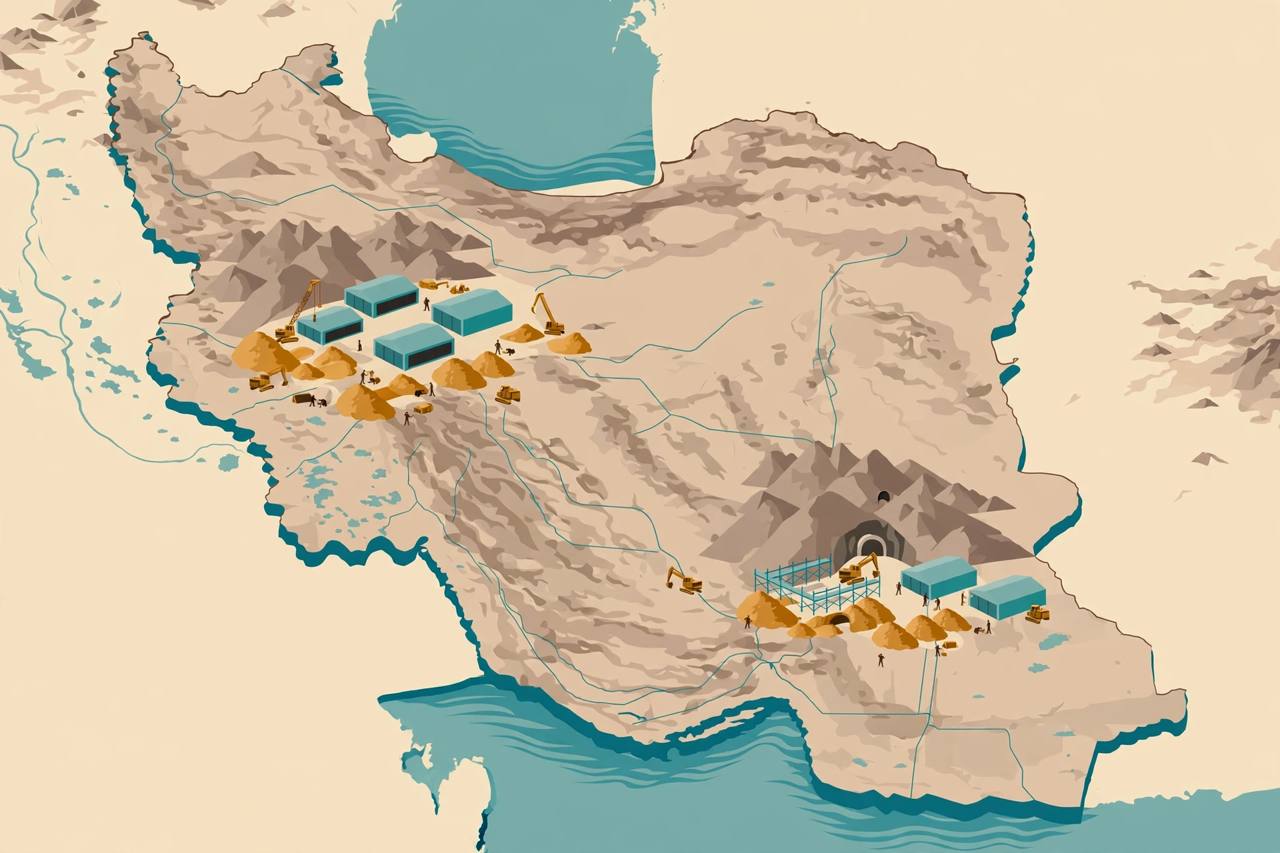
Iran appears to be undertaking significant new construction near at least two of its major missile sites and repairing bases damaged by months of US and Israeli air strikes, analysis of satellite images suggests, BBC Verify reported on Friday. Evidence of digging and new buildings is visible in satellite imagery taken in November at the Garmdareh military base in Karaj, near the capital Tehran, and the Shahroud base in the north, analysts at British intelligence company MAIAR, who reviewed the photos, told BBC Verify.
Source: BBC Verify
At least 12 other military sites, including missile complexes and air bases, appear to show signs of repairs. New roofs have been built on destroyed buildings at the Kermanshah missile base in western Iran, near the border with Iraq, while damaged buildings and debris have been cleared at the Parchin military complex, east of the capital, which has been repeatedly repaired despite a succession of air strikes.
Digging underground at Shahroud and Karaj
The excavations near Shahroud could potentially be related to the production of missiles, said Jim Lamson, a former CIA analyst who focused on Iran. Because the nearby air base at Shahroud has been targeted multiple times in recent years, Iran's Islamic Revolutionary Guards Corps (IRGC) is probably trying to find ways to move its production facilities underground, he said. A MAIAR analyst noted that Iran has 'a pattern of moving infrastructure underground to protect them from further strikes'.
At the Parchin complex, analysts said satellite images appear to show significant construction completed at the Taleghan 2 facility, with damaged buildings levelled and the aftermath of attacks on an underground bunker repaired and reinforced with concrete. At Karaj, multiple vehicles were visible and improvements appear to have been carried out at the nearby airbase; the images appear to show 'a new portal for an underground facility', said Sam Lair, a research analyst at the Foreign Policy Research Institute (FPRI), which has studied recent developments at Iranian sites extensively. A MAIAR analyst also identified new construction and excavations outside tunnel entrances near Qom, close to the Fordo underground uranium enrichment complex, which the US and Israel have bombed multiple times.
Source: BBC Verify
The construction work is unlikely to be an effort to deceive foreign intelligence agencies, said Sean O'Connor, an analyst with the intelligence firm Janes, because such a project 'would be costly and may achieve little'. Mark Mellett, a defence analyst and former head of the Irish military, said underground facilities also make it 'harder for outside observers to assess the extent and operational status' of the sites. The findings are broadly in line with FPRI's own October satellite survey of Parchin, Khojir and Shahroud, which found debris clearing and a growing tunnel complex at Shahroud even while solid-propellant production buildings remained out of operation.
Source: Foreign Policy Research Institute
Washington says the base was destroyed; Tehran says it still has missiles
The rebuilding comes after repeated assurances from the White House that US-Israeli attacks have depleted Iran's armed forces, which President Donald Trump dismissed as a 'complete and total mess'. A Pentagon spokesperson previously said the US had 'destroyed up to 90% of Iran's drone, ballistic missile, and naval industrial base' and 'significantly degraded' the country's ability to launch drone and missile attacks. Iran, for its part, claims it retains large stockpiles of missiles; footage broadcast on state TV this week claimed to show dozens of missiles at the entrance to an underground facility in southern Iran, and in August state TV footage claimed to show Khordad surface-to-air missiles emerging from a tunnel near Bandar Abbas. Those Iranian claims have not been independently verified.
Speculation has mounted in recent weeks that the US could resume attacks on Iran after this week's midterm elections. On Wednesday, Vice-President JD Vance cited the war's unpopularity with voters for the Republicans' poor midterm performance, saying it may have cost his party control of the Senate 'for the next 6 years'. Activity at military sites would show Tehran is bracing for further US and Israeli attacks, said Mark Cancian, a military analyst with the International Security Program at the Center for Strategic and International Studies (CSIS): 'The purpose is to better defend itself against future attacks. It also indicates a priority on rebuilding military capability rather than rehabilitating the economy.'
What happens next
The war that began with US-Israeli strikes on Iran on February 28 has left the Strait of Hormuz largely blocked, oil markets volatile and lakhs of Punjabi and Indian workers across the Gulf watching every escalation for its effect on jobs, flights and remittances. If Iran succeeds in moving missile production underground, US and Israeli planners would face harder targets in any resumed strike campaign — one reason satellite watchers expect the digging at Garmdareh, Shahroud and Qom to be monitored closely in the weeks ahead. Iran has not commented publicly on the BBC Verify findings.
What is solid
- BBC Verify, citing November satellite imagery reviewed by MAIAR analysts, reported new excavation and buildings at Garmdareh and Shahroud and repair signs at at least 12 other military sites, including Kermanshah and Parchin.
- Analysts from MAIAR, Janes, FPRI and CSIS told BBC Verify the pattern fits Iran moving infrastructure underground to protect it from further strikes.
- FPRI's separate October satellite survey of Parchin, Khojir and Shahroud independently found debris clearing and tunnel work at Shahroud.
What is only claimed
- The Pentagon's claim to have destroyed up to 90% of Iran's missile and drone industrial base is a US government claim; Iran says it retains large missile stockpiles, and neither side's full claim has been independently verified.
- What the new excavation will be used for — missile production or other purposes — is analyst assessment from imagery, not confirmed Iranian disclosure.