Myanmar's military-backed leader Min Aung Hlaing said on Wednesday, November 18, that his administration is reconsidering the country's relationship with Southeast Asia's regional bloc ASEAN, but would continue discussions with its members, Reuters reported.
Source: Reuters
The former junta chief turned president, whose coup against an elected civilian government in 2021 triggered a nationwide civil war, also told parliament he plans to hold a peace conference in February, with the aim of ending fighting within his five-year term.
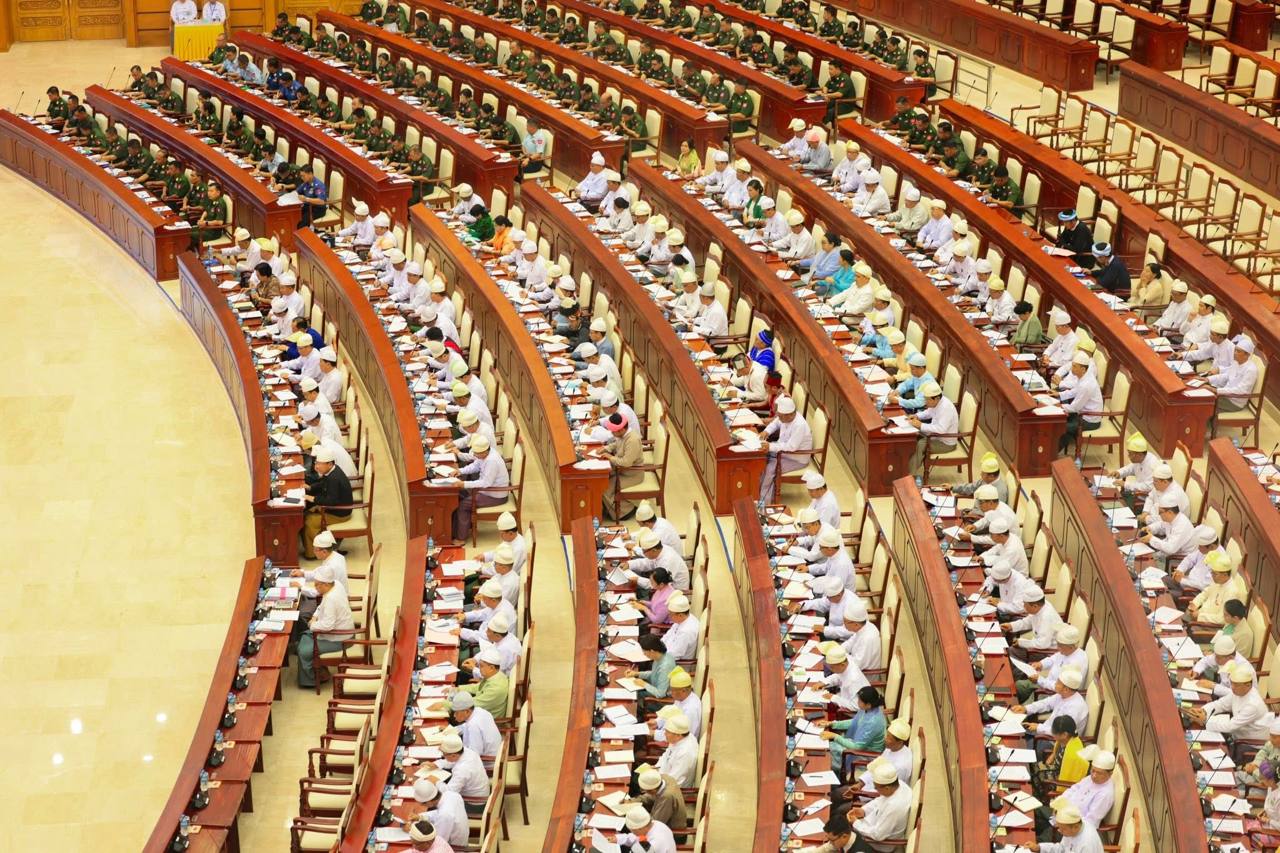
“They are imposing such pressure only on our country,” Min Aung Hlaing said. “There was never pressure placed on or indignity shown toward an ASEAN member before. But with Myanmar, they are doing that.” The Associated Press, which also reported the speech, said he told more than 540 lawmakers, military representatives and government officials in the parliament building in the capital, Naypyitaw, that ASEAN's statement on Myanmar was unreasonable and only reflected the personal positions of some of the bloc's leaders rather than a broader consensus. “Our government has decided to review our future relations with ASEAN,” he said, adding that Myanmar would continue discussions with individual ASEAN member states.
Source: Associated Press via Jeepney News
Min Aung Hlaing's remarks answer the ASEAN leaders' statement issued on Sunday at their annual summit in Manila, which said they may consider gradually restoring Myanmar's full political representation only if the country makes progress on the bloc's longstanding plan to resolve its crisis — the latest step in ASEAN's calibrated-engagement approach. Read the earlier ASEAN decision
The five-point consensus at the centre of the row
At their annual summit in Manila, ASEAN leaders said they had agreed to pursue a “calibrated engagement” through a “phased and progress-based” approach, if Myanmar makes “sustained and concrete” progress on the bloc's proposed plan, known as the five-point consensus. The consensus, adopted soon after the 2021 coup, calls for an immediate end to violence and for the launch of constructive dialogue among all parties, while also offering ASEAN mediation and humanitarian assistance. The Philippines, the current ASEAN chair, whose foreign ministry did not immediately respond to a request for comment on Min Aung Hlaing's remarks, hosted the summit, which met this week without including Myanmar.
“For Myanmar and ASEAN to resume normal relations, we will take into consideration Myanmar's stance and the intentions of ASEAN member countries. We will continue to discuss with ASEAN member countries,” Min Aung Hlaing said. Since he became president in April following a widely criticised election dominated by an army-backed party, he has made visits to several ASEAN member countries, including Thailand, Malaysia and Vietnam, and nearly half the bloc's 11 members have stepped up bilateral engagement since the election — engagement he has been pushing to widen, and which appeared to leave him disappointed by the bloc's collective position this week.
A February peace conference — with few details
Min Aung Hlaing offered few details about his proposed peace conference, which would be the first since he became president. Previous peace talk efforts have produced limited results. He has repeatedly criticised ASEAN's peace plan, saying it had been issued without the agreement of all member states and that the bloc had discriminated against Myanmar, according to AP.
The promise comes as fighting rages on in Myanmar, where the military is locked in conflict against an array of armed groups. More than 100,000 people have died and millions have been displaced, and despite calls for calm, the Myanmar military has stepped up a deadly bombing campaign in parts of the country, including multiple airstrikes that have killed large numbers of civilians, Reuters reported.
Min Aung Hlaing did not announce any withdrawal from ASEAN, and the review he described leaves bilateral ties with individual members untouched. The tests ahead are whether the February peace conference is held and who attends it, and whether ASEAN's phased, progress-based approach moves at all while Myanmar's war continues.