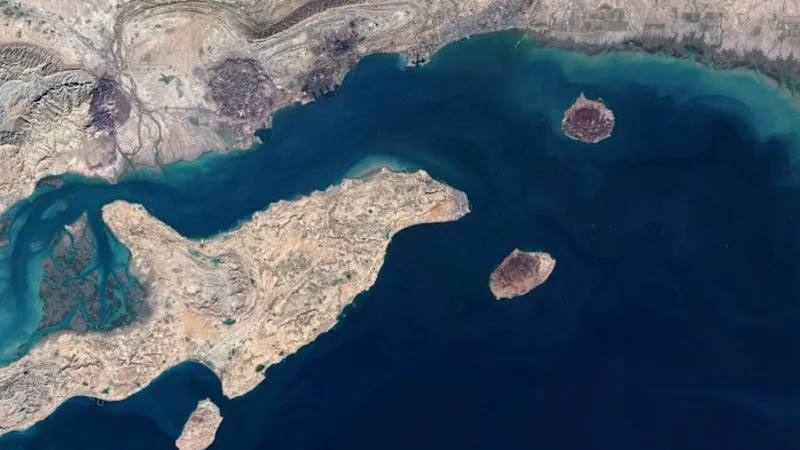
An explosion and smoke seen on Iran's Qeshm Island on Friday were caused by the disposal of unexploded munitions, Iran's semi-official Tasnim news agency reported, citing an official — correcting its own earlier report of a missile strike there. Reuters reported the correction on Friday, November 20.
Tasnim had first reported that a missile struck an area near Qeshm city, in the Strait of Hormuz, at around 6:50pm local time on Friday, with no immediate reports of casualties or confirmed damage. Hours later, the agency said the blast and smoke came from the disposal of unexploded munitions, and that further details would follow once the relevant authorities confirmed the incident.
This is a correction to a fast-moving story. Qeshm was last struck in a confirmed US attack on November 17, when American fighter jets hit an IRGC missile launch site on the island. Read our earlier report on the last confirmed strike on Qeshm
No casualties and no damage were reported from Friday's incident on Qeshm, and no target was confirmed. The island, the largest in the Persian Gulf, sits inside the Strait of Hormuz, the narrow waterway through which about one-fifth of the world's oil passes.
Why this matters
The correction matters because Qeshm has been hit repeatedly during the US-Iran war, which began on February 28, 2026, and every reported blast on the island is read as a possible escalation. US forces struck Qeshm on November 3, on the eve of the US midterm elections, and President Donald Trump later acknowledged what he called 'minor strikes', including an attack on an anti-aircraft device. On November 17, US fighter jets again struck an IRGC missile launch site on the island with precision munitions, a US official told AFP, describing the attack as self-defence after the Revolutionary Guard fired on American aircraft. Iran said that strike caused no serious damage.
The wider exchange has continued all week. Iran's Revolutionary Guard claimed drone attacks on a US radar site at Sheikh Isa Air Base in Bahrain, and on Sunday said six drones had targeted a US air-defence radar at the Al-Riffa helicopter base in Bahrain; Bahrain said it intercepted the attack. CBS counted it as the third attempted Iranian strike on a US installation in five days, all intercepted. A third US aircraft carrier, the USS Theodore Roosevelt, reached the region on November 15.
Shipping through the Strait of Hormuz remains the central concern. The waterway has been heavily disrupted since the war began, with Iranian missile and drone attacks and a US naval blockade of Iranian ports. Iran says tankers have hit mines on routes it calls unauthorised — claims that have not been independently confirmed — while the US military says the southern shipping lanes are free of mines and safe to use. No shipping disruption was reported from Friday's incident on Qeshm.
Diplomacy has stalled. On November 12, President Trump wrote on Truth Social that the United States does not need a deal with Iran, and US officials say he plans to raise the war with China's Xi Jinping and Russia's Vladimir Putin at a meeting in Shenzhen on Thursday. Gulf states have been pressing for a way to avert a return to all-out war, while mediators have stepped up efforts to prevent further escalation.
What is solid
- An explosion and smoke were seen on Qeshm Island on Friday, November 20.
- Tasnim first reported a missile strike near Qeshm city at about 6:50pm local time.
- Tasnim later reported, citing an official, that the blast was caused by the disposal of unexploded munitions.
- No casualties or damage were reported from Friday's incident.
- US jets struck an IRGC missile launch site on Qeshm on November 17, a US official told AFP.
What is only claimed
- Whether any missile struck Qeshm on Friday — Tasnim first reported a missile strike, then said the blast was the disposal of unexploded munitions.
- Iran's claim that tankers have hit mines in the strait on unauthorised routes — the US military says the southern lanes are clear and safe.
What happens next: Tasnim said further details would be published after the relevant authorities confirm the incident. Attention now turns to whether Iranian officials give a fuller account of the munitions disposal, and to the Shenzhen meeting on Thursday, where the war is expected to be discussed. For the thousands of Punjabi and Indian workers in the Gulf, the immediate point is that Friday's incident caused no reported casualties and no reported disruption to shipping — but the strait remains the most watched waterway in the world while the war continues.