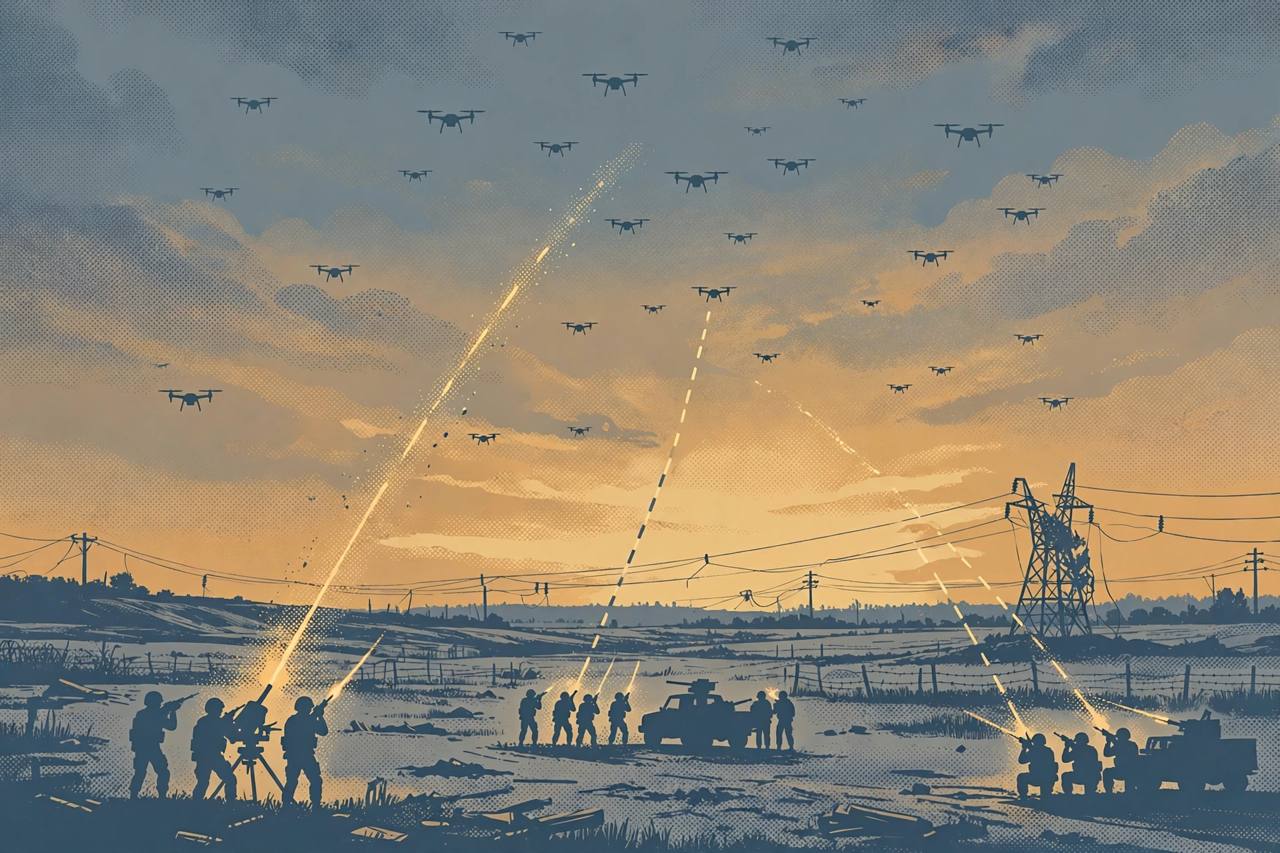
Ukraine's General Staff has put a number on the drone war being fought along the front line: between October 29 and November 4, Russian forces deployed 7,947 Lancet and Molniya attack drones at the tactical level, and Ukrainian defence forces neutralised 7,225 of them — almost 91 per cent. The figures were announced by the General Staff on Facebook, reported by Ukraine's Ukrinform news agency and carried by Italy's LaPresse on November 6.
Source: LaPresse via Ukrinform
"Between 29 October and 4 November, the enemy deployed 7,947 of these drones. Our units neutralised 7,225 of them, equivalent to almost 91 per cent. The peak in the deployment of Molniya drones was recorded on 30 October, with 1,609 units launched in a single day," the General Staff statement reads. Over the week, Russia launched an average of more than 1,100 such drones per day.
The Institute for the Study of War (ISW), in its November 5 campaign assessment, reported the same General Staff figures, noting the tactical drones were used against Ukrainian positions, logistics and the civilian population of frontline settlements. ISW separately recorded that on the previous night Russia had launched two Kh-35 anti-ship missiles and 128 drones against Ukraine — a reminder that the frontline tactical swarm runs alongside a nightly long-range strike campaign against cities and energy sites.
Source: Institute for the Study of War
A second, bigger night in the rear
The rear-area campaign escalated the same night. Ukraine's Air Force said Russia began a large attack at 6 p.m. on November 5, launching 227 attack drones — including 86 jet-powered models — from Orel, Kursk, Millerovo and Primorsko-Akhtarsk in Russia, and from occupied Donetsk, Hvardiiske and Cape Chauda in Crimea. In preliminary data as of 8 a.m. on November 6, air defences had neutralised 196 drones, including 70 of the jet-powered type, strikes were recorded at 14 locations and debris fell at eight more, while about 15 drones were still in Ukrainian airspace, according to reports of the Air Force statement by UATV and 112.ua.
Source: UATV via 112.ua
Ukrainian sources reported damage to electricity generation and distribution facilities in the Kyiv, Zhytomyr, Kirovohrad, Ternopil, Volyn and Odesa regions in the overnight attacks, and said the capital Kyiv had been without water for three days as repair crews worked on strike-damaged infrastructure. Those damage reports are Ukrainian accounts of the night and could not be independently verified from outside the country.
The General Staff stressed that the battle for the skies is not only fought over cities in the rear, where Shahed-type drones — conventional and jet-powered — are intercepted, but daily along the front line itself, on which, it said, the stability of the front, the safety of nearby communities and civilian lives depend.
The drone figures land days after President Volodymyr Zelenskiy told leaders in Madrid that Russia has damaged every power plant in Ukraine and appealed for transformers, cables and generators — read that report here: Zelenskiy's Madrid energy appeal
What happens next
The numbers arrive ahead of US–Russia–Ukraine trilateral talks expected in Abu Dhabi on November 10–11, aimed at ending a war now in its fifth year since Russia's full-scale invasion. Kyiv has repeatedly asked Western partners for more air-defence systems and interceptors, arguing that jet-powered drones and ballistic missiles are the hardest threats to stop; Moscow has not commented on the specific figures in these two releases.
What is solid
- Ukraine's General Staff published the weekly tactical-drone figures (7,947 launched, 7,225 neutralised, Oct 29–Nov 4), reported by Ukrinform/LaPresse and by ISW.
- Ukraine's Air Force reported a 227-drone overnight attack on Nov 5–6, with 196 neutralised in preliminary 8 a.m. data, reported by UATV/112.ua.
What is only claimed
- The launch and interception totals are Ukrainian official claims from an active war zone and have not been independently verified.
- Russia has not confirmed or commented on these specific figures, and damage assessments for the overnight strikes rest on Ukrainian sources.