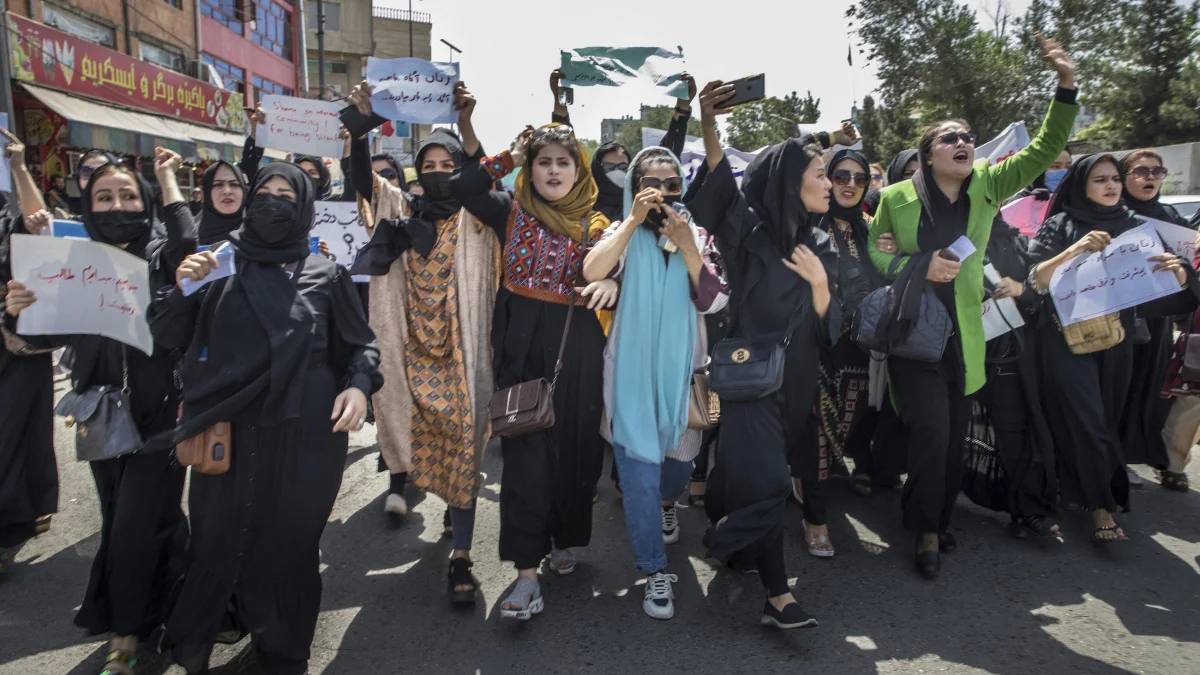
Geneva/Kabul — United Nations agencies warned on Friday of an escalating assault on the rights and freedoms of women and girls in Afghanistan that is preventing growing numbers of them from getting vital medical care.
Sofia Calltorp, UN Women's Chief of Humanitarian Action, who has just returned from Afghanistan, told a UN briefing in Geneva that the systematic attack on women's freedoms continues — and is now reaching into healthcare itself. Susan Ferguson, UN Women's Special Representative in Afghanistan, spoke from Kabul alongside her.
Since taking power in 2021, the Taliban authorities have issued more than 100 decrees stripping women and girls of their rights, UN Women said. Women are banned from many public spaces and most places of work, and some 2.6 million girls have been barred from secondary education — which UN Women says is projected to push more girls into child marriage and increase maternal deaths.
The newest warning concerns healthcare. Women are now being excluded from providing healthcare, and a ban on women training in healthcare professions — combined with restrictions in many communities on male health workers treating women and girls — is making it significantly harder for sick or pregnant women to get care. UN Women warned there is a growing risk that Afghanistan's 22 million women and girls will be denied access to healthcare in the longer term.
Funding cuts have made the situation worse. This year alone, UN Women, the UN aid coordination office OCHA and partners report that nearly 300 humanitarian health facilities have been closed or suspended, affecting more than one million women and girls; more than 193 service points for survivors of gender-based violence have closed, affecting more than one million women and girls; and around 3.4 million women and girls in need are now unlikely to have access to water, sanitation and hygiene services.
Calltorp described meeting a woman in Kunar province who had suffered multiple miscarriages without access to healthcare, and men who spoke of restrictions preventing them from supporting women. She also met women facing their second winter displaced from their homes after losing everything in an earthquake last year.
The crisis is layered on top of other shocks. More than 1.5 million Afghan women and girls have returned from Iran and Pakistan since January 2024 — many of them forcibly — arriving in a country some have never known. A UN Women survey of more than 3,000 people found that three-quarters had experienced at least one serious environmental shock in the past year, exposing up to 16 million women and girls to displacement, loss of safe water and shelter, and protection threats.
UNESCO and UNICEF warned earlier this month that 53 percent of Afghanistan's primary-school-age children are out of school, with 2.6 million girls barred from classrooms — the education crisis behind today's healthcare warning. Read the earlier report
Women-led organisations — which deliver much of the remaining help to women, for women — are themselves at risk. A UN Women survey of 74 women-led organisations across Afghanistan this year found that half expect to suspend operations or close by April 2027 because of aid cuts, putting up to 427,000 women at immediate risk of losing access to services. Ferguson described Afghanistan as the world's worst women's rights crisis and said Afghan women are now fighting for their own survival.
What is solid
- More than 100 decrees restricting women and girls have been issued since 2021, UN Women says.
- Nearly 300 health facilities have closed or been suspended this year, according to UN Women and OCHA.
What is only claimed
- The scale of future harm — UN Women warns of a growing risk that 22 million women and girls could be denied healthcare; that is a projection of where current trends lead, not a counted outcome.
What happens next: UN Women says it is staying and delivering — providing emergency cash assistance, counselling, vocational training, literacy programmes and food packages through women's organisations — but with needs growing and funding shrinking, it warns that impossible choices are being forced over which women and girls receive support and which are turned away. Half of the surveyed women-led organisations say they may have to close within five months.