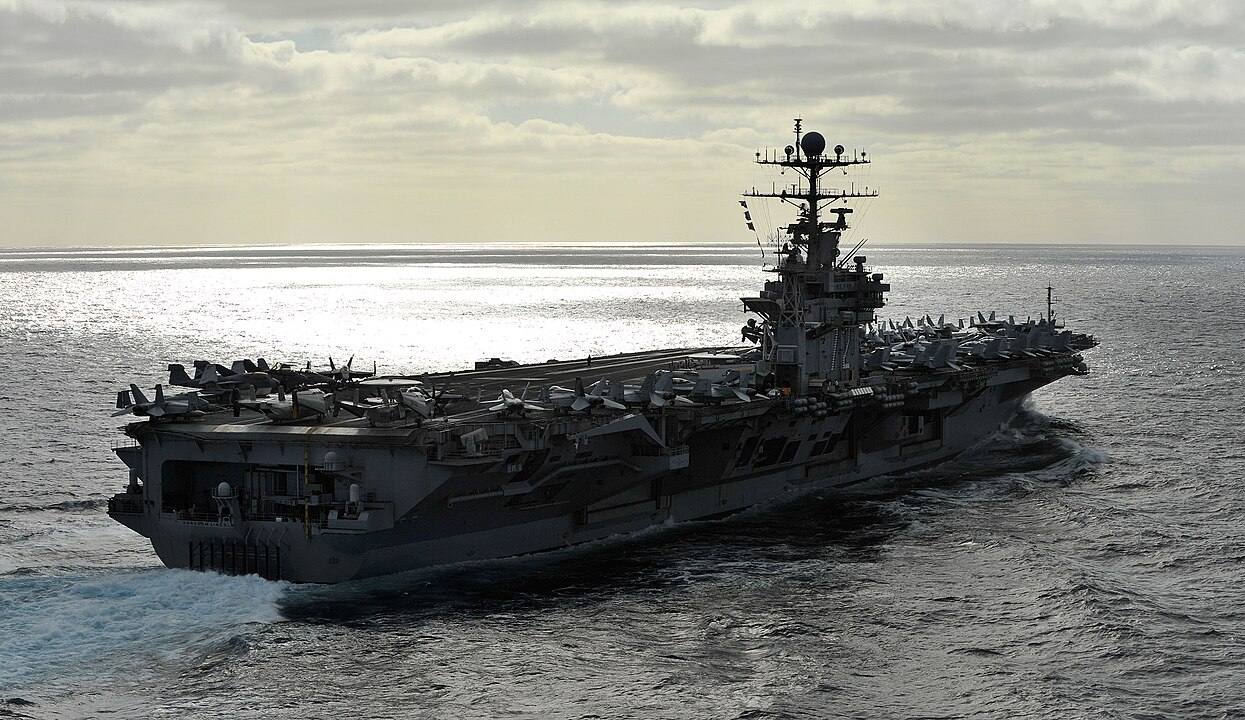
The United States military's Central Command (CENTCOM) on Friday rejected as fabricated three claims made by Iran's navy chief about American naval operations in the Gulf, saying no American ship was hit, no tanker was retaken and no fee is charged to pass through the Strait of Hormuz.
Iran's navy claimed on Thursday that it had retaken two oil tankers seized by US forces while American personnel aboard were asleep — a claim offered without proof. Read the earlier story
The three claims CENTCOM rejected
CENTCOM posted its statement on the social media platform X late on Friday, US time, answering claims made the same day by Iranian Navy commander Admiral Shahram Irani, who was quoted by Iran's semi-official Fars News Agency. "Iran no longer has a navy. The entire situation the Iranian military commander described is another fabricated lie," CENTCOM said.
Source: The Diplomatic Insight
First, Irani claimed that Iran's Revolutionary Guards navy had retaken two oil tankers previously seized by American forces, boarding them while US personnel on board were asleep. CENTCOM flatly denied the account, saying the vessels were not retaken and the story was invented.
Second, Irani claimed Iranian forces had struck the aircraft carrier USS Abraham Lincoln on the first day of Operation Epic Fury, the US military operation against Iran, forcing American forces to seek evacuation help from regional countries. CENTCOM said the carrier strike group "was well defended and never struck by Iran" and had completed what it called a historically successful combat deployment before returning safely to the United States last month.
Source: The Asia Live
Third, Irani claimed Washington is charging ships $2.5 million to transit the Strait of Hormuz — yaani takreeban 22 crore rupaye per crossing. CENTCOM denied that too. "While U.S. forces and regional partners do control the Strait of Hormuz, there is no toll for passing ships," the command said, adding that thousands of ships and billions of barrels of crude oil had transited the strait freely and safely under US protection.
Who made the claims — and what is verified
The claims came from Admiral Irani, speaking to Iranian media on Friday, and were carried by Fars News Agency. CENTCOM's rebuttal was relayed by Iran International, the Persian-language broadcaster, and reported by several outlets. Neither Irani's claims nor CENTCOM's rebuttal has been independently verified by a third party, and both sides in the war have made unverified battlefield claims before.
The wider war at sea
The exchange comes in the ninth month of the war the United States and Israel launched against Iran on February 28, which has turned the Strait of Hormuz — through which about a fifth of the world's oil normally flows — into the war's most contested waterway. The US is enforcing a naval blockade of Iranian ports, and on Friday CENTCOM said American aircraft had disabled the Palau-flagged bulk carrier Pacific Archer in the Gulf of Oman after it left the Iranian port of Bandar Abbas and tried to run the blockade. CENTCOM says its forces have redirected 158 commercial vessels and disabled six ships that refused to comply.
Source: Geopolitics Unplugged
Separately, Iran's Revolutionary Guards navy claimed that two oil tankers exploded after hitting naval mines near Khasab in the Strait of Hormuz while trying to use unauthorised routes. That claim, too, has not been independently verified.
What it means for oil and Gulf workers
Brent crude closed on Friday at $95.44 a barrel, up about 3 percent on the week, after attacks on shipping and on Saudi energy infrastructure kept supply fears alive. Traders now watch the OPEC+ ministerial meeting on Sunday, November 29, where members are expected to keep existing output targets. For the lakhs of Punjabi and Indian workers in the Gulf, the shipping disruption matters directly: delayed vessels, higher insurance and freight costs, and the safety of seafarers working the Gulf routes all hang on whether the strait stays open.
What happens next: markets reopen on Monday, when oil prices will give the first verdict on the war of words. CENTCOM says the blockade of Iranian ports continues, and the competing claims about tankers, the carrier and the alleged toll remain unverified by any independent source.
What is solid
- CENTCOM posted the denial on X late on Friday, November 27
- Iranian Navy commander Admiral Shahram Irani made the three claims, quoted by Fars News Agency
- The USS Abraham Lincoln carrier strike group returned safely to the United States last month
- The US is enforcing a naval blockade of Iranian ports and disabled the Pacific Archer on Thursday
What is only claimed
- Whether Iran's navy retook any tankers from US forces
- Whether the USS Abraham Lincoln was struck by Iranian forces
- Whether any toll is charged for Strait of Hormuz transits — CENTCOM denies all three; Iran has offered no proof