WASHINGTON — The United States government should refuse to certify Chinese-made airplanes and restrict investments in China's aerospace sector, a congressional report released on November 19 said, after a year-long investigation into commercial ties that lawmakers say have strengthened Beijing's military air power.
The House Select Committee on China said Washington should toughen export controls and restrict outbound investment in China's aerospace industry, and press allies to adopt similar measures. The report also urged the government to consider pulling taxpayer-funded contracts from defence contractors — including European aerospace manufacturer Airbus — if they do not halt investments in China's aerospace industrial base.
What the committee wants
"The US and its allies should strengthen export controls and tighten investment restrictions on the aerospace sector to stop the transfer of vital technology that will empower our foremost adversary," said Representative John Moolenaar, the panel's chair and a Michigan Republican, following the year-long investigation.
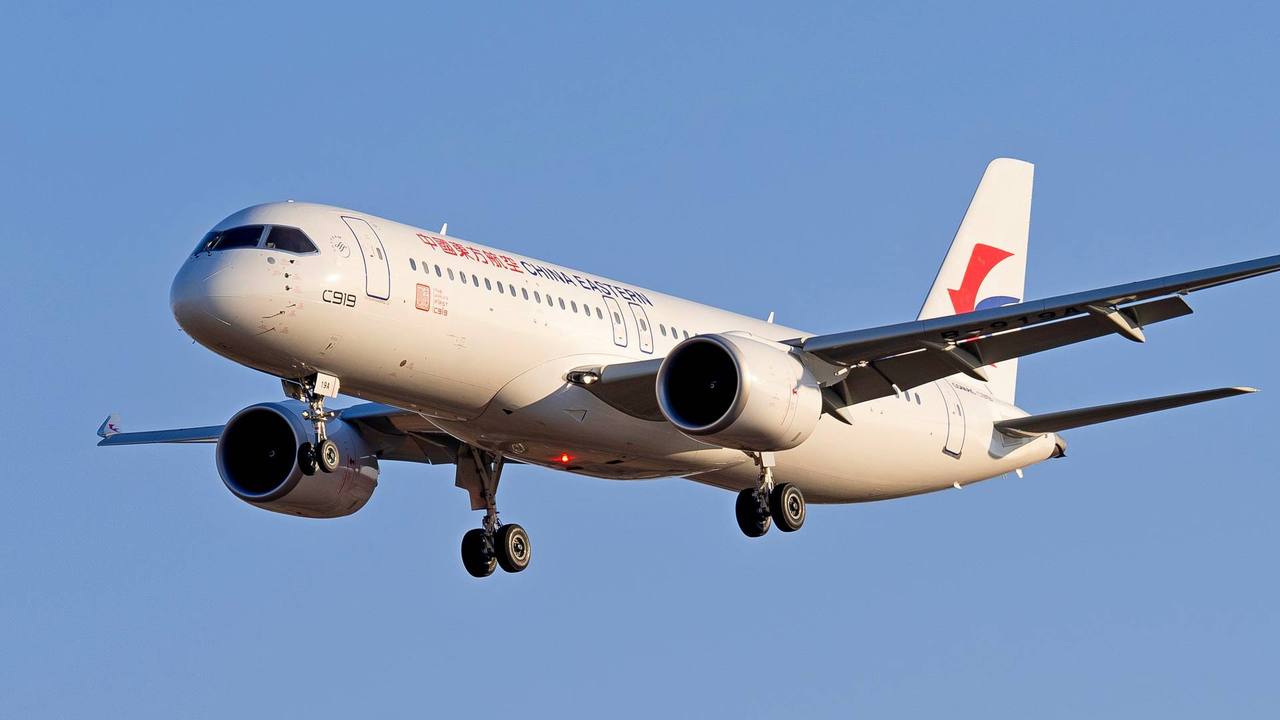
The report said the Federal Aviation Administration (FAA) should not allow Chinese-manufactured aircraft to fly in the United States. The FAA declined to comment on the report but said it has not certified any Chinese aircraft. The proposal would chiefly affect COMAC, the state-owned maker of the C909 regional jet and the C919 narrowbody airliner, which is not currently seeking US certification.
The committee also said the US Treasury Department should restrict outbound investment into China's aerospace sector and urge allies to follow suit, and should subject the purchase of US aerospace companies by French firms to heightened scrutiny until they unwind ties to China's "Civil-Military Ecosystem" — Beijing's policy of fusing civilian industry with military development.
Technology transfers under scrutiny
The report said Honeywell Aerospace, GE Aerospace and Collins Aerospace "repeatedly sought and obtained licenses for controlled technology transfers involving PRC (People's Republic of China) military end users and other military-linked entities as part of Chinese commercial aerospace platforms." The committee argues that joint ventures, licensed transfers and supplier collaborations moved advanced technology and manufacturing know-how to Chinese firms linked to the military.
Airbus features prominently in the investigation. The European manufacturer operates two A320-family final assembly lines in Tianjin, China — the second inaugurated in October 2025, which delivered its first A320neo in September 2026. The report also questioned Airbus's relationship with Chinese suppliers involved in military programmes, including Xi'an Aircraft Industry Group, which produces A320 wing structures. Airbus did not immediately comment, according to Reuters.
The committee cited Chinese government subsidies to state-owned plane makers COMAC and AVIC, and noted that China has never released its final report into the 2022 crash of a China Eastern Airlines Boeing 737-800. The C919 still relies on Western engines and avionics and lacks both FAA and European EASA certification, limiting its international reach.
Recommendations, not law — yet
The proposals remain congressional recommendations rather than enacted restrictions. They would require new laws and coordinated action by allies, and could strain transatlantic relations, since they target European manufacturers as well as Chinese ones. The committee has not set a timetable for implementing them.
The report landed on the same day President Donald Trump met Chinese President Xi Jinping and Russian President Vladimir Putin in Shenzhen, and as the US Treasury's Outbound Investment Security Program — in effect since January 2025 for semiconductors, microelectronics, quantum technologies and artificial intelligence — is being widened to more sensitive technologies. The committee now wants aerospace added firmly to that list.