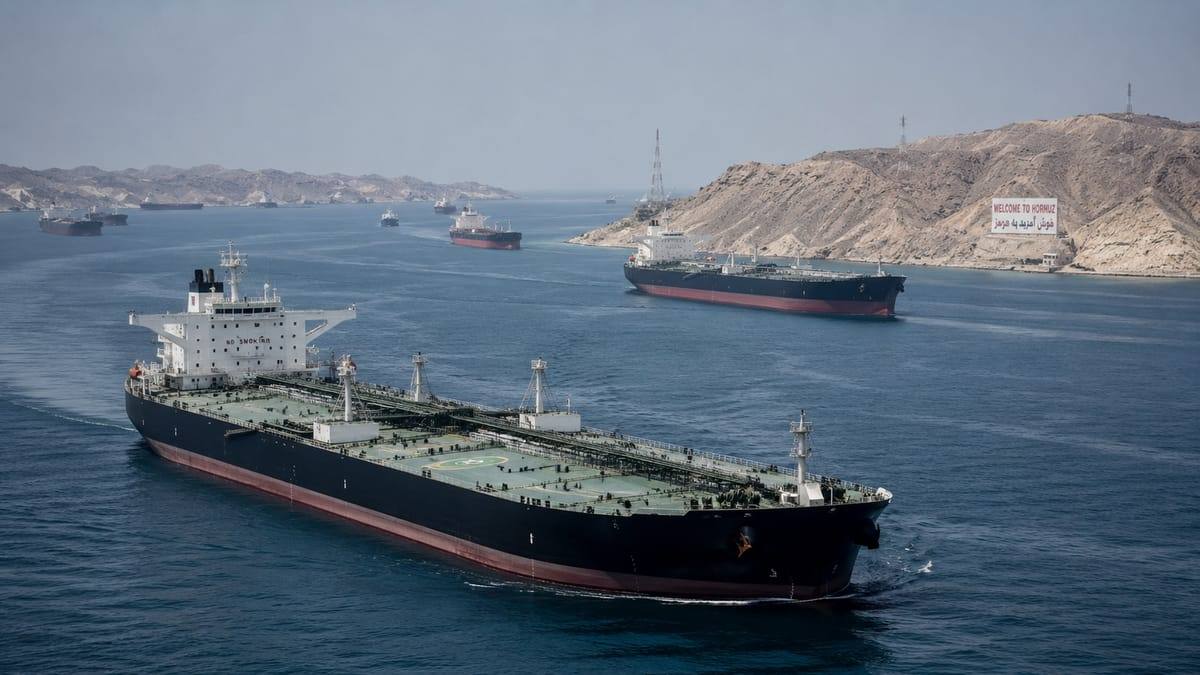
The United States government's own maritime agency warned in October that Washington's naval blockade of Iran was pushing up the cost of shipping through the Gulf and squeezing cargo capacity, according to internal documents obtained by Al Jazeera and published on November 20.
Source: Al Jazeera
The warning came in an internal alert titled “Alert – Hormuz risk expands beyond the strait”, shared on October 12 by Stephen M Carmel, the administrator of the US Maritime Administration (MARAD), with Michael Yarrington, an official in the agency's Office of Marine Insurance. Al Jazeera obtained the documents through a Freedom of Information Act request. It is not clear whether the alert originated inside MARAD or another agency, and MARAD did not respond to Al Jazeera's request for comment.
The memo said merchant ships “now face kinetic action from both sides” and warned the threat had spread from the Strait of Hormuz to Gulf anchorages and the Gulf of Oman. It said that raised the likelihood of “further war-risk premium spikes, crew refusals and effective tanker capacity contraction”. Carmel also emailed Yarrington asking: “How is the insurance market responding to all this?” and sought an update on efforts to rebuild war-risk insurance.
What triggered the warning
The alert followed the October 10 incident in which US Central Command (CENTCOM) said a fighter jet disabled the Panama-flagged bulk carrier Ocean Molica in the Gulf of Oman after its crew ignored repeated warnings and tried to run the blockade. The memo also referred to unattributed attacks on three other tankers in and around the Strait of Hormuz. The United States reinstated its blockade of Iranian ports and oil exports on July 14, and CENTCOM said on November 7 that its forces had redirected 147 commercial vessels that complied with orders since July, while five merchant ships that refused to comply had been disabled.
CENTCOM widened the blockade further on November 18, warning that ships taking Iranian cargo at sea could be stopped, boarded or seized. Read the earlier story
Just this week, two tankers were reported hit by projectiles near Khasab in the Strait of Hormuz — the latest in a run of incidents averaging about one a day in November, according to Singapore bank UOB. Read the earlier story
Why it matters for Gulf workers and trade
The warning matters far beyond insurers. Lakhs of Indian and Punjabi seafarers and workers depend on Gulf shipping, and crew refusals — sailors declining to sail into a war zone — can idle ships, push up freight rates and disrupt the flow of oil and goods. In plain terms, insurance that cost only a few cents per barrel in January had risen to $12.29 a barrel by the end of October — about 200 times more.
Oil markets have felt both sides of the story. Brent crude settled at $92.57 a barrel on Friday, up on the day after Houthi missiles were fired toward Riyadh and tanker disruption reports in Hormuz, but still down for a third straight week as recovering shipments through the strait and expectations of a supply surplus weighed on prices, according to Reuters-based market reporting.
Source: Reuters
What happens next
MARAD is now working on rebuilding war-risk insurance cover, according to the documents, while traders watch the next OPEC+ meeting on November 29 and the blockade grinds on with no negotiated end to the US-Iran war in sight. The war began on February 28, and talks between Washington and Tehran remain deadlocked. For Gulf workers and shippers, the memo is a reminder from inside the US government itself that the blockade's costs are landing on commercial shipping, not only on Iran.
What is solid
- MARAD's October 12 alert exists and was obtained by Al Jazeera through a Freedom of Information Act request; its warning on premiums, crew refusals and capacity is quoted from the document.
- CENTCOM disabled the Panama-flagged Ocean Molica on October 10, 2026 in the Gulf of Oman.
- OPEC's figure: tanker insurance for Middle East crude to East Asia reached $12.29 a barrel by end-October, about 200 times January's level.
- Brent crude settled at $92.57 a barrel on Friday, November 20.
What is only claimed
- Whether the alert originated inside MARAD or another agency — Al Jazeera says this is unclear.
- Who attacked the three other tankers mentioned in the memo — those attacks are unattributed.
- Whether premiums will keep rising — the memo warns of further spikes, which is a forecast, not a fact.