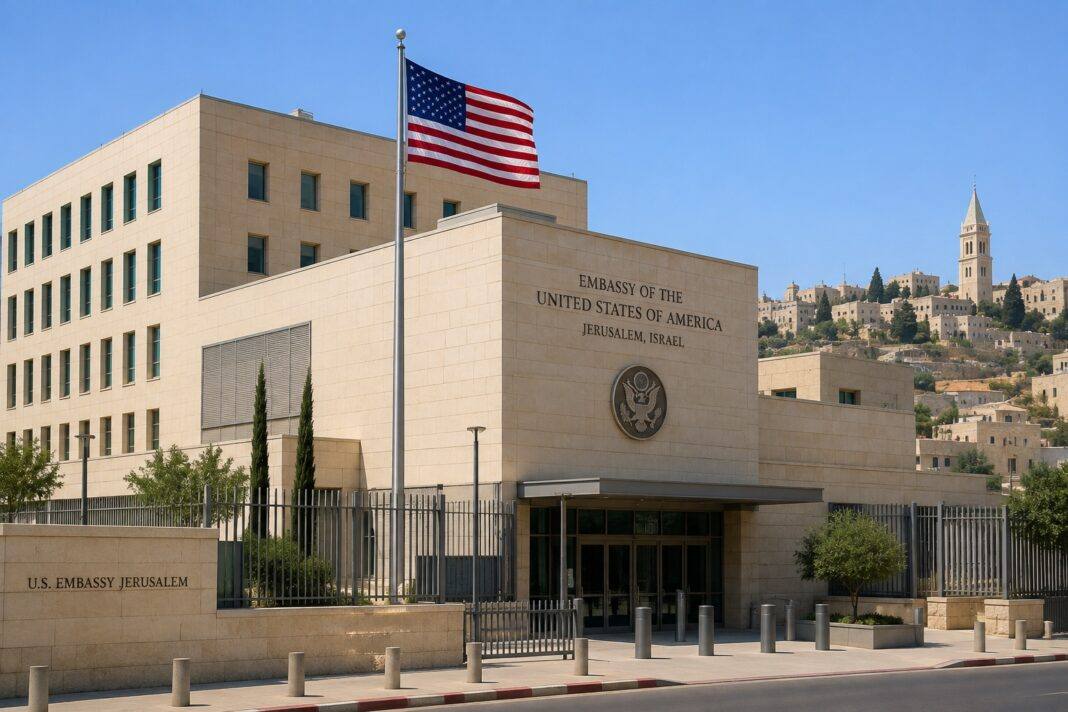
The United States has issued a security alert for its citizens across the Middle East, urging them to exercise heightened vigilance as threats from Iran and the Iran-backed Houthis grow. The alert was issued by the US State Department through its embassies in the region on Monday, November 24, and covers Americans living, working and travelling across the Gulf and the wider region.
In the alert, the State Department said Iran had launched attacks targeting US assets in both Bahrain and Kuwait, and that Iranian-supported Houthis had engaged in hostilities against Saudi Arabia, including attacks on civilian airports and other critical infrastructure. The attacks have resulted in civilian casualties and severe travel disruptions, the statement said, warning that “the hostilities have the potential to escalate rapidly.”
US citizens were told to be aware of potential alerts, flight cancellations, airspace closures and travel disruptions, and to enrol in the State Department’s Smart Traveler Enrollment Program (STEP) at step.state.gov so the nearest US embassy can reach them in an emergency.
A day of escalation across the Gulf
The alert came on a day of fast-moving escalation. A drone struck a tower in Riyadh’s King Abdullah Financial District — the Saudi capital’s tallest skyscraper, hit for the second time in days — injuring 11 people. The Saudi-led coalition said the Houthis deliberately targeted civilians and vowed the attack “will be met with a firm response.”
Hours earlier, the Saudi-led coalition ordered civilians to evacuate Yemen’s Hodeidah port, and the Houthis threatened to target all of Saudi Arabia’s ports on the Red Sea coast, including Jeddah, the region’s second-largest maritime hub, if the coalition attacked the port. The coalition later said two drones were intercepted and destroyed in Saudi Arabia’s Eastern Province.
In the Strait of Hormuz, the world’s most important oil chokepoint, Iran’s Revolutionary Guards said they had targeted a non-compliant container ship transiting the strait, and Al Jazeera reported that oil traffic through Hormuz was down 40 percent as tanker attacks mounted. Iran has said it will use “all available means” to confront the US naval blockade, which has largely halted Iranian oil exports.
The wider war, in its tenth month
The alert lands as the war pitting the United States and Israel against Iran enters its tenth month. According to Al Jazeera, the United States has as many as 50,000 troops and about 19 major military installations across the Middle East, and experts warn the war has exposed vulnerabilities in protecting those assets. A day earlier, the US Treasury imposed fresh sanctions on Iran’s shadow banking network under Operation Economic Outcast, targeting exchange houses and front companies in Dubai, Hong Kong and Turkey.
On November 23, the US Treasury designated more than two dozen Iranian exchange houses, front companies and officials in a new sanctions round. Read the full story
Diplomacy continued alongside the warnings. US Secretary of State Marco Rubio spoke to Saudi Foreign Minister Prince Faisal bin Farhan, condemning the Houthi attacks and stressing freedom of navigation in the Strait of Hormuz and the Bab al-Mandeb Strait. Qatar said it was working with the United States and Iran to revive negotiations and prevent another escalation, warning that the Middle East “cannot withstand” one. Britain imposed sanctions on the Houthis and four of their senior officials, and Qatar, Lebanon and the UAE condemned the attack on the Riyadh tower.
For the lakhs of Punjabi and Indian workers living across the Gulf — in Saudi Arabia, the UAE, Qatar, Bahrain, Kuwait and Oman — the alert is a direct warning: flight cancellations, airspace closures and sudden travel disruption are now a live risk, and workers should keep their travel documents ready, follow their employer’s and local authorities’ guidance, and stay in touch with the nearest Indian embassy or consulate.
What happens next: the alert remains in force, and US embassies across the region are expected to update it as the situation develops. The next signals to watch are any further Houthi strikes on Saudi targets, Iran’s next move in the Strait of Hormuz, and whether the Qatar-mediated talks produce any opening — or whether, as the State Department warned, the hostilities escalate rapidly.