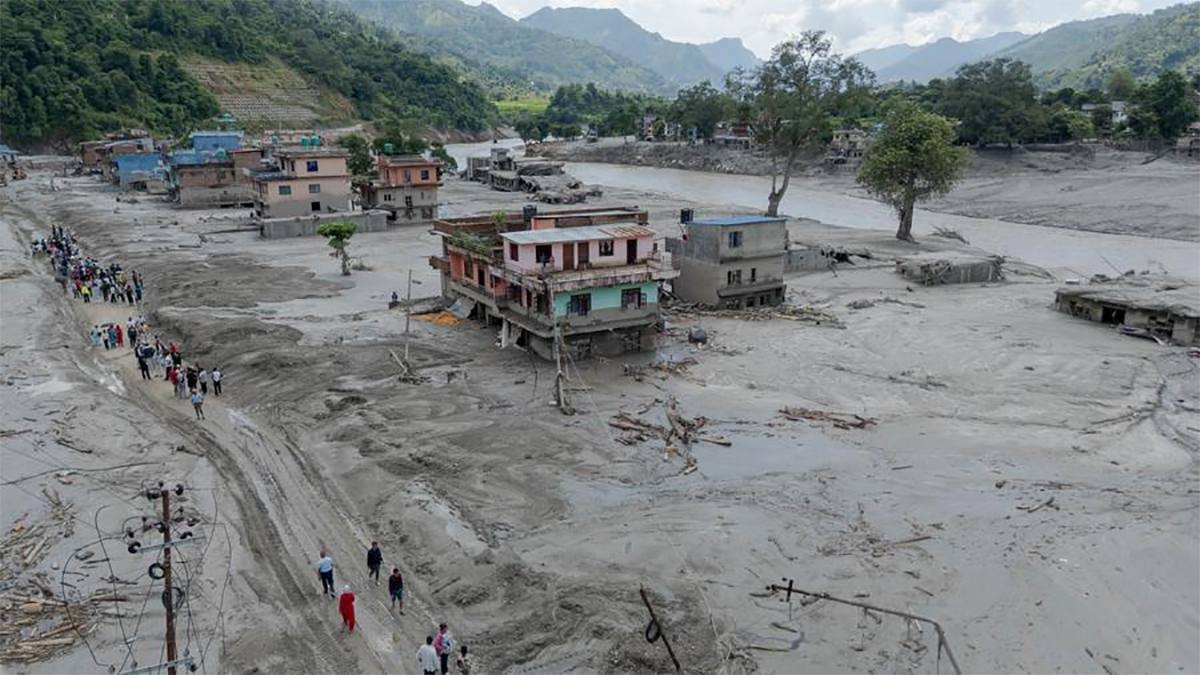
Kathmandu: Nepal is working to mobilise $4 billion to $5 billion over the next three to five years for reconstruction and rehabilitation after the Bhotekoshi-Trishuli disaster, Finance Minister Dr Swarnim Wagle told a parliamentary committee on Friday. Addressing the special committee on climate change impacts in the Himalayas, climate justice and the disaster, Wagle said the government was in talks with India, China, the World Bank and the Asian Development Bank (ADB) to secure the funding, People's Review reported. Radio Nepal also reported the meeting, saying Wagle assured the committee there would be no shortage of resources for relief, reconstruction and recovery in the disaster-affected areas.
Source: People's Review
Four partners expected to carry most of the bill
Wagle said the four partners — India, China, the World Bank and the ADB — were expected to cover around 80 per cent of the total requirement, with the remaining 20 per cent coming from other development partners and donors. With India, discussions are under way for a special financing package for reconstruction and infrastructure development, and Wagle said some agreements could be signed during the Prime Minister's upcoming visit to India.
Talks with China cover disaster reconstruction, modern infrastructure and alternative trade routes, including connectivity through Rasuwagadhi, Tatopani and Korala. The proposed works include railways, tunnels, viaducts and modern customs facilities, and Nepal also wants to upgrade existing roads linking the two countries using modern technology. Radio Nepal likewise reported that preparations were under way to strengthen disaster-related coordination with China, including alternative trade routes and modern tunnel networks.
Source: Radio Nepal
The World Bank had indicated the possibility of securing up to $1 billion through its agencies and concessional financing facilities, Wagle said, adding that he expected comparable support from the ADB. He said concessional loans would need to be used prudently as international grant assistance declines. The government will initially redirect allocations from the current fiscal year's budget towards reconstruction rather than seek additional funding, with more resources possible in next year's budget. Citing the 2015 earthquake, Wagle recalled that the national budget had risen from Rs 518 billion to Rs 619 billion in the following year to support recovery.
First Loss and Damage grant, and a South Asian first on disaster insurance
Wagle said Nepal had secured a $20 million grant from the Loss and Damage Fund following an emergency meeting requested by the government five days after the disaster — an update to the fund's October decision to set aside the amount — and described it as the first grant awarded by the fund since its establishment. Although small compared with reconstruction needs, he said, it would strengthen Nepal's case for climate justice internationally. Nepal has also joined a catastrophic disaster insurance system, becoming the first South Asian country to do so; the scheme provides substantial payouts following major disasters in return for relatively small premiums.
The disaster struck on August 26, when a rock-and-ice avalanche sent water and debris surging through the Bhotekoshi and Trishuli river valleys. Preliminary assessments reported in October put direct damage at around $2.7 billion and total reconstruction needs at about $4.7 billion, with around 1,450 people confirmed dead and more than 5,000 still missing in official counts.
Wagle acknowledged that, despite the rapid restoration of electricity, telephone services and temporary bridges, assistance had not reached all affected areas equally. He urged the committee to prioritise residents' needs and to develop clear procedures and policy recommendations for managing future disasters. Reconstruction will follow the three-to-five-year plan, with local governments leading implementation in coordination with provincial governments, ministries and security agencies.