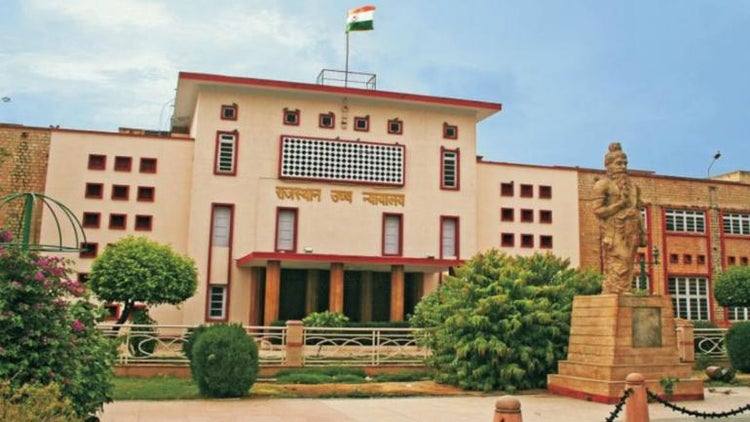
The Rajasthan High Court has dismissed the appeals filed by eight accused against the framing of charges in the Kanhaiya Lal murder case, holding that the contentions raised “essentially pertain to the appreciation and evaluation of evidence” and must be tested at trial, not at the charge stage. A division bench of Chief Justice Sanjay K. Agrawal and Justice Sameer Jain said interference at this stage “would amount to an unwarranted pre-emption of the prosecution proceedings”.
Source: Pink City Post
The eight accused, all lodged in the Central Jail at Ajmer, had challenged the trial court's orders framing charges against them. The charges include criminal conspiracy and murder under the Indian Penal Code, Sections 16, 18 and 20 of the Unlawful Activities (Prevention) Act, 1967, and offences under the Arms Act, 1959. The appeals were dismissed and the charge-framing orders affirmed; the court found no “patent illegality, perversity or jurisdictional error” in the trial court's orders. Nation Press's Jaipur coverage on Friday likewise reported that the High Court rejected all eight accused appeals on charges, keeping the UAPA terror charges in place.
Source: Nation Press
Kanhaiya Lal, a tailor, was murdered inside his shop in Udaipur on June 28, 2022, and two shop assistants were injured; the case was later taken over by the National Investigation Agency (NIA), and the trial court framed charges in January and February 2024, according to SCC Online's case summary. According to the prosecution in the present appeals, the accused conspired to kill Kanhaiya Lal because he had allegedly shared and forwarded, on social media, remarks made on a television show; the prosecution also alleges that threats preceded the killing and that the act was meant to hurt religious sentiments and disturb communal harmony. These are prosecution allegations, not findings of the court.
Source: SCC Online
The appellants argued that sharing a social media message could not, by itself, justify invoking the UAPA, that the recovered videos contained no words likely to disturb public tranquillity, and that no material showed they belonged to any unlawful organisation. The NIA responded that conspiracy under Section 18 of the Act is of wide amplitude and includes preparatory acts, and that the videos, the alleged threats and the surrounding circumstances had to be examined together after evidence is led.
Source: Pink City Post
Relying on the Supreme Court's rulings in Sajjan Kumar v CBI and State of Bihar v Ramesh Singh, the bench said that at the charge stage a court asks only whether the material shows a case on the face of it, or grave suspicion; it does not hold a mini-trial or weigh the worth of each piece of evidence. The objections about the videos and about membership of an unlawful organisation could not be accepted as “conclusive grounds for discharge”, the court said, adding that direct evidence of conspiracy is not needed because such an agreement may be inferred from the cumulative effect of the circumstances.
Source: Pink City Post
The case is titled Mohsin Khan and others v National Investigation Agency, connected with Mohammed Riyaz Attari and another v National Investigation Agency (D.B. Criminal Appeal Nos. 93/2024 and 96/2024). The court clarified that its observations are confined to the appeals and “shall not influence” the trial court, which must appreciate the evidence independently. What happens next: the trial will proceed in accordance with law before the trial court, where the charges will now be tested on evidence.