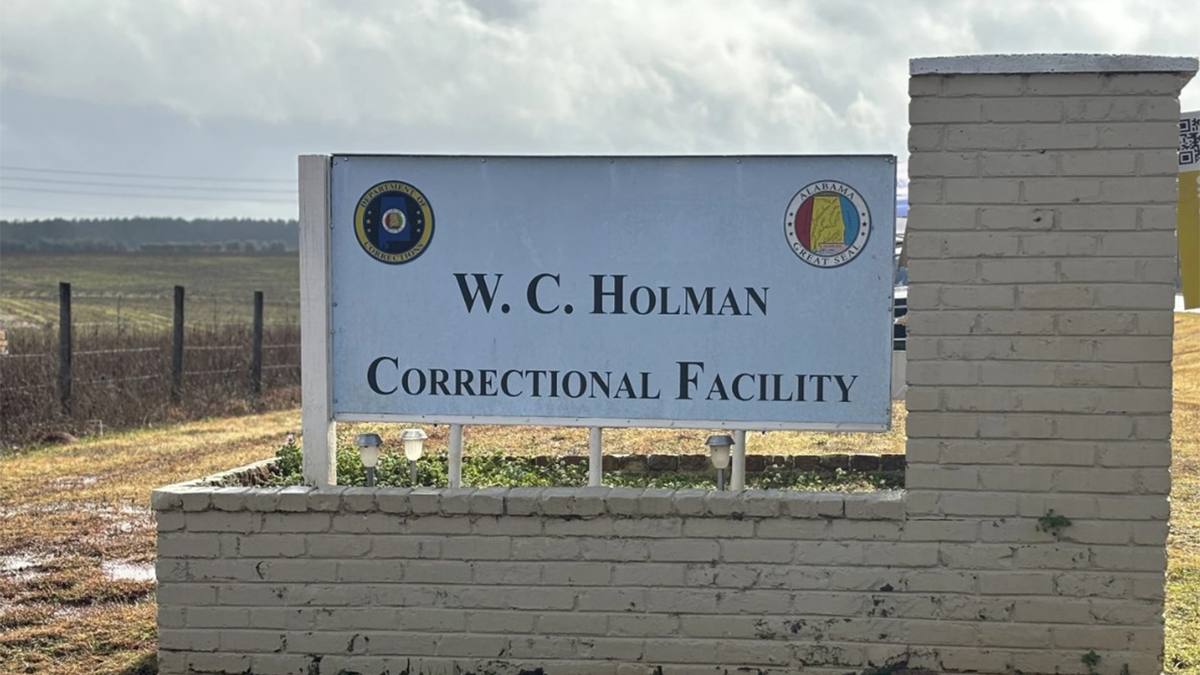
Alabama executed Michael Shannon Taylor, 54, by lethal injection on Thursday evening, November 5, at the William C. Holman Correctional Facility in Atmore, closing a capital case that began 35 years ago with the murders of Ivan and Lucille Moore, an elderly couple in Gadsden, Etowah County. Attorney General Steve Marshall cleared the execution to commence at 5:47 p.m., and Taylor's time of death was 6:10 p.m., the Attorney General's office said in a statement issued the same night.
Source: Alabama Attorney General's Office
Taylor's execution capped a rare triple-execution day in the United States. Indiana put Jeffrey Weisheit, 50, to death at 12:45 a.m. for a 2010 house fire that killed his girlfriend's two children, ages 8 and 5, and Florida executed Jesse Guardado, 64, at 6:13 p.m. for the 2004 stabbing of a 75-year-old woman. It was only the second time in 2026 that three inmates were executed in the U.S. on the same day — the first was August 13, when Oklahoma, Tennessee and Alabama carried out executions within hours of each other. Before that, the last same-day triple execution was on January 7, 2010.
Source: Associated Press
What happened in Gadsden on November 4, 1991
According to the Attorney General's legal summary of State of Alabama v. Michael Shannon Taylor, Taylor was 19 years old and in Gadsden while absent without leave from the U.S. Navy. He got a ride to the home of Ivan Moore, 83, and Lucille Moore, 79, an elderly couple he knew who lived across the street from his relatives. He left a duffel bag outside, asked to use their telephone, and was offered a snack. While the couple were out of the room, he retrieved a barbell he had hidden in the bag; when Mr. Moore returned to the kitchen, Taylor attacked him with it, then struck Mrs. Moore as she tried to help her husband.
Taylor stole Mr. Moore's wallet, Mrs. Moore's purse, a checkbook and the couple's 1986 Cadillac, and drove to Birmingham, where over the next five days he cashed several checks totalling $1,500 and made clothing and jewellery purchases. A neighbour discovered the Moores on November 6 — Mr. Moore had died on his kitchen floor, and Mrs. Moore, still unconscious, died of her injuries on November 10. The cause of death for both was severe blunt-force injuries to the head. Taylor was arrested outside the Galleria shopping centre in Hoover as he tried to leave in the stolen Cadillac, and confessed to beating the Moores during a robbery.
He was indicted on two counts of murder in the first degree and one count of murder of two or more persons during one act. A jury found him guilty on all counts and unanimously recommended the death penalty, which the trial judge accepted. Taylor became eligible for execution in November 2016, after exhausting his direct appeals and post-conviction remedies — meaning the case spent 25 years in the appeals process after the conviction.
The final week: a stay denied and a last fight over method
The Alabama Supreme Court on Wednesday, November 4, denied Taylor's emergency motion for a stay of execution, and the state proceeded inside a 30-hour execution window that ran to 6 a.m. Friday. Media witnesses were brought into the execution viewing room at Holman at approximately 5:40 p.m. on Thursday. The method itself was litigated to the end: Taylor had chosen execution by nitrogen hypoxia in 2018, when Alabama first introduced that method, but a federal district court ruled this summer that the method violated the Eighth Amendment's protection against cruel and unusual punishment, returning his execution to lethal injection. His attorneys objected to the switch and sought to preserve his original choice; a judge ruled against them.
"Tonight is long overdue for the relatives and loved ones of Ivan and Lucille Moore. Thirty-five years ago, the Moores showed kindness to a young man in need and were callously murdered for it. No excuse can justify Taylor's gruesome and brutal crimes, and a jury of his peers agreed with the prosecution. They swiftly found Taylor guilty on all counts and unanimously recommended death, and the trial judge accepted that recommendation."
"Reprehensible" — the governor and the family; "a changed man" — his lawyers
Governor Kay Ivey declined to stop the execution and issued a statement on Thursday night describing Taylor's actions as "reprehensible": "Thirty-five years ago yesterday, Ivan and Lucille Moore kindly opened their home to Michael Taylor. Mr. Taylor repaid the Moores by beating them to death with a metal bar, all to rob them for money to buy clothing and jewelry," she said. The victims' family thanked the Attorney General's office for bringing closure but expressed disappointment at the wait: "We know that a person has the right to appeal, but there should come a time when the jury's decision is final. For all these years, our family has had to live with the waiting, the delays, and the uncertainty."
Taylor's own attorneys said he "knew the depth of the harm he caused" and "grieved it for the rest of his life," calling him a changed man: "Michael's life was proof that God isn't finished with any of us. Tonight we pray that both families find peace, and we deeply mourn the loss of Michael." Death-penalty opponents had urged Governor Ivey to commute the sentence to life in prison, arguing that at 19 he was too young and immature to fully understand the consequences of his actions.
The case against the sentence, as the Equal Justice Initiative states it
The Equal Justice Initiative (EJI), the Montgomery-based legal organisation, opposed the execution and argues the death sentence was never reliable. In its account, Taylor was 19, had absolutely no history of violence, and could not afford a lawyer; the counsel appointed to him had never represented a capital defendant before. EJI says the defence failed to investigate Taylor's mental state despite psychological reports and family accounts of immaturity, a harsh upbringing and psychological deterioration — and that his trial lawyers even told the jury he was "1000 percent" guilty and that there was "nothing that mitigates the crime." His later lawyers argued in federal court that this evidence was "absolutely indispensable to an accurate assessment of Mr. Taylor's culpability" and that neither the jury nor the sentencing court ever heard it. The state disputes none of the facts of the 1991 crime, and the conviction and sentence survived every appeal over 25 years; the dispute is over whether the sentence itself was fairly reached.
EJI and the Death Penalty Information Center also place the case in a national shift: since the Supreme Court's 2005 decision in Roper v. Simmons barred the death penalty for offenders under 18, experts have reached what DPIC describes as a broad consensus that 18- to 20-year-olds show similar cognitive immaturity, and new death sentences for that age group have become, in DPIC's words, "vanishingly rare" over the last 20 years. Alabama proceeded anyway, under a sentence imposed in 1993.
What happens next
For the Taylor case itself, nothing remains: the sentence has been carried out and the file is closed. Nationally, Thursday's executions landed in a fast-moving argument. They came amid renewed scrutiny of lethal injection after a failed execution attempt in Tennessee, where inmate Christa Pike survived two doses of pentobarbital in late September and was hospitalised before being returned to prison — and on the same day that California Governor Gavin Newsom announced he is seeking to commute all 548 death sentences in his state to life without parole. Alabama, Indiana and Florida moved in the opposite direction on the same day: three sentences, imposed decades ago, carried out within 18 hours.
What is solid
- Taylor was executed by lethal injection at Holman Correctional Facility on November 5, 2026; time of death 6:10 p.m.
- He was convicted on all counts for the November 4, 1991 murders of Ivan, 83, and Lucille Moore, 79, in Gadsden; the jury unanimously recommended death.
- The Alabama Supreme Court denied his emergency stay on November 4; Governor Ivey declined clemency.
- It was the third execution in Alabama in 2026 and part of a rare three-state, same-day set of executions.
What is only claimed
- Whether the death sentence was reliable: EJI argues his inexperienced appointed counsel failed to present mental-state and mitigation evidence the jury never heard; the state maintains the jury's verdict was sound and survived 25 years of appeals.
- Whether a sentence for a crime committed at 19 should be carried out at all — opponents cite adolescent-development science and Roper v. Simmons; Alabama law and courts allowed it.