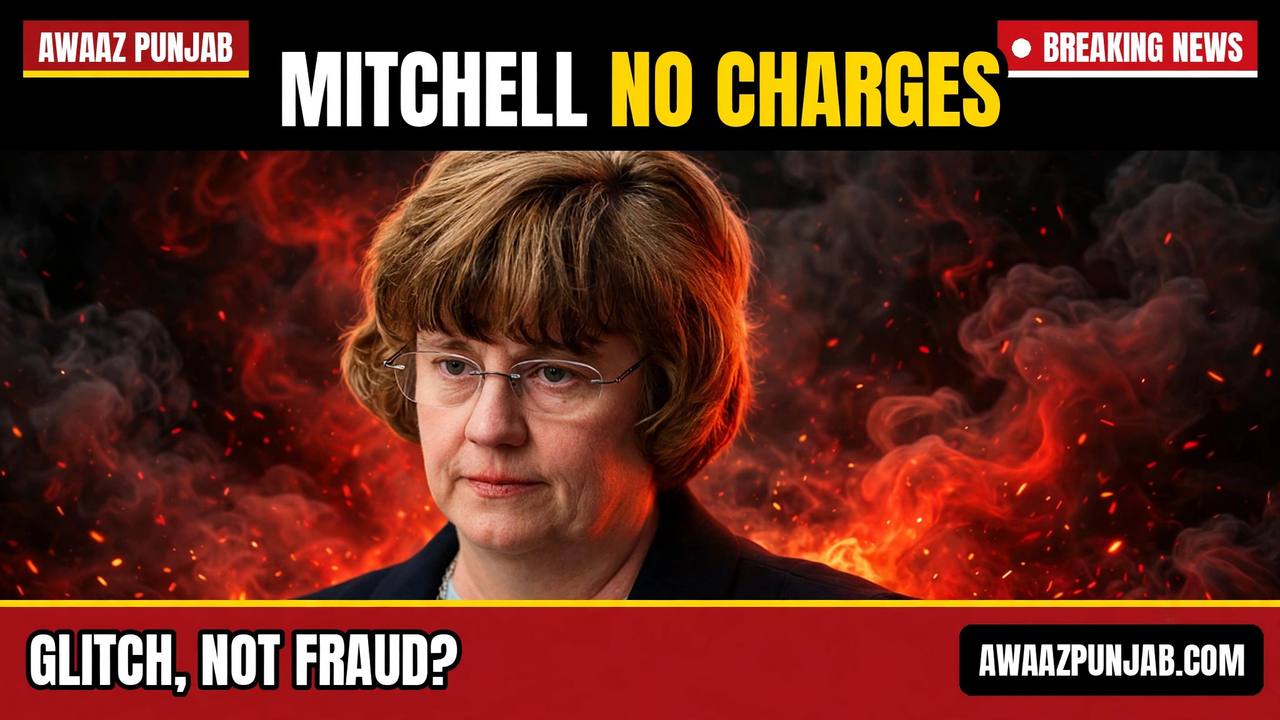
Maricopa County's top prosecutor announced Wednesday that her office will not bring criminal charges against eight noncitizens who were mistakenly registered to vote and cast ballots in Arizona elections, saying a government records error — not fraud — put them on the voter rolls.
County Attorney Rachel Mitchell, a Republican, said the eight people — all legal residents of the United States — cast a combined 16 ballots between 2012 and 2025. No more than three of them voted in any single election, she said, not enough to change the outcome of any race.
"We will not be filing charges in those cases," Mitchell said at a news conference. "It's my feeling that a jury would not convict these eight individuals because of the involvement of a government-involved glitch, if you will."
Source: Phoenix Focal
How the eight were found
The cases began in March, when Maricopa County Recorder Justin Heap referred 60 suspected noncitizen voters to the county attorney's office. The referrals followed a review of more than 60,000 voter registrations affected by a glitch in the Arizona Motor Vehicle Division's records system, an error that dates to 2004 and was discovered in 2024.
The Recorder's Office ran the affected voters through the federal SAVE database, which flagged 207 names. Investigators confirmed that 60 of those people had actually cast a ballot at least once. In September, Mitchell announced that 52 of the 60 were confirmed U.S. citizens — leaving eight noncitizens.
Source: Phoenix Focal
A glitch dating to 2004
The error traces to Arizona's proof-of-citizenship rule for driver's licences. People who obtained a licence before October 1, 1996 — when the state began requiring proof of citizenship — were mistakenly recorded as having already provided that proof. When they later renewed their licences, the system treated them as citizens and they were registered to vote.
Mitchell said the state error was responsible for seven of the eight cases, and there was no evidence those seven sought to register. "In talking to individuals, they thought, 'Well, if I'm being sent a ballot, I guess it's OK for me to vote,'" she said. The eighth person filled out a paper registration form, checked a box saying they were not a citizen — and still received a ballot.
The eight were registered across party lines: two as Republicans, one as a Democrat and five with no party affiliation, Mitchell said. All eight are in the country legally.
What happens next
Mitchell said the eight cases are closed, but her office is conducting a systemic review of voter registration processes and is calling for legislation to close the loophole, including a bill her office is working on for next year. Another 147 names flagged by the Recorder's Office remain under investigation by her office and the Arizona Attorney General's Office.
"Every ineligible voter dilutes the vote of a citizen. It's crucial that we fix this going forward so there are no doubts cast on the security and the results of our elections," Mitchell said.
The episode has drawn mixed reactions. Some voting-rights advocates welcomed the decision not to prosecute people who relied on ballots the government itself sent them; others said it shows why accurate voter rolls matter. The Recorder's Office did not immediately respond to a request for comment on the decision, according to the Phoenix Focal.
The case is not the first time the motor-vehicle glitch has surfaced. When the flaw was discovered in 2024, state officials identified more than 200,000 voters whose records were affected for the same reason. The federal SAVE database used to flag the names has also produced false positives in several states, a reminder that database matches alone do not prove wrongdoing.
For Arizona voters, the message from the county attorney's office is practical: check your registration, and know that a ballot arriving in the mail does not by itself prove eligibility. For the eight people at the centre of the case, the legal question is now settled — no charges — while the system that registered them still awaits its fix.