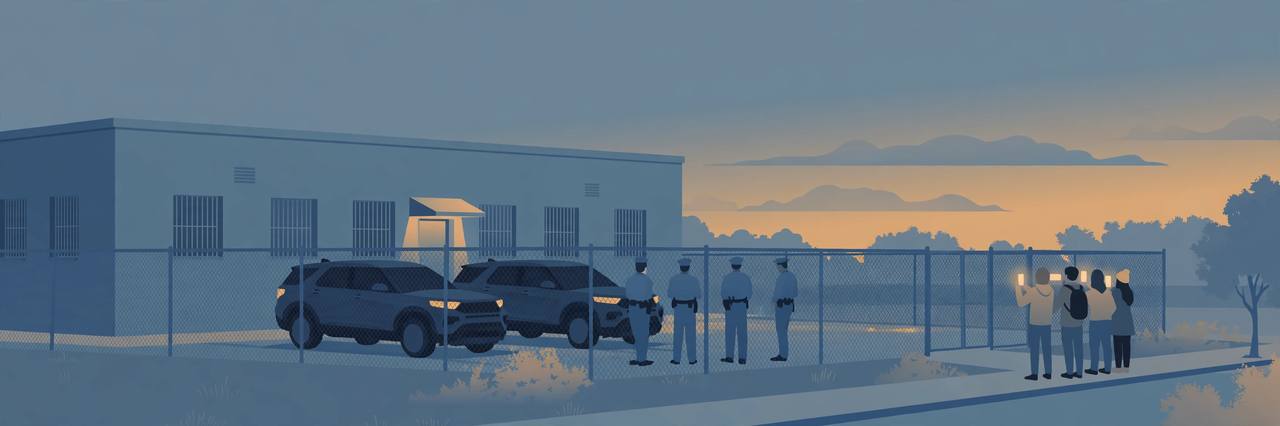
Immigration enforcement has intensified sharply across the San Francisco Bay Area in recent weeks, with federal agents staging outside county jails and making arrests in parking lots, on streets and at workplaces — a shift that has put dozens of people in custody in November alone and drawn a coordinated pushback from county governments, according to rapid-response networks and local reporting.
Alameda County: 30 arrests and counting
The Alameda County Immigration Legal and Education Partnership (ACILEP), which tracks enforcement through its rapid-response network, has documented more than 30 arrests so far this month, including 13 last weekend alone, seven of them Fremont residents. The number of arrests in the county since early October is three or four times the average over the past year, according to ACILEP managing attorney Nikolas De Bremaeker.
"In a departure from past practice, the majority of recent arrests are occurring in the community rather than at check-in appointments inside ICE offices," De Bremaeker said. He added that most detainees have not been presented with any kind of warrant.
"Courts have been overwhelmingly finding these arrests to be in violation of the Constitution, because they have been warrantless," De Bremaeker said — an assertion by the advocate, not a finding by a court in these cases. ICE and the Department of Homeland Security have previously said their operations are lawful, and their account of the force used in Bay Area arrests has differed sharply from advocates' accounts, as Awaaz Punjab reported on October 24.
San Mateo County: 37 arrests, 12 in a single day
In San Mateo County, the rapid-response network has documented at least 37 arrests this month, including 12 on Monday, and an increased presence of ICE agents outside the county's main jail, the Maguire Correctional Facility in Redwood City, according to Bay City News Service. KRON4, citing the county's Rapid Response Network, reported the Monday arrests as six in South San Francisco, one in Daly City, one outside the Redwood City Jail, one in Millbrae, two in Redwood City and one at an ICE check-in appointment.
The Redwood City jail has been a flashpoint since early November. ICE agents waited outside the Maguire Correctional Facility from Friday, November 6 through Monday, November 9, detaining seven people across the county in four days, including four just blocks from the jail, according to reporting by La Voz News of De Anza College. Dozens of residents and volunteers kept watch outside the jail, and the city's mayor joined them on the night of November 6.
San Francisco: an uptick, but still mostly targeted arrests
San Francisco has also seen an uptick, with up to five people detained per week. But most arrests in the city are still "targeted", taking place at ICE appointments or at the airport, according to Milli Atkinson, legal director for the San Francisco Immigrant Legal Defense program. She said she was not aware of an increase in ICE activity around the San Francisco Hall of Justice.
Counties fight back: bans on staging on county property
In Contra Costa County, ICE officers have been stationed in the Martinez courthouse parking lot for nearly three weeks, questioning people coming out of the jail and making arrests, according to Assistant Public Defender Ali Saidi, who directs Stand Together Contra Costa, the county's rapid-response and legal defence network.
On Tuesday, November 17, the Contra Costa Board of Supervisors unanimously adopted an ordinance prohibiting the use of county property for immigration enforcement, and supervisors said they plan to send a cease-and-desist letter to ICE over its use of county property. At the meeting, Assistant Sheriff Jose Beltran explained that the fingerprints of every person arrested are automatically sent to the U.S. Department of Justice, which makes them available to other federal agencies.
"We do not communicate with ICE outside the guardrails of SB 54," Beltran said, referring to the California law restricting law enforcement cooperation with federal immigration officials. He added that if no charges are filed against a person, ICE can work out the date of their release from jail based on the limits imposed by California law.
Alameda County sent a similar cease-and-desist letter earlier this month, demanding that ICE stop conducting immigration enforcement at Santa Rita Jail in Dublin. A county attorney wrote that ICE had ignored warnings from the sheriff's office that agents are not allowed to use the jail parking lot and lobby for operations, and that agents have chased people in the parking lot and confronted them in the lobby.
"I would say a lot of them are rogue, incredibly untrained and unprofessional, and they should not be allowed to be conducting themselves in the way that they are doing," Alameda County Supervisor Nikki Fortunato Bas said. "It's causing a lot of fear as well as safety concerns."
Alameda County Sheriff's Office spokesperson Robert Morales told KQED this week that while the sheriff had restricted access to the Santa Rita jail lobby, controlling the large parking lots, which have multiple entry points, would be challenging. "It's a policy. It's not a law," he said. "So we can ask someone, 'Hey, according to county policy, we respectfully ask you to leave.' There's not much else we can do besides asking them."
How the surge began: from the Central Valley to the Bay Area
Bay Area rapid-response networks began preparing when they saw enforcement surge in California starting in early October, with ICE officers making hundreds of arrests in agricultural communities in the Central Valley and on the Central Coast. That surge reached Santa Clara County the week before the election, with as many as six unmarked ICE vehicles showing up in county jail parking lots nightly, according to Huy Tran, executive director of SIREN, a San Jose immigrant rights group.
On October 30, the Santa Clara County sheriff's department restricted access to the parking lot at its Elmwood Correctional Facility in Milpitas, limiting entry to people with "an immediate facility-related purpose", such as visitation. The closure was made in line with the county's 2025 ordinance restricting federal immigration officers from using county property to stage enforcement actions.
The money and the law: $70 billion in enforcement funding
The surge in California may be traceable to a recent federal funding bill that pours $70 billion into immigration enforcement, including $350 million for ICE operations in cities and states, including California, that do not take part in so-called 287(g) agreements, which authorise local police to conduct federal immigration arrests. The bill directs the money to be used to target immigrants who have been charged, but not convicted, of a wide range of offences, according to the reporting.
At the state level, California Attorney General Rob Bonta joined other states on Wednesday in filing an amicus brief in defence of Colorado laws that restrict state and local law enforcement from sharing noncitizens' personal information with immigration agents and from spending state resources to enforce civil immigration laws. The Trump administration has challenged those laws; Bonta argued they are within the legitimate power of states and are not pre-empted by federal immigration law.
Also on Wednesday, Senator Alex Padilla introduced a bill in Congress to limit ICE's ability to conduct civil immigration operations at airports without a judicial warrant related to a felony criminal conviction, and to limit information sharing between ICE and the Transportation Security Administration. "ICE is out of control, and these are bare minimum standards for reining it in," Padilla said. "These safeguards protect everyone involved — travellers, officers and the public. It's common sense and responsible."
What it means for immigrant families
For immigrant families in the Bay Area — including the region's large Punjabi and South Asian community, centred in cities such as Fremont, where seven of last weekend's Alameda County arrests took place — the shift from office check-ins to street, workplace and jail-side arrests has changed everyday calculations about going to work, taking children to school and visiting a relative in custody. Every Bay Area county now has a rapid-response network, with hotlines run by non-profit groups and supported with state and county funds.
"We really want to ask the community to not spread rumours online," said Lourdes Martinez, co-director of ACILEP. "Call us as soon as you see something so the time is good for a verification and let us know the address. If you're able to record anything, please do. But do call it in."
What happens next
Contra Costa County's cease-and-desist letter to ICE is expected in the coming days, and Alameda County's earlier letter has so far not stopped agents using the Santa Rita Jail parking lot, according to the county. Senator Padilla's airport bill now moves through Congress, and the Colorado case defended by Attorney General Bonta will test how far states can go in limiting cooperation with federal immigration enforcement. Rapid-response networks say they will keep publishing verified arrest counts and urging residents to report sightings to hotlines rather than social media.
Awaaz Punjab reported on October 24 that at least two Bay Area immigration arrests had ended with the person detained in hospital, with court records and the Department of Homeland Security offering sharply different accounts of the force used. Alameda County's cease-and-desist letter over Santa Rita Jail was reported on November 9, and Contra Costa County's vote on barring ICE from county property was previewed on November 14 before supervisors adopted the ordinance on November 17. Read our October 24 report
What is solid
- Rapid-response networks have documented more than 30 arrests in Alameda County and 37 in San Mateo County so far in November.
- Contra Costa County supervisors unanimously adopted an ordinance on November 17 barring immigration enforcement from county property.
- Senator Alex Padilla introduced an airport-enforcement bill on November 18, and Attorney General Rob Bonta joined an amicus brief the same day.
What is only claimed
- Whether the recent warrantless arrests violate the Constitution — advocates say courts have found so; the federal government maintains its operations are lawful.
- Whether the $70 billion federal funding bill is the cause of the California surge — the reporting describes it as a possible trace, not a proven cause.