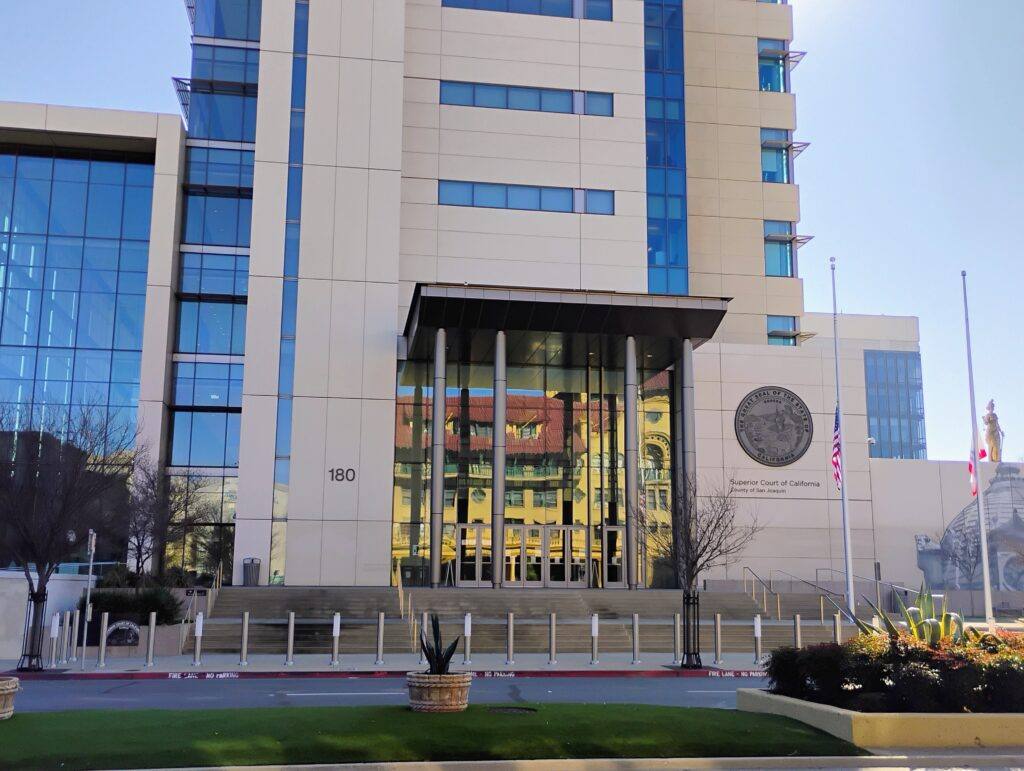
A Stockton man who shot three teenagers dead in a parked car in 2019 will die in prison. Joaquin Cruz has been sentenced in San Joaquin County to three consecutive life terms without the possibility of parole, plus a further 75 years to life, for the first-degree murders of David Connary, 19, his sister Tiffany Connary, 18, and Remilio Castillo, 18 — a sentence reported on Tuesday, November 3, by CBS Sacramento. 'Justice was fully delivered,' District Attorney Ron Freitas said in a statement. 'Three consecutive life terms without parole means he will spend the rest of his life behind bars, with zero chance of ever stepping foot in our community again.'
What happened on March 22, 2019
The three victims were sitting in a parked vehicle near F Street and Finland Avenue in Stockton on March 22, 2019, when they were shot. David and Tiffany Connary were siblings. Prosecutors said the shooting grew out of a gang feud: Cruz located Castillo near his home, and Cruz and an accomplice then opened fire on the vehicle. Investigators said David and Tiffany Connary were not involved in gang activity — they were, on the prosecution's account, young people caught in a feud that was not theirs.
A San Joaquin County jury convicted Cruz in November 2025 of three counts of first-degree murder, and found the firearm, gang and special-circumstance allegations against him true. ABC10's reporting of the verdict said the jury found him guilty on all 17 counts in the case. The special-circumstance finding is what made a life-without-parole sentence available under California law, and the court has now imposed it three times over — one term for each life taken — with the terms running consecutively, one after another, rather than at the same time.
Arrest in Oregon, and a case that took six years
Cruz did not stay in Stockton after the shooting. He was arrested about two months later in Klamath, Oregon, and returned to San Joaquin County to face the charges. The case then moved slowly through the courts — from the 2019 shooting to the November 2025 verdict to this week's sentencing is more than six and a half years, during which the Connary and Castillo families waited for an outcome that the district attorney's statement this week described as justice 'fully delivered.'
A life term without the possibility of parole means exactly what it says: there is no parole hearing and no release date at the end of a minimum term. 'Consecutive' means each of the three life terms stands separately, one behind the other, and the additional 75-years-to-life term sits on top of them. For Cruz, the practical effect — as District Attorney Freitas put it — is that he will spend the rest of his life in a California prison.
Why this sentencing lands in Stockton
Stockton has lived with gang violence for decades, and prosecutors framed this case from the start as a feud killing — one in which, on their account, two of the three young people shot had no gang involvement at all. Sentencings like this one are the point at which a case leaves the headlines and becomes permanent: no trial remains, no further court date will decide Cruz's freedom, and the families' public role in the case ends with the statements they gave along the way. What remains open in the public record is the accomplice prosecutors described — CBS's report says Cruz acted with another person in opening fire on the car; the sentencing report does not name that person or describe a separate case.
For this site's readers, Stockton is not a distant dateline. The city is home to one of the oldest Sikh and Punjabi communities in the United States and sits on the I-5 and Highway 99 trucking corridors that Punjabi drivers run daily between the Central Valley's warehouses and the rest of California. A gang-feud shooting that killed three teenagers in a parked car — and a court that answers it with the heaviest sentence California allows short of death — is the kind of local story that shapes how safe those neighbourhoods feel to the families who live and work in them.
What happens next
With sentencing complete, Cruz will be transferred to the California Department of Corrections and Rehabilitation to serve the life terms. Convicted defendants in California have a right to appeal, and appeals in special-circumstance murder cases routinely run for years; the reports of this sentencing do not record any appeal filing, and none is needed for the sentence to take effect — Cruz remains in custody either way. For the Connary and Castillo families, the court process that began on a March night in 2019 is, at the trial-court level, finished.