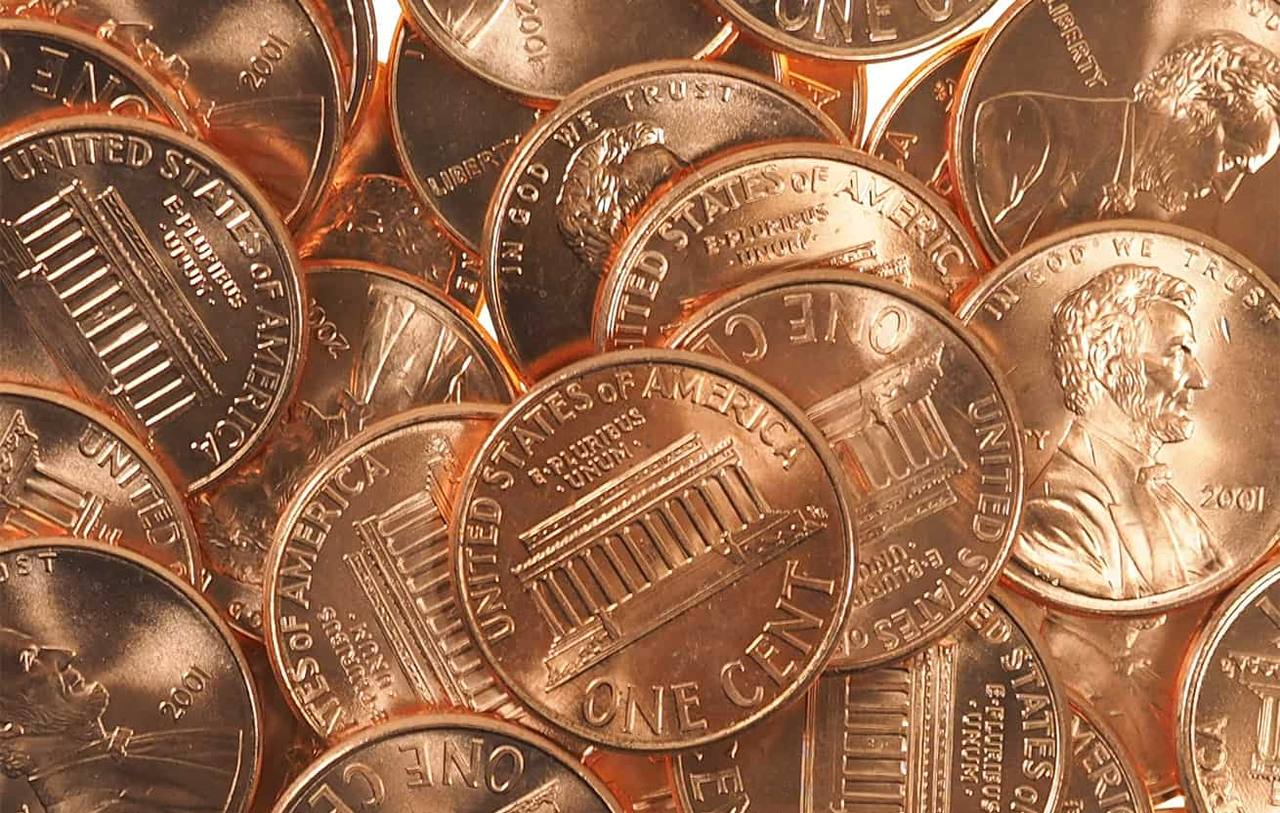
President Donald Trump signed the Common Cents Act into law on Friday, November 20, 2026, permanently ending production of the one-cent coin for general circulation and giving the United States a national rule for rounding cash payments to the nearest nickel. The law, H.R. 10167, formalises the end of the penny more than a year after the U.S. Mint struck its final circulating penny.
Source: The White House
What the new law does
The Act directs the Department of the Treasury to stop producing the penny except to meet collector demand. Pennies already in circulation remain legal tender, and no one is required to hand them in. Card, cheque and electronic payments are unaffected and stay exact to the penny.
For cash, the law creates a voluntary, symmetrical rounding standard for use when exact change is unavailable: totals ending in 1, 2, 6 or 7 cents round down to the nearest nickel, and totals ending in 3, 4, 8 or 9 cents round up. Businesses may round, but they are not forced to — the framework simply gives every shop in the country the same rule to follow.
The law also allows the nickel to be made from cheaper, cost-saving materials, and it sets out procedures for the Secretary of the Treasury to follow to discontinue production of any coin for general circulation in the future.
Why the penny is going
The penny had become more expensive than it was worth. A Department of the Treasury analysis put the cost of producing a single one-cent coin at 3.69 cents — nearly four times its face value. The U.S. Mint struck its final circulating penny on November 12, 2025, and President Trump had directed the Treasury in February 2025 to stop minting the coin, saying he wanted to "rip the waste out" of the budget.
Source: Bloomberg Law
Since production ended, retailers across the country have struggled to find enough pennies to make exact change, leaving shoppers and cashiers to improvise. The new law is meant to end that confusion with one clear national standard instead of a patchwork of store-by-store practices.
How it became law
The bill was a bipartisan effort. In the Senate it was led by Senator Cynthia Lummis, Republican of Wyoming, and Senator Kirsten Gillibrand, Democrat of New York; in the House by Representative Lisa McClain, Republican of Michigan, and Representative Robert Garcia, Democrat of California. Lummis introduced the Senate version in April 2025.
Source: Office of Sen. Cynthia Lummis
The House passed the Common Cents Act by voice vote on September 14, 2026, and the Senate followed by unanimous consent on September 28, 2026 — both chambers without opposition. The bill was presented to the President on November 12, and Trump signed it on November 20, with Senator Lummis joining him in the Oval Office.
"The Common Cents Act eliminates wasteful spending, modernizes our currency system, and most importantly gives families and businesses clear rules for everyday cash transactions."
What it means at the checkout
Grocers and retailers welcomed the signing. The National Grocers Association said the law gives shops clear legal authority to round cash transactions to the nearest nickel, and the Food Industry Association said it protects merchants who follow the rounding rules from conflicting federal, state, local and tribal requirements, including SNAP equal-treatment provisions.
For shoppers, the practical change is small but visible: a cash total of $10.02 may now be rounded down to $10.00, and a total of $10.03 rounded up to $10.05, when the shop has no pennies to make exact change. The industry groups noted the timing — the law arrives just before Thanksgiving and the holiday shopping season, the busiest cash period of the year.
What happens next
The Treasury Department will now implement the law, the Mint will continue producing pennies only for collectors, and businesses will decide whether to adopt rounding at the till. The nickel's cheaper composition is also expected to follow. For the 233-year-old penny — first struck in 1793 — the signing closes the book on everyday use, while the coins already in pockets, jars and cash registers remain spendable.