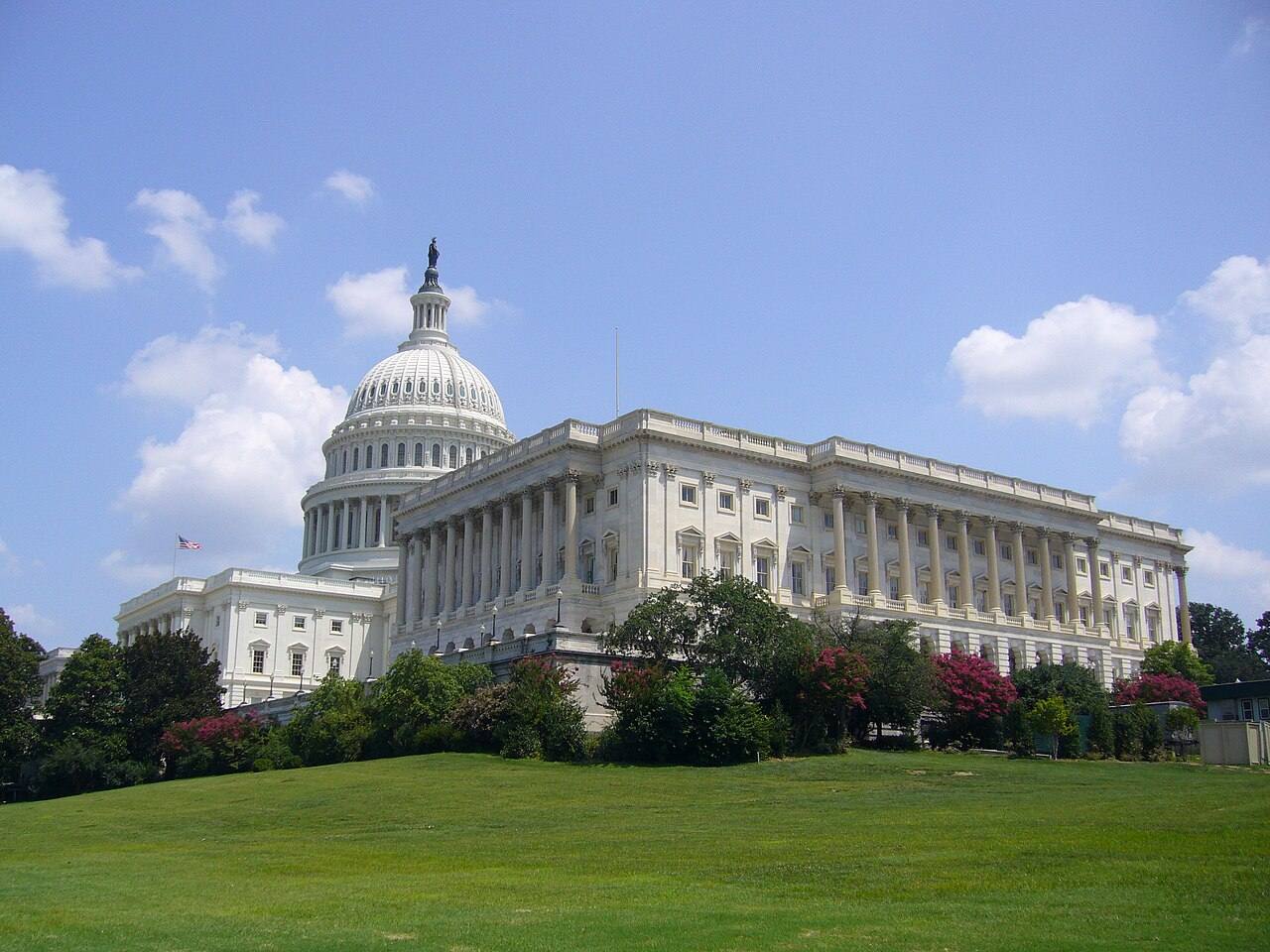
Congress could be headed for another government shutdown before Christmas, Reuters reported on November 20, as divisions over the war in Iran and President Donald Trump's demand for $350 billion in new Pentagon spending threaten to derail a funding deal. Federal funding runs out on December 11, leaving lawmakers about three weeks to reach agreement — and they were leaving Washington for a one-week Thanksgiving break still far apart.
Source: Reuters, November 20, 2026
Three weeks, a holiday break — and no deal yet
In the 100-seat Senate, a bipartisan funding package would need 60 votes to pass. Republicans and Democrats are aiming for a stopgap measure — a continuing resolution — to fund the government into early next year, when Democrats take control of the Senate and the House after their sweeping victory in the November midterm elections. They also hope to pass some of the 12 full-year appropriations bills in the current lame-duck session to fund parts of the government through the fiscal year, which ends on September 30.
The Iran war is the sticking point
Democrats are divided over whether to insist on language restricting funding for the war in Iran, even if that means cutting off money for federal agencies and workers just before Christmas. “The big obstacle is that we don't want to fund the war, we don't want to shut down, how do you solve that,” Senator Peter Welch, a Vermont Democrat, told Reuters. “That's the Gordian knot.”
Senator John Hickenlooper, a Colorado Democrat, said high energy prices caused by the war were hurting American families and could justify another funding cutoff. “A shutdown of government right before the holidays is a tough nut. You wouldn't do it if it wasn't dire. This is pretty dire,” he said. But Representative Rosa DeLauro, the top Democrat on the House Appropriations Committee, adamantly opposes using a shutdown as leverage: “Shutting the government down doesn't stop the war,” she said.
Politico reported that a group of Senate Democrats finalised a draft proposal on Thursday night to cut off funding for the Iran war as part of a deal to avert a shutdown — a sign the party is actively weighing the option even as its leaders remain split.
Republicans split over Trump's $350 billion demand
Senate Majority Leader John Thune warned on Tuesday: “The American people don't need another government shutdown. I think that would be a colossal mistake and a real disservice to the people of this country.” On Friday he told reporters that “some good conversations” were taking place on funding, but there were “no deals yet.”
Senate Republicans have not agreed on whether to meet Trump's $350 billion request through budget reconciliation, a partisan manoeuvre that would let it pass with a simple majority. After discussing the request behind closed doors for more than an hour this week, the Republican conference decided instead to pursue bipartisan talks with Democrats on a $1.1 trillion defence appropriations bill proposed by Republicans that contains only $69 billion of Trump's request. A partisan bill remains on the table, which could complicate a bipartisan deal. “We're going to run out of time if we don't expedite either more communications with both sides of the aisle, or if we can't come to a consensus,” Republican Senator Mike Rounds, a member of the Senate Appropriations Committee, told Reuters.
What a shutdown would mean
If funding lapses, many federal workers would be furloughed or required to work without pay, and federal services would be disrupted in the run-up to Christmas. Democrats have already forced three shutdowns since Trump returned to power in January 2025, including the longest large-scale shutdown in US history, which ended on November 12 after 43 days. Earlier this year they also cut off Homeland Security funding after federal immigration agents fatally shot two US citizens in Minneapolis.
NPR reported on Friday that funding for the war in Iran could prove decisive in whether the negotiations end with a deal or another shutdown. Senate Appropriations Committee Chair Susan Collins told reporters that Democrats were not seeking Iran language in exchange for agreement on a bipartisan short-term funding package, but in relation to the new defence funding Trump is seeking. Representative DeLauro said finishing all 12 spending bills was not possible, “but I believe we can get out a number of them … and then deal with where we need to be on the CR.”
Source: NPR, November 20, 2026
Awaaz Punjab reported on November 4 that federal funding runs out on December 11 and that the Congress which lost the midterms would have to fix it. This report follows that story with the latest developments. Read the earlier report
What happens next
Negotiations resume after the Thanksgiving break, with the December 11 deadline approaching and the Senate's 60-vote threshold looming over any bipartisan package. The questions to watch are whether Democrats insist on language cutting off Iran war funding, whether Republicans stick with the bipartisan $1.1 trillion defence bill or return to a partisan reconciliation bill, and whether a short-term continuing resolution can buy time into early next year.
A pre-Christmas shutdown would hit federal workers, travellers and families relying on federal services during the holidays. During the shutdown that ended on November 12, flight cancellations topped 2,100 on a single Sunday as air-traffic strains mounted. For diaspora families, a funding lapse can also mean delays at federal offices, airports and benefit services — and higher energy prices, which senators from both parties cited this week, are already squeezing household budgets.
What is solid
- Federal funding expires on December 11, 2026.
- A bipartisan Senate funding package needs 60 votes.
- President Trump has asked for $350 billion in new Pentagon spending.
- The Republican defence bill under discussion is worth $1.1 trillion and contains $69 billion of that request.
What is only claimed
- Whether Democrats will insist on cutting off Iran war funding — the party is openly divided.
- Whether a shutdown can be avoided — both parties say they want a deal, but no agreement exists yet.