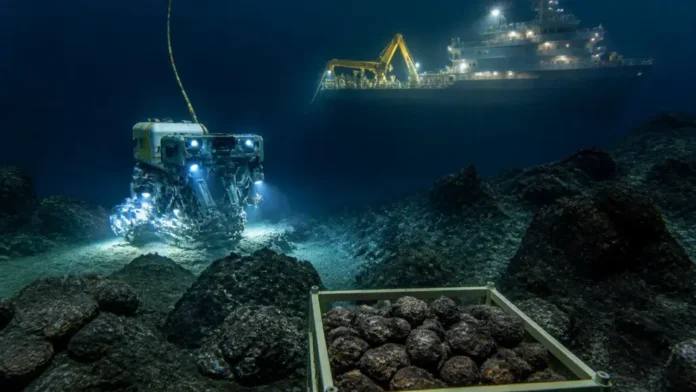
The United States on Thursday, November 19, sold its first-ever offshore leases for deep-sea mining, auctioning two huge areas of Pacific seabed off American Samoa for $6 million — three days after a federal judge ruled the government's environmental review of the sale had broken the law.
Source: The Associated Press / The Washington Post
The Interior Department's Marine Minerals Administration (MMA) said the sale — Lease Sale PACM-1 — covered about 31.5 million acres (31,503,235 acres) of federal waters. The only bidder was Wetstone US Ventures, a New York-based deep-sea mining startup, which offered the minimum bid of $3 million for each of the two areas. Two companies had registered for the auction, but only Wetstone placed a bid.
Source: U.S. Department of the Interior / Marine Minerals Administration
What the leases allow — and what they do not
The leases do not allow mining. If Wetstone's bids are confirmed, the company will at first only be allowed to conduct limited preliminary work — surveys, mapping and sampling of the seabed — to better understand the lease areas. Any commercial extraction would need separate environmental approval, and none is guaranteed. The two areas lie 150 to 240 miles east of Pago Pago, in water 4,630 to 20,100 feet deep. They are being explored for polymetallic nodules and ferromanganese crusts — potato-sized lumps of rock on the ocean floor that contain metals used in batteries, electronics and defence equipment.
Source: American Samoa Deep Sea Minerals Information
A sale three days after a courtroom defeat
The auction went ahead three days after a federal judge in Hawaii ruled that regulators had failed to fully assess the potential harm to protected marine life, including endangered blue, fin, sei and sperm whales, five sea turtle populations and five threatened coral species. The judge found the environmental review violated the Endangered Species Act. Three lawsuits challenging the sale are pending, including one filed on October 19 by a council of Samoan chiefs, known as matai, and community groups represented by Earthjustice, challenging the federal government's authority to lease the seabed off the territory.
Source: Mining.com
American Samoa's opposition
American Samoa imposed a moratorium on deep-sea mining in its own territorial waters in 2024, and its government has said the territory 'does not support commercial deep-sea mineral extraction at this time.' More than 76,000 public comments were submitted on the lease plan, most of them objecting to offshore mining, and several dozen protesters gathered outside the auction, held at the Ventura County Fire Department headquarters in Southern California. Territorial leaders and village councils have opposed the federal leasing plans.
Source: Mining.com
Why Washington is pushing ahead
The sale is part of the Trump administration's push under Executive Order 14285 to develop domestic sources of critical minerals and reduce dependence on supply chains controlled by foreign adversaries, above all China. 'This is the first time the United States has held an offshore critical minerals lease sale in the Pacific and a historic step for America's energy and mineral security,' Interior Secretary Doug Burgum said in a statement. The administration argues the minerals are essential for batteries, electronics and defence; critics say the rush risks irreversible damage to one of the planet's least-studied ecosystems before its value is understood.
Source: gCaptain
Wetstone's bids are provisional until confirmed. Even then, the company may only survey the seabed. Commercial mining would require further environmental review and approval — and the pending lawsuits could delay or overturn the leases before any extraction begins.
Sources: U.S. Department of the Interior / Marine Minerals Administration; The Associated Press; The Washington Post; Mining.com; American Samoa Deep Sea Minerals Information (deepseainfo.as.gov).