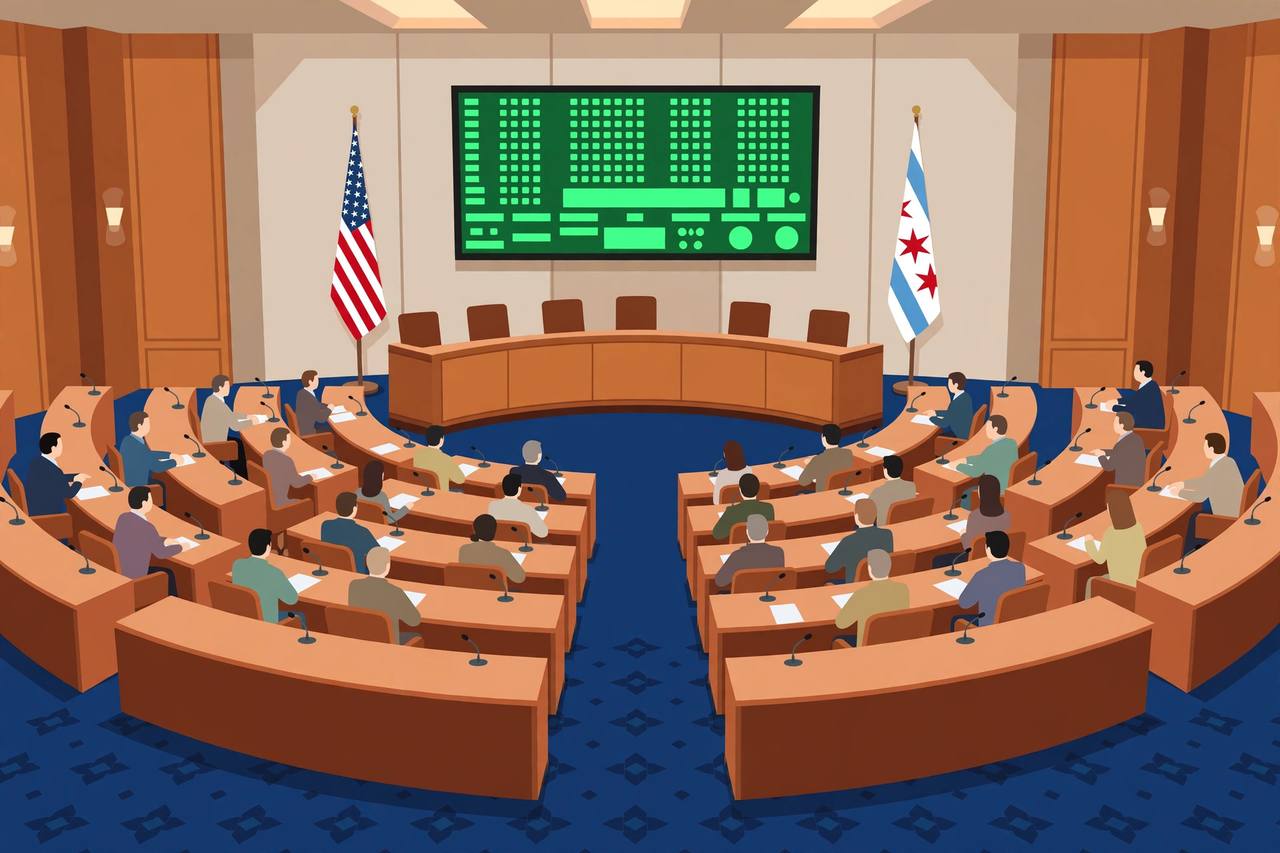
The Chicago City Council has given Mayor Brandon Johnson's administration 30 days to sign a contract for a new gunshot detection system, ending — for now — more than two years of delay since the city switched off ShotSpotter.
Source: FOX Chicago
Alderpersons passed the ordinance on Wednesday, November 18, by a 43-7 vote, directing Chief Procurement Officer Sharla Roberts to finalise a new contract within 30 days. If no contract is awarded within 60 days, Roberts must explain why in writing and appear before the council in person.
Why the council acted now
The vote follows the November 3 election, in which Chicago voters overwhelmingly backed restarting gunshot detection technology. About 72 percent of voters who answered the advisory question — 511,814 people — said yes to bringing back technology that alerts first responders when gunshots are detected. The question was nonbinding and did not name ShotSpotter.
Source: WTTW
The council's move also follows a stalled pilot programme. Roberts told a council panel in writing on October 20 that testing of a new system would begin by November 3 in six South and West Side police districts — Wentworth, Calumet, Englewood, Deering, Ogden and Harrison. Days later she told another committee the plan was off, and gave no firm date for the test. WBBM reported the test may not start until the first of the year.
Two years without a system
Johnson ended the city's ShotSpotter contract in September 2024, keeping a campaign promise to invest in addressing the root causes of crime. The city put out a request for proposals in 2025 to replace the system, and nine companies had bid by April 2025 — but the city has been reviewing proposals for about 19 months without awarding a contract.
Source: The TRiiBE
Gunshot detection systems use acoustic sensors placed around a neighbourhood to pick up the sound of gunfire and alert police dispatchers within seconds, giving officers a location even when nobody calls 911. Supporters say that speeds up response times and helps officers find victims; critics have questioned the accuracy and the cost, and Johnson has pointed to those concerns in holding off on a new contract.
The ordinance was introduced in September and advanced unanimously by the Committee on Contracting Oversight and Equity on October 20. Alderpersons who backed the measure said it was a matter of public safety. Ald. Bill Conway was among those pressing the administration, Ald. Anthony Beale raised the gunshot detection contract during the special meeting, and Ald. David Moore, who has long supported ShotSpotter's return, urged the city to switch the technology back on while a replacement is tested.
What the mayor says
Johnson has said repeatedly that he supports giving police technology that helps make Chicagoans safer, but that he would not sign a new contract until officials could "find something that works." His administration has said it wants to test systems from shortlisted bidders, including SoundThinking, the company behind ShotSpotter, before choosing one.
The same meeting
Wednesday's special session also produced two other rebukes of the administration: the council voted unanimously for a resolution urging state lawmakers to put a tax on incomes over $1 million on the ballot, and 45-5 to hire an outside firm for an independent review of the city's finances over the past three years. That review follows the sudden resignation last Friday of the mayor's chief financial officer, Ashlee Gabrysch, and S&P Global placing Chicago on credit watch.
What happens next
The 30-day clock is now running. Roberts must deliver a signed contract or return to the council with an explanation. For residents of the South and West Side districts where the pilot was planned — neighbourhoods that have lived without citywide gunshot detection since September 2024 — the ordinance is the first binding deadline the council has set, after two earlier council votes in 2024 that the mayor did not act on.
For Chicago's large Indian and Punjabi community, and for families across the South and West Sides, the question now is whether the deadline produces a working system — or another explanation.